


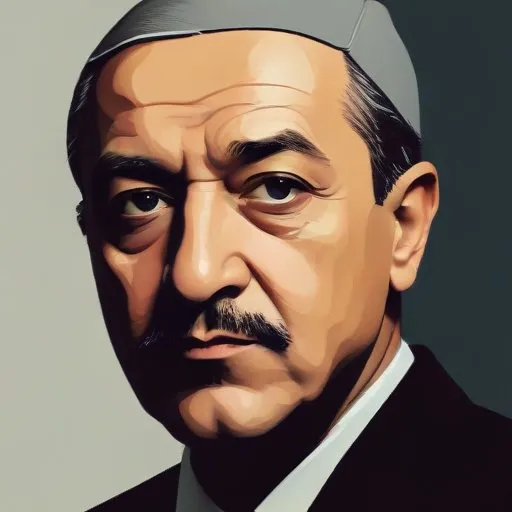
A Turkish journalist and author, known for his novels that often explored the struggles of the working class and rural poor, earning him international acclaim and numerous awards.
Yaar Kemal, born Kemal Sadık Gökçeli, was a renowned Turkish writer of Kurdish origin, human rights activist, and one of Turkey's leading authors. His work, particularly his novel "Memed, My Hawk", earned him international recognition and multiple award nominations, including the Nobel Prize in Literature.
Yaar Kemal was born on October 6, 1923, in Hemite, a Turkmen hamlet in the province of Osmaniye, southern Turkey. Despite being from a Kurdish family, he did not face discrimination in his village. However, his early life was marked by turmoil. He lost his right eye in a knife accident and witnessed his father's murder at the age of five.
These traumatic experiences led to a speech impediment that persisted until he was 12 years old. Despite these challenges, Kemal began his education at nine and showed a natural talent for writing, becoming a locally noted bard before he even started school.
Yaar Kemal's literary career spanned over six decades, during which he wrote numerous novels, short stories, and essays. His most notable works include:
Yaar Kemal was an outspoken intellectual who fearlessly addressed sensitive issues, particularly the oppression of the Kurdish people. He believed in the importance of cultural diversity and the need to protect minority rights. His work often reflected his strong stance against racism, nationalism, and militarism.
Yaar Kemal's writing had a significant impact on modern Turkish literature and society. He inspired a generation of writers to speak out against social injustices and advocate for human rights. His work also raised awareness about the Kurdish issue, sparking important discussions on cultural identity and minority rights.
Yaar Kemal's candid writing often put him at odds with the Turkish government. He was tried in 1995 under anti-terror laws for an article he wrote for Der Spiegel, which highlighted the Turkish Army's destruction of Kurdish villages during the Turkish-Kurdish conflict. He was released but later received a suspended 20-month jail sentence for another article criticizing racism in Turkey, especially against the Kurds.
Throughout his lifetime, Yaar Kemal received 38 awards for his literary contributions. Some of his notable awards include:
Yaar Kemal's legacy extends beyond his literary work. He remains an inspiration to writers, human rights activists, and minority groups around the world. His courage to speak out against oppression and his commitment to social justice continue to influence contemporary Turkish literature and society.
As we reflect on his life and work, we are reminded of the power of literature to spark change and inspire hope. Yaar Kemal's unwavering commitment to human rights and social justice serves as a beacon of courage for generations to come.
Remembering Yaar Kemal: A Life of Courage and Conviction
74 Years Old
A Turkish-American novelist, screenwriter, and academic, known for blending historical and cultural elements in his literary works, which often explore the complexities of Turkish identity and history.
Born in 1915
A renowned Turkish writer and satirist, known for his humorous and critical writings that often targeted political and social issues, earning him both praise and controversy.
Born in 1923
A Turkish journalist and author, known for his novels that often explored the struggles of the working class and rural poor, earning him international acclaim and numerous awards.
Born in 1925
A Turkish journalist, scholar, and politician who served as the 16th Prime Minister of Turkey, known for his progressive policies and literary works. He played a significant role in shaping Turkey's modern politics and culture.
Born in 1924
A Turkish engineer-turned-politician who served as the country's 9th President, known for his efforts to modernize Turkey's economy and infrastructure. He played a key role in shaping Turkey's politics and economy during the latter half of the 20th century.
