


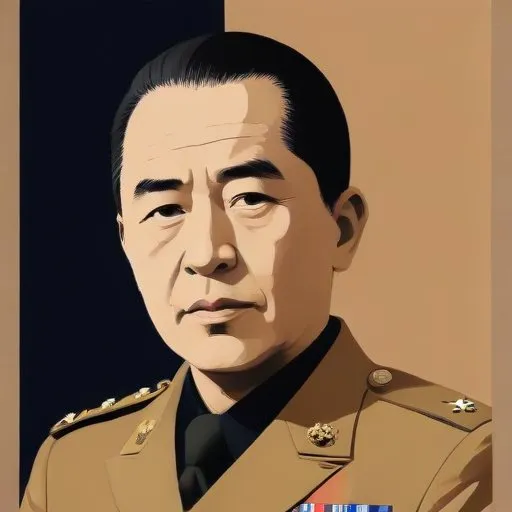
A prominent Japanese leader who served as Prime Minister twice, playing a key role in modernizing Japan's military and politics. He's known for his efforts to transform Japan into a major world power.
Yamagata Aritomo, a Japanese statesman and military commander, is best known for his instrumental role in shaping the Empire of Japan's military and reactionary ideology. As the Imperial Japanese Army's inaugural Chief of Staff, he is often referred to as the father of Japanese militarism, leaving an indelible mark on the country's history and politics.
Born on June 14, 1838, in Kawashima, Abu, Yamaguchi Prefecture, Yamagata was the eldest son of samurai foot soldier Yamagata Aritoshi. His early life was marked by tragedy, with his mother passing away when he was just four years old. Raised by his strict grandmother, Yamagata was taught academics by his father, who excelled in kokugaku and wrote poetry.
Yamagata started his career as a petty official at the Chōshū Domain and later at the Meirinkan. He served as a territorial magistrate, learning the duties of a samurai official and traveling from village to village. His dedication and hard work eventually earned him recognition, and he became a leading member of the genrō, an elite group of senior statesmen who dominated Japanese politics after the Meiji Restoration.
Yamagata's political career was marked by controversy and power struggles. He vied against Marquess Itō Hirobumi for control over Japan's policies, and after Itō's assassination in 1909, Yamagata emerged as the most powerful figure among Japan's genrō. However, his meddling in Crown Prince Hirohito's engagement led to a political crisis, and he lost power shortly before his death in February 1922.
As the Imperial Japanese Army's Chief of Staff, Yamagata played a crucial role in shaping the country's military doctrine and strategy. He was instrumental in modernizing the Japanese military, introducing conscription, and creating a centralized command structure. His militarist ideology and emphasis on national security have had a lasting impact on Japan's politics and foreign policy.
Yamagata's legacy extends beyond the realm of politics and military. His reactionary ideology and emphasis on national security have influenced Japan's modern society, shaping the country's relationships with its neighbors and its stance on international issues. His impact on Japanese militarism has also led to controversy and criticism, with some historians viewing him as a symbol of Japan's imperial ambitions.
Yamagata's personal life was marked by significant milestones, including his coming of age ceremony at the age of 15 and his service as a petty official at the Meirinkan. He was known for his strict upbringing and his academic excellence, which laid the foundation for his future success.
Yamagata's quotes and memorable sayings reflect his militarist ideology and emphasis on national security. One of his most famous quotes is, "The maintenance of the Empire's independence and the preservation of its honor are the most important tasks of the nation."
Yamagata's life and legacy must be understood within the context of Japan's tumultuous history, including the Meiji Restoration and the country's rapid modernization. His influence on Japanese militarism and politics has been profound, and his legacy continues to shape Japan's relationships with its neighbors and its stance on international issues.
Yamagata's life and legacy can be compared to those of his contemporaries, including Itō Hirobumi and other leading figures of the Meiji era. While his militarist ideology and emphasis on national security have been criticized, his influence on Japanese politics and society cannot be overstated.
Born in 1841
First Prime Minister of Japan, instrumental in modernizing the country and drafting its constitution, known for his role in transforming Japan from a feudal society to a modern nation.
Born in 1848
A Japanese general and politician who served as the 6th Prime Minister of Japan, known for modernizing the country's military and playing a key role in its early 20th-century development.
Born in 1828
Leader of the Satsuma Rebellion, a samurai who fought against the modernization of Japan, seeking to preserve traditional ways. He's known for his bravery and tragic demise.
