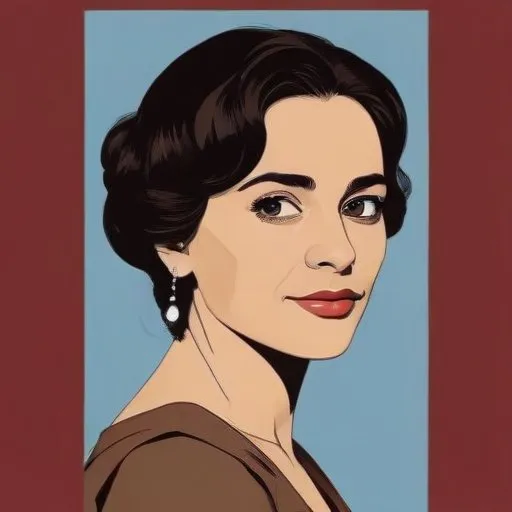
Yasmina Reza: The Playwright Behind the Curtains of Modern Society
The Art of Provocation
Yasmina Reza is a French playwright, actress, novelist, and screenwriter, renowned for her piercing satires that dissect the intricacies of contemporary middle-class life. Her plays, such as
Art and
God of Carnage, have become benchmarks for wit, intellectual vigor, and emotional depth, catapulting her to international acclaim.
Early Life and Inspirations
Born on May 1, 1959, in Paris, France, Reza's multicultural heritage played a significant role in shaping her artistic vision. Her Russian-born Bukharan Jewish father, an engineer, businessman, and pianist, and her Jewish Hungarian violinist mother from Budapest, instilled in her a deep appreciation for the arts. The tumultuous backdrop of World War II, during which her father was deported to Drancy internment camp, likely influenced her fascination with the human condition and the darker aspects of society.
Rise to Prominence
Reza's acting career took off in the early 1980s, with roles in new plays as well as classical works by Molière and Marivaux. However, it was her writing that truly set her apart. Her 1987 play,
Conversations after a Burial, earned her the Molière Award for Best Author, establishing her as a force to be reckoned with in French theatre. This early success paved the way for her subsequent plays, including
Winter Crossing, which won the 1990 Molière Award for Best Fringe Production.
Breakthrough and International Acclaim
The 1994 premiere of
Art in Paris marked a turning point in Reza's career, as it went on to win the Molière Award for Best Author and later, the Tony Award for Best Play.
Art's international production has been translated into over 30 languages, solidifying Reza's reputation as a master playwright. Her other notable works include
The Unexpected Man,
Life x 3, and
God of Carnage, the latter of which was adapted into a film by Roman Polanski in 2011.
Influence and Legacy
Reza's plays have been widely praised for their incisive commentary on modern society, delving into themes such as class, relationships, and the human condition. Her work has inspired a new generation of playwrights, actors, and theatre enthusiasts alike. Her influence extends beyond the theatre world, as her plays have been adapted into films, and her writing continues to shape the cultural landscape.
Awards and Honors
- Molière Award for Best Author (1987) for Conversations after a Burial
- Molière Award for Best Fringe Production (1990) for Winter Crossing
- Molière Award for Best Author (1994) for Art
- Tony Award for Best Play (1998) for Art
- Laurence Olivier Award and Evening Standard Award (1996-1997) for Art
Personal Quotes and Musings
"I think that in order to write about people, you have to be interested in them. You have to be curious, you have to love them, and you have to respect them." - Yasmina Reza
FAQ
What is Yasmina Rezas background in theatre?
Yasmina Reza is a French actress, playwright, and novelist. She has written several plays, including Art and God of Carnage, which have been widely performed and acclaimed.
What is Yasmina Rezas writing style?
Yasmina Rezas writing is known for its wit, sophistication, and insight into human relationships. Her plays often explore themes of art, culture, and social convention.
Has Yasmina Reza won any awards for her work?
Yes, Yasmina Reza has won several awards for her work, including the Tony Award for Best Play for Art and the Olivier Award for Best New Comedy for God of Carnage.
What is Yasmina Rezas most famous play?
Yasmina Rezas most famous play is probably Art, which premiered in 1994 and has been translated into over 30 languages. The play has been performed worldwide, including on Broadway and in the West End.
Is Yasmina Reza also a novelist?
Yes, Yasmina Reza is also a novelist. Her novels, such as Hammerklavier and Babylon, have been well-received in France and have been translated into several languages.
Related People:
93 Years Old
Acclaimed filmmaker behind iconic movies like "Chinatown" and "Rosemary's Baby", known for his dark, psychological, and suspenseful storytelling style.
Born in 1913
A French novelist, philosopher, and journalist who wrote influential works like "The Stranger" and "The Plague", exploring absurdism and the human condition.
95 Years Old
A pioneer of French New Wave cinema, known for experimental and provocative films that challenged traditional narrative structures and explored themes of politics, philosophy, and social commentary.
94 Years Old
A pioneering filmmaker of the French New Wave, known for directing iconic films like "Jules and Jim" and "The 400 Blows", which redefined cinematic storytelling.
Born in 1920
French New Wave pioneer behind contemplative, visually stunning films that explore human relationships and morality, known for subtle storytelling and nuanced character studies.
88 Years Old
A renowned filmmaker behind iconic romantic dramas, known for his visually stunning and emotionally charged storytelling, often exploring themes of love, fate, and human connection.