


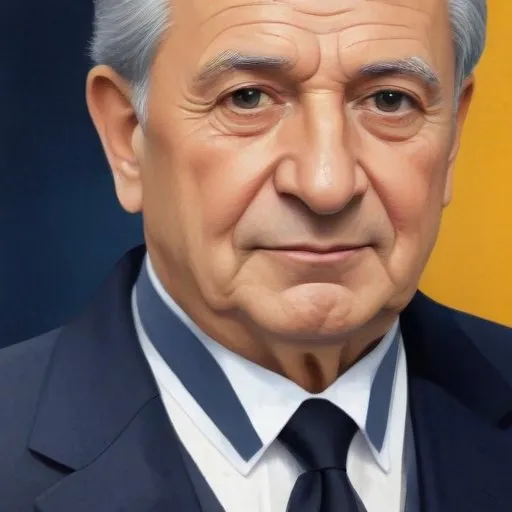
A Ukrainian-born Israeli historian and politician who served as the second President of Israel, known for his role in the country's early development and his research on Jewish history. He's a key figure in Israel's founding and growth.
Yitzhak BenZvi, known for his groundbreaking research on Jewish communities in the Land of Israel, was a Labor Zionist leader and the longest-serving President of Israel, holding the office from 1952 until his passing in 1963. Through his tireless efforts, he shed light on the rich traditions, language, folklore, and religious practices of Mizrahi and Sephardic Jewish communities, as well as the Samaritan communities.
Born on November 24, 1884, in Poltava, Ukraine, Yitzhak BenZvi was the eldest son of Zvi Shimshi, a writer and communal worker, and Karina Atara, daughter of Rabbi Israel Leib Kupilevich. His family's rich heritage and influence played a significant role in shaping his future endeavors. He was descended from Rabbi Meir Halevi Epstein on his mother's side and traced his lineage back to Lithuanian Rabbi Jehiel ben Solomon Heilprin on his father's side.
BenZvi's passion for Jewish history and ethnology led him to conduct extensive research on the oral histories, firsthand accounts, and documentary evidence of Jewish communities in the Land of Israel. He published numerous books and articles on the subject, providing valuable insights into the traditions and practices of these communities. His work continues to be a testament to his dedication and commitment to preserving the rich cultural heritage of the Jewish people.
In recognition of his outstanding contributions, the BenZvi Institute was founded and directed by him, becoming a premier institution for research on Jewish communities in the Middle East. The institute remains a vital platform for scholars and researchers to explore and learn from the vast cultural and historical tapestry of the region.
BenZvi's remarkable achievements were recognized and celebrated during his lifetime. He was elected as the President of Israel in 1952 and continued to serve in the position until his passing in 1963. His legacy extends beyond his presidential tenure, as his contributions to Jewish history and ethnology continue to inspire and educate future generations.
Yitzhak BenZvi's remarkable life and work have left an indelible mark on the understanding and appreciation of Jewish history and culture. His tireless efforts to preserve and promote the rich heritage of Jewish communities have inspired countless scholars, researchers, and enthusiasts. As a testament to his enduring legacy, the BenZvi Institute continues to be a hub for academic and cultural exploration, ensuring that his vision and contributions remain a vital part of the ongoing conversation on Jewish identity and culture.
Born in 1886
The founder of the State of Israel, who played a crucial role in the country's establishment and served as its first prime minister, shaping the nation's early years and policies. He's revered as a national hero and a symbol of Israeli independence.
Born in 1898
A pioneering female leader who served as Israel's first and only female Prime Minister, known for her strong leadership during times of war and peace. She played a crucial role in shaping Israel's early years and remains an iconic figure in Israeli politics.
Born in 1913
A Belarusian-born Israeli politician who served as Prime Minister of Israel and was awarded the Nobel Peace Prize for his efforts to establish a peace treaty with Egypt. He's known for his strong leadership and commitment to Israeli security.
Born in 1895
Ukrainian-born Israeli leader who served as Prime Minister from 1963 to 1969, known for his role in Israel's development and the Six-Day War.
Born in 1915
A renowned Israeli military leader and statesman who played a key role in shaping Israel's foreign policy and defense strategy, known for his iconic eye patch and daring military operations.
Born in 1915
A South African-born Israeli diplomat who served as the first Ambassador to the United Nations, known for his charismatic oratory skills and instrumental role in shaping Israel's international relations.
Born in 1923
A Nobel Peace Prize winner who served as Israel's President and Prime Minister, known for his efforts to bring peace to the Middle East through diplomatic negotiations.
84 Years Old
A decorated military leader who later navigated Israel's complex political landscape as Prime Minister, known for his efforts to resolve the Israeli-Palestinian conflict.
