


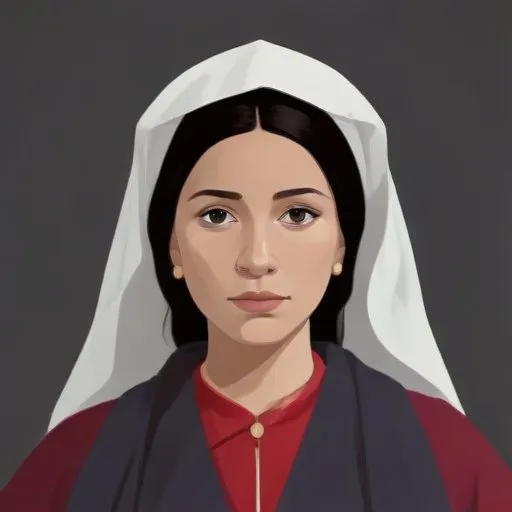
Yolande of Aragon, Duchess of Anjou and Countess of Provence, was a mastermind of 15th-century European politics, who played a pivotal role in the struggles between France and England. Her cunning diplomacy and strategic alliances ultimately led to the financing of Joan of Arc's army in 1429, a turning point in favor of the French.
Born on August 11, 1381, in Zaragoza, Aragon, Yolande was the eldest daughter of King John I of Aragon and his second wife, Yolande of Bar. Her family ties created a complex web of alliances and rivalries, shaping her future as a shrewd politician. She had three brothers, two sisters, and five older half-siblings from her father's first marriage.
In 1387, Yolande's parents received a marriage proposal from King Louis II of Naples, but she refused, signing a document to disavow any promises made by ambassadors. Later, Richard II of England sought her hand, but she was ultimately forced to marry Louis II in 1400, despite her initial objections. The marriage proved successful, despite her husband's illness and her own claims to the Aragonese throne.
As the surviving daughter of King John I, Yolande claimed the throne of Aragon after the deaths of her elder sister Joanna and her uncle, King Martin I. However, her claim was never realized, and she instead focused on her responsibilities as Duchess of Anjou and Countess of Provence.
Tradition holds that Yolande commissioned the exquisite Rohan Hours, a masterpiece of medieval illumination. This stunning work showcases her refined taste and cultural influence, solidifying her legacy as a patron of the arts.
Yolande's most significant achievement was her role in financing Joan of Arc's army in 1429, a crucial turning point in the Hundred Years' War. Her diplomatic prowess and strategic alliances enabled her to secure backing for the French cause, paving the way for Joan's victories.
Yolande of Aragon's remarkable life and legacy continue to inspire historians and scholars. Her mastery of politics, diplomacy, and cultural patronage cemented her place as one of the most influential women of the 15th century, leaving an indelible mark on European history.
Born in 1350
King of Aragon from 1387 to 1396, known for his tumultuous reign marked by conflicts with the nobility and the papacy. He was also a patron of the arts and literature.
Born in 1380
Unified the Crown of Aragon, ruling over a vast territory in eastern Spain, and sponsored the voyages of Christopher Columbus, leading to the discovery of the New World.
Born in 1451
Unified the Spanish kingdoms, sponsored Christopher Columbus's voyage to the Americas, and established the Spanish Inquisition.
Born in 1403
King of France from 1422 to 1461, he played a crucial role in ending the Hundred Years' War by expelling the English from French territory. He also established a strong centralized government.
Born in 1340
A powerful and wealthy medieval English nobleman, known for his immense influence on English politics and his role in the Hundred Years' War. He was also a patron of the arts and a founder of Trinity College, Cambridge.
Born in 1710
The monarch who ruled France from 1715 to 1774, known as the "Sun King's" great-grandson, and remembered for his extravagance, absolutism, and the decline of the French monarchy.
