


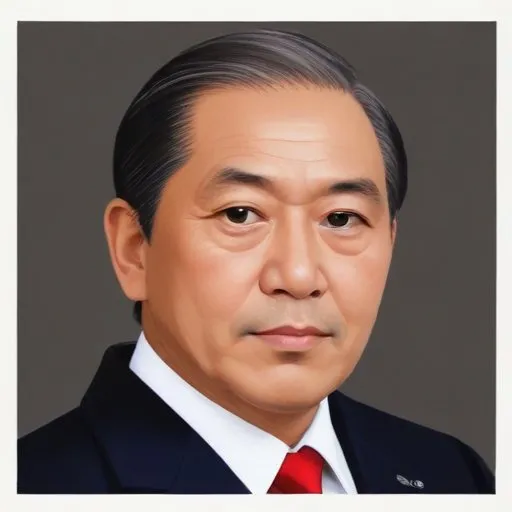
Japanese Minister of Foreign Affairs who played a crucial role in shaping Japan's foreign policy during World War II, including the Tripartite Pact with Germany and Italy. He's infamous for his nationalist and anti-Semitic views.
Ysuke Matsuoka, a Japanese diplomat, is best remembered for his fiery speech at the League of Nations in February 1933, which marked Japan's withdrawal from the organization. This bold move solidified Matsuoka's reputation as a vocal advocate for Japanese interests and earned him a place in the annals of World War II history.
Born on March 4, 1880, in Kumage District, Yamaguchi Prefecture, Japan, Matsuoka was the fourth son of a shipping magnate. When his father's business went bankrupt, Matsuoka was sent to the United States in 1893 to study English, under the sponsorship of Methodist missionaries.
Settling in Portland, Oregon, Matsuoka lived with the Dunbar family, who took him under their wing. Mrs. Isabelle Dunbar Beveridge, in particular, played a significant role in his life, serving as a foster mother and helping him adjust to American society. Matsuoka's affection for her lasted a lifetime.
Matsuoka's education and international experience paved the way for a distinguished diplomatic career. He served as Minister of Foreign Affairs of the Empire of Japan from 1940 to 1941, during the tumultuous early stages of World War II.
One of Matsuoka's most notable achievements was the negotiation of the Tripartite Pact, a military alliance between Japan, Germany, and Italy. He also played a key role in the Soviet-Japanese Neutrality Pact, signed in 1941.
Matsuoka's defiant speech at the League of Nations, which led to Japan's withdrawal, sparked international controversy. His unwavering support for Japanese expansionist policies and his role in negotiating the Tripartite Pact have been criticized by historians and scholars.
Despite these controversies, Matsuoka remains a significant figure in Japanese history, remembered for his unwavering dedication to his country's interests and his unshakeable conviction in the face of international pressure.
Matsuoka's legacy is complex and multifaceted, marked by both achievement and controversy. His negotiation of the Tripartite Pact and the Soviet-Japanese Neutrality Pact demonstrated his diplomatic prowess, while his defiant speech at the League of Nations showcased his unwavering dedication to Japanese interests.
As we reflect on Matsuoka's life and career, we are reminded of the intricate complexities of international relations and the role of individual diplomacy in shaping global events.
Born in 1891
A Japanese politician who served as Prime Minister during World War II, known for his role in leading Japan into the war and his attempts to negotiate a peace settlement. He is also infamous for his involvement in the Nanjing Massacre.
