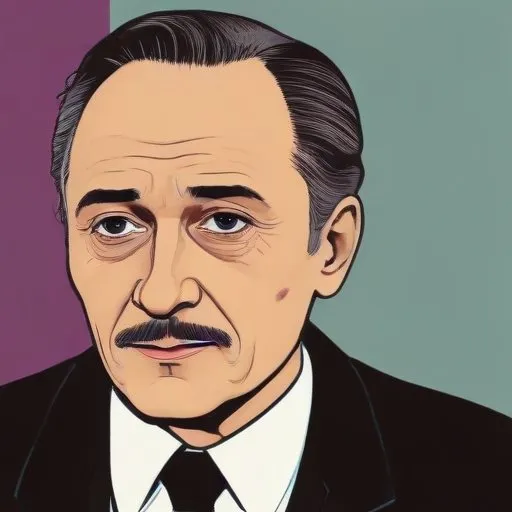
The Visionary Poet: Yuri Ivask
A Life Dedicated to Art and Activism
Yuri Ivask, a prominent Russian-American poet, literary critic, and activist, left an indelible mark on the literary world with his profound poems and essays that explored the human condition, freedom, and social justice. Ivask's work, which spanned over six decades, was characterized by its lyricism, depth, and unwavering commitment to defending the rights of the silenced and marginalized.
Early Life and Education
Born on July 27, 1907, in Moscow, Russia, Ivask grew up in a family of intellectuals. His father, Mikhail Mikhailovich Ivask, was a prominent lawyer and literary critic, while his mother, Elena Andreievna Shakhovskaya, was a writer and translator. Ivask's early life was marred by the Russian Revolution and the subsequent turmoil, which ultimately led his family to flee to Paris in 1920. It was in Paris that Ivask discovered his passion for literature, immersing himself in the works of French Symbolists and Russian émigré writers.
Literary Career and Contributions
Ivask's poetry is a testament to his unique ability to capture the essence of human experience. His work is characterized by its lyricism, precision, and depth, often exploring themes of love, freedom, and social justice. Throughout his career, Ivask published numerous collections of poetry, including
The Shadow of the Statue (1936) and
The Power of the Word (1969). His poetry has been translated into several languages, including English, French, and Italian.
作为 a literary critic, Ivask was instrumental in promoting the works of Russian émigré writers, such as
Vladimir Nabokov and
Boris Pasternak. He was also a vocal advocate for human rights, using his platform to speak out against repression and censorship.
Philosophical Contributions and Beliefs
Ivask's work was deeply influenced by his philosophical beliefs, which emphasized the importance of individual freedom, creativity, and moral responsibility. He was a fierce critic of totalitarianism and a steadfast defender of democracy, often incorporating these themes into his poetry and essays.
In 1940, Ivask emigrated to the United States, where he became an influential figure in the Russian-American literary community. He taught at several universities, including Yale and Columbia, and was a frequent contributor to literary journals and magazines.
In 1967, Ivask was awarded the prestigious Guggenheim Fellowship, which recognized his contributions to literature and poetry.
Influence on Modern Society
Ivask's work has had a profound impact on modern society, inspiring generations of writers, poets, and activists. His poetry and essays have been widely studied and translated, and his commitment to social justice and human rights has inspired countless individuals to take action.
Historical Context and Legacy
Ivask's life and work are a testament to the power of art and activism. His poetry and essays, which spanned over six decades, provide a unique window into the tumultuous 20th century, offering insights into the Russian Revolution, World War II, and the Cold War.
Today, Ivask's work remains a powerful symbol of resistance and hope, inspiring new generations of writers, activists, and thinkers.
Comparative Analysis with Contemporaries
Ivask's work is often compared to that of his contemporaries, including Vladimir Nabokov and Boris Pasternak. Like these writers, Ivask was a master of language and form, using his poetry and essays to explore the complexities of human experience.
However, Ivask's unique blend of lyricism and activism sets him apart from his contemporaries, making him a truly original voice in modern literature.
Personal Relationships and Anecdotes
Ivask was known for his warmth and generosity, often hosting salons and gatherings at his home in New York City. He was a close friend and mentor to many young writers, including the poet and novelist, Nina Berberova.
One anecdote that captures Ivask's warmth and wit is his famous toast at a dinner party, where he raised a glass to "the only thing that can save us from ourselves – poetry!"
Trivia and Fun Facts
- Ivask was an accomplished pianist and loved to play Chopin's nocturnes.
- He was a voracious reader, devouring books on history, philosophy, and literature.
- Ivask was a talented linguist, speaking fluent Russian, French, and English.
Predictions and Speculations
As we look to the future, it is clear that Ivask's work will continue to inspire and influence new generations of writers, poets, and activists. His poetry and essays, which captured the essence of the 20th century, will remain a powerful reminder of the importance of individual freedom, creativity, and moral responsibility.
In the words of Ivask himself, "Poetry is the only thing that can save us from ourselves – and from the darkness that lies within."
FAQ
What was Yuri Ivasks literary focus?
Yuri Ivask was a Russian-American poet and critic, known for his works of poetry, literary criticism, and essays exploring the intersection of Russian and American cultures.
What kind of poetry did Yuri Ivask write?
Ivasks poetry was characterized by its lyricism, introspection, and exploration of themes such as exile, identity, and cultural heritage.
Did Yuri Ivask work as a literary critic?
Yes, Ivask was a prominent literary critic, writing for various publications and anthologies, and was known for his insightful analyses of Russian and American literature.
What is Yuri Ivasks legacy in Russian-American literature?
Ivasks work as a poet, critic, and translator has contributed significantly to the understanding and appreciation of Russian and American literature, bridging cultural divides.
Has Yuri Ivasks work been translated?
Yes, Ivasks poetry and essays have been translated into multiple languages, including English, Russian, and French, increasing his international recognition and readership.