


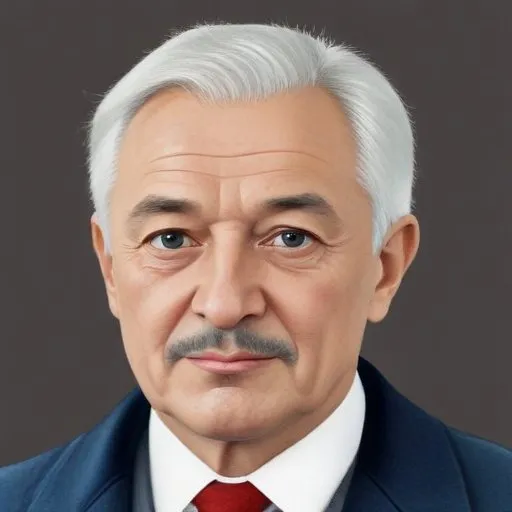
A renowned expert in deciphering ancient scripts, particularly the Mayan hieroglyphs, and uncovering the secrets of Mesoamerican cultures.
Yuri Valentinovich Knorozov, a renowned Soviet and Russian linguist, epigrapher, and ethnographer, is celebrated for his groundbreaking contributions to the decipherment of the Mayan script, a writing system employed by the pre-Columbian Maya civilization of Mesoamerica. His identification of syllabic signs proved an essential step forward in understanding the ancient script, earning him the distinction of being the founder of the Soviet school of Mayan studies.
Born on November 19, 1922, in the village of Yuzhny near Kharkov, Ukraine, Knorozov was the product of a Russian intellectual family. His paternal grandmother, Maria Sakhavyan, was a celebrated stage actress in Armenia. Knorozov's academic journey was marked by both brilliance and turbulence. Despite struggling with poor health and being Nearly expelled from school for his behavior, he demonstrated exceptional aptitude in various subjects, with the exception of Ukrainian language.
In 1940, at the age of 17, Knorozov enrolled in the Department of Ethnology at Moscow State University's History Department, initially specializing in Egyptology. However, his academic plans were soon disrupted by the outbreak of World War II. Due to his poor health, Knorozov was deemed unfit for regular military service in the Soviet Army. During this period, he and his family spent time on German-occupied territories, where he astutely avoided being forced to join the German army support units.
Knorozov's pioneering work on the Mayan script began in the 1950s. His research, which spanned several decades, led to the identification of syllabic signs and the development of a decipherment method. This groundbreaking work paved the way for subsequent researchers to build upon, ultimately contributing to the comprehensive understanding of the Mayan writing system.
Knorozov's work was underpinned by a deep respect for the cultural heritage of the Maya civilization. He believed that the decipherment of the Mayan script held the key to understanding the intellectual and spiritual achievements of this ancient civilization. His philosophical approach emphasized the importance of considering the cultural context in which the script was employed.
Knorozov's contributions to Mayan studies have had a lasting impact on modern society. His work has inspired a new generation of researchers, epigraphers, and linguists. Furthermore, his research has contributed to a greater understanding of the cultural and historical significance of the Maya civilization. Some of his notable career highlights include:
Yuri Knorozov's work was set against the backdrop of the Cold War era, during which the Soviet Union was actively promoting its scientific and cultural achievements. Knorozov's contributions to Mayan studies not only reflected the Soviet Union's interest in Mesoamerican cultures but also demonstrated the country's commitment to advancing knowledge in the fields of linguistics and epigraphy. Today, Knorozov's legacy continues to inspire researchers and scholars, cementing his place as one of the most significant figures in the history of Mayan studies.
Throughout his life, Knorozov was driven by an insatiable curiosity and passion for knowledge. Despite facing numerous challenges, including poor health and war-related interruptions, he remained committed to his research. Some of his personal milestones include:
Did you know that:
Yuri Knorozov's remarkable life and achievements serve as a testament to the power of human curiosity and dedication. His groundbreaking contributions to Mayan studies have left an indelible mark on the field, inspiring future generations of researchers and scholars. As we reflect on his remarkable legacy, we are reminded of the importance of preserving and promoting cultural heritage, as well as the boundless potential of human knowledge and discovery.
Born in 1773
Pioneering researcher who made groundbreaking contributions to the fields of optics, physiology, and Egyptology, including deciphering ancient hieroglyphics and proposing the wave theory of light.
Born in 1790
Decipherer of ancient Egyptian hieroglyphs, unlocking secrets of a lost civilization through meticulous study and groundbreaking discoveries.
Born in 1899
A Russian-born novelist and critic, renowned for crafting intricate, lyrical prose and exploring themes of identity, morality, and the human condition through works like "Lolita" and "Pale Fire".
Born in 1904
A Ukrainian-American physicist and cosmologist who developed the Big Bang theory and wrote popular science books, making complex concepts accessible to a broad audience.
Born in 1907
A pioneering rocket engineer and designer who played a crucial role in the Soviet space program, developing the R-7 rocket that launched Sputnik and sent humans into space.
