


In a move that sent shockwaves across the global community, Russian President Vladimir Putin declared the Luhansk Peoples Republic and Donetsk Peoples Republic as independent from Ukraine, effectively escalating the Russo-Ukrainian crisis to unprecedented heights. This bold action, condemned by the United Nations, marked a significant turning point in the protracted conflict, solidifying Russia's grip on the disputed regions.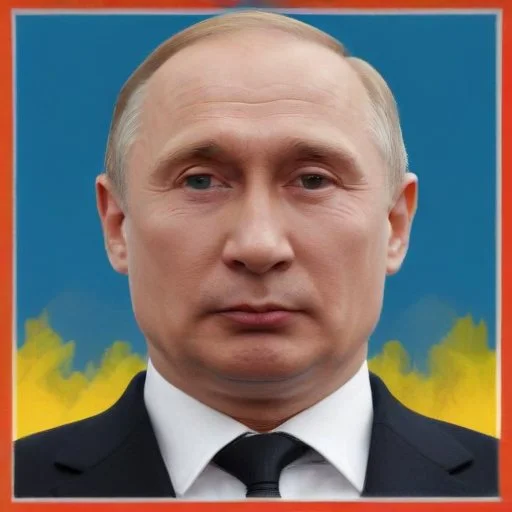
The seeds of the Russo-Ukrainian crisis were sown in the aftermath of the Ukrainian Revolution of 2014, which saw the ousting of pro-Russian President Viktor Yanukovych. The subsequent formation of a pro-European government in Ukraine led to heightened tensions with Russia, culminating in the annexation of Crimea in 2014. The ongoing conflict in eastern Ukraine, fueled by separatist sentiment and Russian support, created a fertile ground for the dramatic events that unfolded.
The repercussions of Putin's declaration have been far-reaching, with significant implications for regional and global politics. Key outcomes include:
The crisis has had a profound impact on the cultural and social fabric of the region, with ethnic and linguistic divisions exacerbating the conflict. The declaration of independence has also raised questions about the status of ethnic Russians in Ukraine and the role of nationalist sentiment in fueling the crisis.
The actions of President Putin have drawn widespread criticism, with many viewing the move as a naked attempt to expand Russian influence in the region. The international community has been sharply divided, with some countries supporting Ukraine's sovereignty and others backing Russia's claims.
The Russo-Ukrainian crisis bears striking similarities to other conflicts in the region, including the annexation of Crimea and the Nagorno-Karabakh conflict. A comparative analysis of these events highlights the complex web of historical, cultural, and geopolitical factors that underpin the crisis.
The consequences of Putin's declaration will reverberate for years to come, shaping the trajectory of regional politics and international relations. The crisis has spotlighted the need for diplomatic efforts to resolve the conflict, with a lasting impact on the global community.
As the international community grapples with the implications of this watershed moment, one thing is clear: the Russo-Ukrainian crisis has irreversibly altered the geopolitical landscape, ushering in a new era of tension and uncertainty.
The roots of the Russo-Ukrainian crisis can be traced back to the Kievan Rus' era, when the region was a hotbed of power struggles between various factions. The legacy of this tumultuous period continues to influence the modern-day conflict, with both Russia and Ukraine claiming historical ownership over the disputed territories.
In the centuries that followed, the region was shaped by the Mongol invasion, the Polish-Lithuanian Commonwealth, and the Russian Empire, each leaving their mark on the cultural, linguistic, and religious identity of the region.
The Ukrainian Revolution of 2014, which ousted pro-Russian President Viktor Yanukovych, marked a turning point in the crisis, as Ukraine began to pivot towards the European Union and away from Russia's sphere of influence.

Russian President Vladimir Putin's leadership style has been instrumental in shaping the course of the crisis. A master strategist and tactician, Putin has skillfully leveraged Russia's military and economic power to achieve his goals in Ukraine.
Putin's KGB background has instilled in him a strong sense of loyalty and duty to the Russian state, which has driven his decision-making in the crisis. His ability to manipulate public opinion and maintain a tight grip on power has allowed him to pursue his agenda with relative impunity.
In contrast, Ukrainian President Volodymyr Zelensky has faced significant challenges in mobilizing international support for Ukraine's cause, despite his vocal criticism of Russian aggression.
The Russo-Ukrainian crisis has had a profound impact on the cultural and social fabric of the region. The declaration of independence by the Luhansk and Donetsk Peoples Republics has raised questions about the status of ethnic Russians in Ukraine and the role of nationalist sentiment in fueling the conflict.
The crisis has also led to a surge in nationalism on both sides, with anti-Russian sentiment growing in Ukraine and pro-Russian sentiment increasing in the disputed regions.
Cultural institutions, such as museums and historical landmarks, have become battlegrounds in the conflict, with both sides accusing the other of cultural appropriation and historical revisionism.

The Russo-Ukrainian crisis has significant implications for regional and global politics. The crisis has exposed the limitations of international institutions, such as the United Nations, in preventing aggression and protecting national sovereignty.
The crisis has also led to a shift in the global balance of power, with Russia's actions challenging the dominance of the United States and Europe.
The crisis has sparked a debate about the role of NATO and the European Union in maintaining regional security, with some calling for a more assertive stance against Russian aggression.
The economic consequences of the Russo-Ukrainian crisis have been far-reaching, with both Russia and Ukraine facing significant economic sanctions.
The crisis has disrupted global energy markets, with Russia's control over energy supplies giving it significant leverage over European countries.
The crisis has also led to a decline in foreign investment in Ukraine, exacerbating the country's economic woes.