


The 13th Dalai Lama's declaration of Tibetan independence in 1913 marked a pivotal moment in Tibetan history, as the country broke free from the shackles of the Manchu Qing dynasty's domination. This courageous move paved the way for nearly four decades of autonomy, allowing Tibet to forge its own path and reclaim its sovereignty.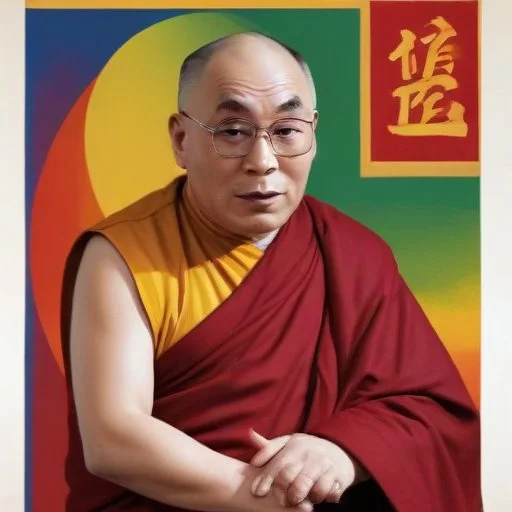
The Qing dynasty, which ruled China from 1644 to 1912, had exerted control over Tibet since the 18th century. The Qing emperors saw Tibet as a vital border region, rich in natural resources and strategically located between China and India. For over a century, Tibetans struggled under the weight of foreign domination, with their culture, religion, and way of life threatened by the Qing's attempts to assimilate them into Chinese culture.
Born in 1876, Thubten Gyatso, the 13th Dalai Lama, was a charismatic leader who embodied the spirit of Tibetan resistance. Recognized as the reincarnation of the Dalai Lama at the age of two, he was trained in the traditional Tibetan Buddhist scriptures and quickly demonstrated a deep understanding of politics and diplomacy. As he grew older, the Dalai Lama became increasingly concerned about the erosion of Tibetan autonomy and the threat posed by the Qing dynasty.
In 1913, the Dalai Lama, supported by his government and the Tibetan people, issued a formal declaration of Tibetan independence. This bold move was a direct challenge to the Qing dynasty, which had grown weakened following the fall of the Chinese Empire in 1912. The proclamation was a beacon of hope for Tibetans, who saw it as a chance to reclaim their country's sovereignty and chart its own course.
The Dalai Lama's declaration of independence had far-reaching consequences:
The Tibetan independence movement had a profound impact on the country's cultural and social landscape:
The Dalai Lama's declaration of independence was not without controversy:
The 13th Dalai Lama's brave declaration of independence left an indelible mark on Tibetan history and identity:
The 13th Dalai Lama's proclamation of Tibetan independence serves as a testament to the power of courage and determination in the face of adversity. His vision for a free and sovereign Tibet continues to inspire generations, and his legacy remains an integral part of Tibetan identity and culture.
Thubten Gyatso, the 13th Dalai Lama, was born on June 28, 1876, in the village of Thakpo Langdun in the Chamdo region of Tibet. His early life was marked by humble beginnings, with his family being of moderate means. However, his life took a dramatic turn when he was recognized as the reincarnation of the Dalai Lama at the age of two.
Under the guidance of the Panchen Lama, Thubten Gyatso began his monastic education, studying Buddhist scriptures and philosophy. He demonstrated exceptional aptitude and a deep understanding of the subject matter, which earned him great respect and admiration from his teachers and peers.

In 1913, the world was in a state of flux, with various empires and nations vying for power and influence. The Qing dynasty, which had ruled China for over two centuries, was on the brink of collapse, and the Republic of China had just been established.
Europe was experiencing a period of relative peace, with the great powers engaged in a delicate balance of power politics. The British Empire, in particular, was a major player in the region, with its colonial possessions in India and its interests in Tibet.
This complex global landscape created an opportunity for Tibet to declare its independence, with the 13th Dalai Lama capitalizing on the power vacuum to assert his country's sovereignty.
The declaration of independence in 1913 had a profound impact on Tibetan culture, allowing it to flourish and develop without foreign interference. The Dalai Lama's efforts to modernize Tibet led to the introduction of new technologies, such as the telegraph and the telephone, which facilitated communication and exchange with the outside world.
The period of autonomy also saw a resurgence of Tibetan art, literature, and music, as artists and writers were able to express themselves freely. The construction of new buildings, roads, and bridges further contributed to the country's cultural and economic development.
Moreover, the independence movement inspired a sense of national pride and identity among Tibetans, who saw themselves as a distinct nation with a rich history and traditions.
The 13th Dalai Lama's declaration of independence was a bold political move, challenging the authority of the Qing dynasty and asserting Tibet's sovereignty. The Dalai Lama's government carefully crafted the proclamation, taking into account the complex geopolitical landscape of the time.
The Tibetan government established its own currency, postal system, and international relations, further solidifying its independence. The country also developed its own military, which played a crucial role in maintaining Tibet's sovereignty.
The Dalai Lama's leadership and vision for an independent Tibet earned him recognition and respect from the international community, with countries such as Britain and Nepal establishing diplomatic relations with Tibet.
Historians have long debated the significance of the 13th Dalai Lama's declaration of independence, with some viewing it as a brave attempt to assert Tibetan sovereignty and others seeing it as a negotiated settlement between Tibet and China.
Some scholars argue that the declaration was a pragmatic move, aimed at preserving Tibetan autonomy in the face of Chinese dominance. Others view it as a symbol of Tibetan resistance against foreign domination, marking a turning point in the country's struggle for independence.
Regardless of interpretation, the declaration of independence remains a pivotal moment in Tibetan history, shedding light on the complexities of Tibetan-Chinese relations and the quest for sovereignty in the early 20th century.