


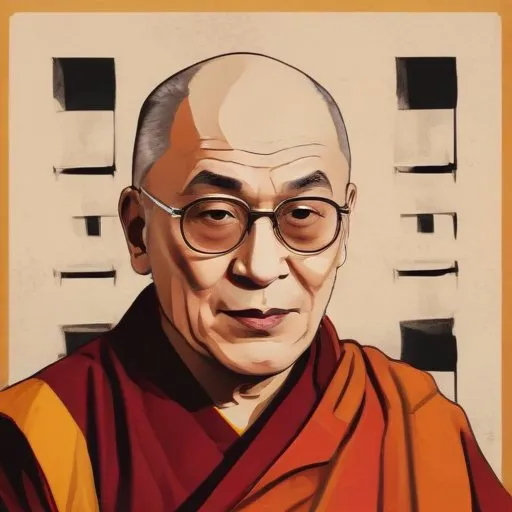
The spiritual leader of Tibetan Buddhism, who ruled Tibet and sought to modernize and secularize the country while maintaining its cultural heritage. He's known for his efforts to resist Chinese occupation and preserve Tibetan independence.
The 13th Dalai Lama, Thubten Gyatso, is revered for his unwavering dedication to reclaiming Tibet's national independence and implementing groundbreaking reforms during a turbulent era in Tibetan history. He is celebrated as the "Great Thirteenth," a testament to his profound impact on the region and its people.
Born on February 12, 1876, in the village of Thakpo Langdun, Tibet, to peasant parents Kunga Rinchen and Lobsang Dolma, the 13th Dalai Lama was recognized as the reincarnation of the Dalai Lama in 1878. He was escorted to Lhasa and given his pre-novice vows by the Panchen Lama, Tenpai Wangchuk, and named Ngawang Lobsang Thupten Gyatso Jigdral Chokley Namgyal.
In 1879, he was enthroned at the Potala Palace, but did not assume political power until 1895, after reaching maturity. Thubten Gyatso proved to be an intellectual reformer and skilled politician, countering the British expedition to Tibet and restoring discipline in monastic life. He also increased the number of lay officials to avoid excessive power being placed in the hands of the monks.
Thubten Gyatso's vision for an independent and modernized Tibet continues to inspire generations of Tibetans. His efforts to promote education, improve infrastructure, and foster economic growth paved the way for Tibet's development in the 20th century.
The 13th Dalai Lama was a devout practitioner of Buddhism and adhered to the principles of compassion, wisdom, and non-violence. He believed in the importance of education and intellectual pursuits, recognizing their potential to empower Tibetans and secure their future.
Thubten Gyatso's remarkable life and achievements are set against the backdrop of the Qing Dynasty's collapse and the British Empire's expansion into Tibet. Despite these challenges, he remained resolute in his commitment to Tibetan independence and progress.
"The mind is everything; what you think, you become." - 13th Dalai Lama
Thubten Gyatso's remarkable life, marked by courage, wisdom, and unwavering dedication to his people, serves as a beacon of inspiration for generations to come. His vision for a free and modernized Tibet continues to resonate, a testament to the enduring power of his leadership and ideals.
Born in 1876
The spiritual leader of Tibetan Buddhism, who ruled Tibet and sought to modernize and secularize the country while maintaining its cultural heritage. He's known for his efforts to resist Chinese occupation and preserve Tibetan independence.
Born in 1876
The spiritual leader of Tibetan Buddhism, who ruled Tibet and sought to modernize and secularize the country while maintaining its cultural heritage. He's known for his efforts to resist Chinese occupation and preserve Tibetan independence.
Born in 1876
The spiritual leader of Tibetan Buddhism, who ruled Tibet and sought to modernize and secularize the country while maintaining its cultural heritage. He's known for his efforts to resist Chinese occupation and preserve Tibetan independence.
Born in 1805
The spiritual leader of Tibetan Buddhism, guiding millions on a path of compassion and inner peace, and advocating for Tibetan autonomy.
Born in 1805
The spiritual leader of Tibetan Buddhism, guiding millions on a path of compassion and inner peace, and advocating for Tibetan autonomy.
Born in 1805
The spiritual leader of Tibetan Buddhism, guiding millions on a path of compassion and inner peace, and advocating for Tibetan autonomy.
Born in 1805
The spiritual leader of Tibetan Buddhism, guiding millions on a path of compassion and inner peace, and advocating for Tibetan autonomy.
Born in 1805
The spiritual leader of Tibetan Buddhism, guiding millions on a path of compassion and inner peace, and advocating for Tibetan autonomy.
