


The Philippines takes a significant step towards democratization with the ratification of a new constitution, marking a major milestone in the country's journey towards freedom and self-governance. This historic moment comes in the aftermath of the 1986 People Power Revolution, which ousted the authoritarian regime of Ferdinand Marcos and paved the way for a new era of democratic governance.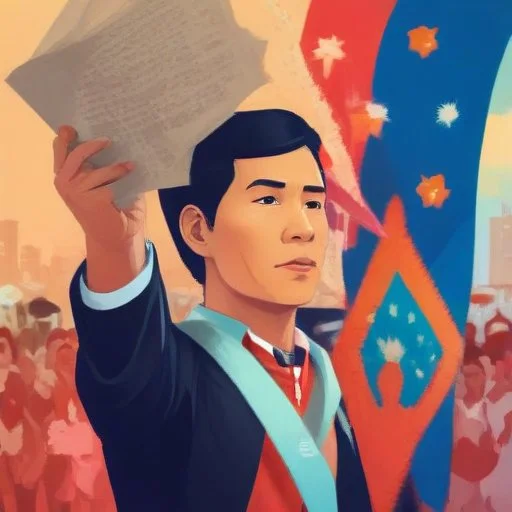
The Marcos regime, which lasted from 1965 to 1986, was marred by corruption, nepotism, and human rights abuses. The regime's grip on power was finally broken when a series of protests and demonstrations, led by Corazon Aquino, the widow of assassinated opposition leader Benigno Aquino Jr., forced Marcos to flee the country in February 1986. The People Power Revolution, as it came to be known, was a bloodless coup that brought an end to Marcos' authoritarian rule.
In the aftermath of the revolution, a Constitutional Commission was established to draft a new constitution that would enshrine the principles of democracy, human rights, and social justice. The commission, composed of 50 members from various sectors of society, worked tirelessly to craft a document that would reflect the aspirations and values of the Filipino people.
Meanwhile, Corazon Aquino, who had become the symbol of the People Power Revolution, was sworn in as President of a provisional government. She quickly set about restoring democratic institutions, releasing political prisoners, and reviving the country's economy. The new government also established a special commission to investigate human rights abuses committed during the Marcos regime.
The new constitution, ratified on February 2, 1987, enshrines several key principles that have shaped the country's governance and politics. Some of the notable provisions include:
The 1987 Philippine Constitution has had a lasting impact on the country's politics and governance. It has provided a framework for democratic governance, protected human rights, and promoted social justice. The document has also served as a model for other countries in the region, inspiring similar efforts towards democratization and constitutional reform.
In the words of President Corazon Aquino, "The constitution is not just a piece of paper. It is a living document that reflects our hopes, our dreams, and our aspirations for a better future."
The 1987 Philippine Constitution is a testament to the power of people's struggle and the importance of democratic governance. It serves as a reminder that, even in the darkest of times, the collective actions of citizens can bring about change and pave the way for a brighter future.
The ratification of the 1987 constitution marked the beginning of a new era of reform and progress in the Philippines. The country has since made significant strides in consolidating its democracy, promoting economic growth, and advancing social justice. While challenges remain, the Philippines has emerged as a beacon of hope and democracy in Southeast Asia, inspiring others to follow in its footsteps.
The 1987 Philippine Constitution was a turning point in the country's political history, marking a shift from authoritarian rule to democratic governance. The document's emphasis on human rights, social justice, and checks and balances reflects the country's commitment to democratic values.
The constitution's impact on the country's political landscape was significant, as it led to the establishment of a more representative and accountable government. The provision for a presidential system, separate from the legislative and judicial branches, ensured that power was decentralized and prevented the concentration of authority in one person or institution.

Corazon Aquino, the first female President of the Philippines, played a pivotal role in the country's transition to democracy. Her leadership and vision were instrumental in shaping the 1987 Constitution, which enshrined democratic principles and human rights.
Aquino's commitment to democracy and human rights was unwavering, and she worked tirelessly to promote national unity and reconciliation. Her presidency marked a significant departure from the authoritarian regime of Ferdinand Marcos, and her legacy continues to inspire Filipinos today.
The 1987 Philippine Constitution has had a profound impact on Filipino culture, shaping the country's values and identity. The document's emphasis on human rights, social justice, and democracy has contributed to a more inclusive and participatory society.
The constitution has also influenced the country's artistic and literary scene, with many writers, artists, and musicians drawing inspiration from its themes and ideals. Filipino culture has become more vibrant and diverse, reflecting the country's newfound commitment to democracy and human rights.

The 1987 Philippine Constitution was drafted within a complex geopolitical context. The end of the Cold War and the rise of democratic movements globally created an environment conducive to democratic reforms in the Philippines.
The constitution's emphasis on human rights, social justice, and democracy reflected the country's desire to align itself with international norms and values. The document has since become a model for other countries in Southeast Asia, inspiring similar efforts towards democratization and constitutional reform.
The 1987 Philippine Constitution has had a significant impact on the country's economy, promoting economic growth and development. The document's provisions for social justice and human rights have contributed to a more equitable distribution of wealth and opportunities.
The constitution's emphasis on free market principles and private enterprise has attracted foreign investment, stimulated economic growth, and created new opportunities for Filipinos. While challenges remain, the country's economy has become more resilient and dynamic, thanks in large part to the 1987 Constitution.