


Known for being one of the most pivotal moments in modern Iranian history, the 1989 Iranian Supreme Leader election saw Ali Khamenei emerge as the new Supreme Leader of Iran, following the death and grand funeral of Ayatollah Ruhollah Khomeini.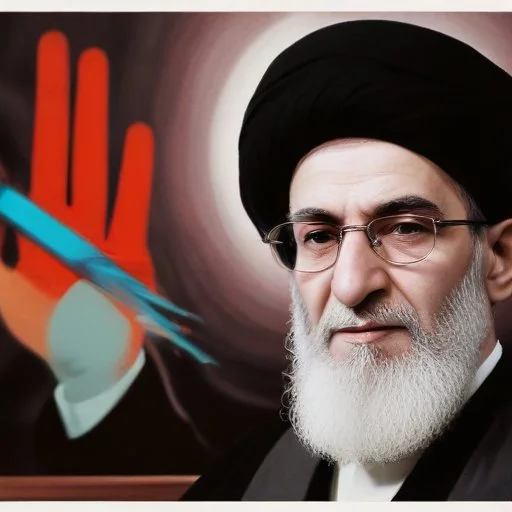
This significant event marked a new chapter in the country's political landscape, solidifying Khamenei's position as the highest authority in the land and shaping Iran's relationships with the world.
In the months leading up to Khomeini's passing, Iran was still reeling from the devastating effects of the Iran-Iraq War. The country was in dire need of a unifying figure, one who could fill the power vacuum left by Khomeini's departure.
Enter Ali Khamenei, a dedicated disciple of Khomeini and former President of Iran. With his background in Islamic studies and his experience in governing, Khamenei was well-positioned to take the reins as the new Supreme Leader.
June 3, 1989: Ayatollah Ruhollah Khomeini passes away, leaving a power vacuum in Iranian politics.
June 4, 1989: Khamenei is elected as the new Supreme Leader of Iran, marking a new era in the country's history.
Khamenei's election had far-reaching implications for Iran's domestic and foreign policies. His leadership style, which blended conservative values with pragmatic governance, helped to stabilize the country and consolidate power.
The election also marked a significant shift in Iran's relationships with the world. Khamenei's government adopted a more hardline stance on international issues, leading to increased tensions with the West.
Khamenei's rise to power was met with widespread support from the Iranian people. His commitment to Islamic values and his role in stabilizing the country earned him a reputation as a strong and capable leader.
The election also had significant cultural implications. Khamenei's government implemented stricter regulations on social behavior, enforcing stricter dress codes and prohibiting Western cultural influences.
Khamenei's leadership style has been the subject of controversy, with critics accusing him of suppressing dissent and restricting individual freedoms.
Despite these criticisms, Khamenei remains a revered figure in Iranian politics, with many Iranians viewing him as a stabilizing force in a turbulent region.
In his memoir, Khamenei recalled the moment he learned of Khomeini's passing, describing it as a "bolt of lightning" that shook the very foundations of the Islamic Republic.
Khamenei's personal account of the event offers a unique glimpse into the thoughts and feelings of the man who would go on to shape Iran's future.
Khamenei's election had a profound impact on Iran's future, shaping the country's relationships with the world and cementing his position as the highest authority in the land.
The event also marked a turning point in the Middle East, with Iran emerging as a major player in regional politics.
In conclusion, the 1989 Iranian Supreme Leader election was a pivotal moment in modern Iranian history, marking the beginning of a new era in politics and cementing Ali Khamenei's position as the highest authority in the land.
Ayatollah Khomeini's Legacy
As the founder of the Islamic Republic of Iran, Ayatollah Khomeini's influence on the country's politics and society cannot be overstated. His charismatic leadership and unwavering commitment to Islamic values earned him a revered status among Iranians.
Despite his passing, Khomeini's legacy continues to shape Iran's domestic and foreign policies, with Ali Khamenei drawing heavily from his mentor's ideology.

Iran's Political Landscape
The 1989 Iranian Supreme Leader election marked a significant shift in the country's political landscape. Ali Khamenei's election cemented the Islamic Republic's transition from a revolutionary state to a more institutionalized government.
The move signaled a new era of pragmatism in Iranian politics, with Khamenei seeking to balance ideological purity with the practical necessities of governance.
The Cultural Significance of Khamenei's Rise
Ayatollah Khamenei's election had a profound impact on Iranian culture, as he sought to promote a more Islamist and traditionalist society. His government's efforts to enforce stricter dress codes and prohibit Western cultural influences were seen as a crucial step in preserving Iran's cultural identity.
The cultural shift was also reflected in the country's education system, with a greater emphasis placed on Islamic studies and traditional values.
The Geopolitical Context of Khamenei's Election
The 1989 Iranian Supreme Leader election took place against the backdrop of a rapidly changing geopolitical landscape. The end of the Iran-Iraq War and the decline of Soviet influence in the region created a power vacuum that Iran sought to fill.
Khamenei's election marked a turning point in Iran's foreign policy, as the country began to assert its influence in the region and challenge Western dominance.
Historiographical Perspectives on Khamenei's Rise
Historians have offered varying interpretations of Ali Khamenei's rise to power, with some viewing it as a natural continuation of the Islamic Revolution and others seeing it as a pragmatic response to the power vacuum left by Ayatollah Khomeini's passing.
Some scholars have argued that Khamenei's election marked a decisive shift away from the radicalism of the early revolutionary period, towards a more pragmatic and institutionalized form of governance.