


On August 18, 1920, the 19th Amendment to the United States Constitution went into effect, etching a monumental milestone in the annals of American history – granting women the long-fought right to vote. This triumph marked the culmination of decades of tireless struggle, as women from all corners of the country rose up to demand equal participation in the democratic process.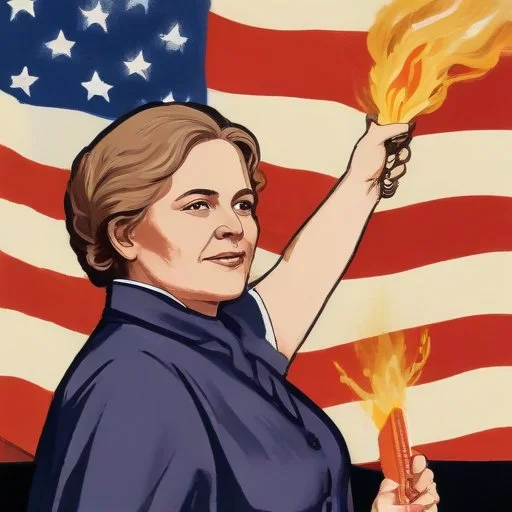
The fight for women's suffrage had its roots in the early 19th century. Women like Elizabeth Cady Stanton and Lucretia Mott, who attended the Seneca Falls Convention in 1848, began to organize and vocalize their demands for equal rights. The women's suffrage movement gained momentum during the Civil War era, as women like Susan B. Anthony and Alice Paul joined the fray.
1913: The suffrage movement gains momentum as Alice Paul organizes a massive march on Washington, D.C., demanding women's right to vote.
1917: The National Woman's Party is founded, with Alice Paul at its helm. The party adopts more radical tactics, including picketing and hunger strikes, to draw attention to the cause.
1919: The 19th Amendment is passed by Congress, but it still requires ratification by 36 states to become law.
August 18, 1920: The 19th Amendment is ratified, securing women's right to vote.
The 19th Amendment's ratification marked a seismic shift in American democracy, as women finally gained a voice in the country's political process. This landmark victory inspired a wave of women to engage in politics, run for office, and shape the country's future.
The women's suffrage movement inspired a broader cultural shift, as women began to challenge traditional gender roles and assert their independence. The movement paved the way for future generations of women to pursue careers in politics, law, and other male-dominated fields.
"Failure is impossible." – Susan B. Anthony
The women's suffrage movement is a testament to the power of perseverance and determination. The courageous women who fought for this fundamental right continue to inspire generations, reminding us that even the most daunting obstacles can be overcome with collective effort and unwavering dedication.
In the words of Elizabeth Cady Stanton, "The moment we begin to fear the opinions of others and hesitate to tell the truth that is in us, and from motives of policy are silent when we should speak, the divine floods of light and life no longer flow into our souls."
Alice Paul, the founder of the National Woman's Party, was a trailblazing suffragist who brought a new level of militancy to the women's rights movement. Born in 1885, Paul was inspired by the nonviolent resistance of Mahatma Gandhi and the labor movements in Britain. She applied these tactics to the suffrage struggle, organizing pickets, hunger strikes, and demonstrations that captivated the nation's attention.
Paul's leadership style was marked by her unwavering commitment to the cause and her willingness to challenge the status quo. She was imprisoned several times for her activism, but continued to advocate for women's rights from behind bars.

The women's suffrage movement had a profound impact on American culture, extending far beyond the realm of politics. As women asserted their right to participate in the democratic process, they also began to challenge traditional gender roles and social norms. The movement paved the way for a broader cultural shift, as women began to pursue careers, education, and personal independence.
The suffrage movement also influenced the arts, with women writers, artists, and musicians using their creative voices to advocate for women's rights. The movement inspired a new wave of feminist literature, art, and music that continued to shape American culture in the decades that followed.
The women's suffrage movement is a testament to the power of collective action and grassroots organizing. From the early protests and petitions to the later mass demonstrations and lobbying efforts, the movement was driven by the collective energy and determination of thousands of women.
The movement's success was also due in part to its ability to adapt and evolve over time, incorporating new strategies and tactics as the political landscape shifted. By building coalitions, mobilizing supporters, and leveraging public opinion, the suffrage movement was able to overcome decades of resistance and achieve its ultimate goal.

The passage of the 19th Amendment marked a significant turning point in the historiography of American democracy. The amendment's ratification represented a fundamental shift in the relationship between the state and its citizens, expanding the franchise and redefining the boundaries of citizenship.
Historians have long recognized the importance of the suffrage movement as a catalyst for broader social and political change. By examining the movement's evolution and impact, scholars have shed new light on the complexities of American democracy and the ongoing struggle for civil rights and social justice.
The women's suffrage movement offers a rich opportunity for interdisciplinary teaching and learning, encompassing history, civics, literature, and women's studies. By incorporating primary sources, oral histories, and multimedia resources, educators can bring the movement to life and foster a deeper understanding of its significance.
Teachers can also use the suffrage movement to explore broader themes, such as civic engagement, social justice, and the evolution of American democracy. By highlighting the intersectionalities of race, class, and gender, educators can encourage students to think critically about the complex power dynamics at play in American society.