


On February 26, 1924, Adolf Hitler, the enigmatic leader of the Nazi Party, stood trial for his role in the failed Beer Hall Putsch, a coup that shook the foundations of Munich, Germany. Found guilty of high treason, Hitler was sentenced to five years imprisonment, but in a shocking turn of events, he would only serve a mere nine months behind bars.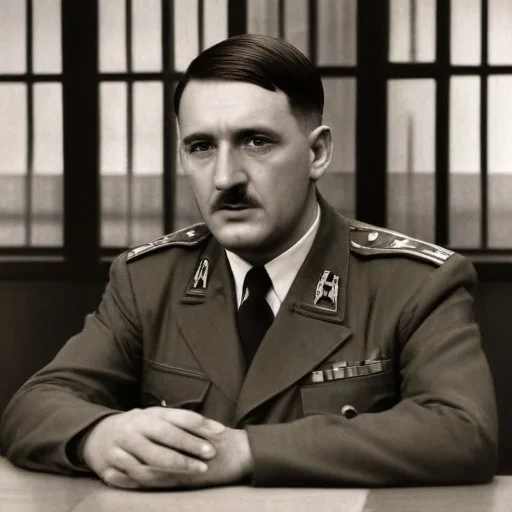
Hitler's time in Landsberg Prison proved to be a period of intellectual ferment, as he dictated his memoir, Mein Kampf, to his loyal deputy, Rudolf Hess. This experience not only honed his radical ideas but also catapulted him to fame, paving the way for his eventual rise to power in Germany.
Post-World War I Germany was marked by political unrest, economic instability, and widespread discontent. Against this backdrop, right-wing groups like the Nazi Party gained momentum, capitalizing on the frustration and disillusionment of the German people.
Adolf Hitler, the charismatic leader of the Nazi Party, was the mastermind behind the Beer Hall Putsch. Alongside him stood General Erich Ludendorff, a decorated war hero, who lent credibility to the ill-fated coup. Other key figures included Rudolf Hess, Hitler's loyal deputy, and Hermann Göring, a key strategist.
Hitler's imprisonment and subsequent release not only failed to quell his ambitions but also provided him with the opportunity to refine his ideas and pen Mein Kampf. The book, which outlined his radical vision for Germany, became a bestseller, catapulting Hitler to fame and solidifying the Nazi Party's position as a force to be reckoned with.
The Beer Hall Putsch, though ultimately unsuccessful, marked a turning point in Hitler's career and the course of German history. The event's controversial legacy continues to be felt today, serving as a poignant reminder of the dangers of extremism and the importance of defending democracy.
As Hitler himself once said, "Those who want to live, let them fight, and those who do not want to fight in this world of eternal struggle do not deserve to live."
One of the most significant factors that contributed to the failed Beer Hall Putsch was the divided loyalties of the German army. Many soldiers were sympathetic to Hitler's cause, but they were also bound by duty to the German government. This internal conflict was exemplified by the role of General Otto von Lossow, who was initially sympathetic to Hitler but eventually turned against him. This division would have far-reaching consequences, as it would influence Hitler's later strategy of infiltrating and co-opting the German army.
Another crucial aspect of the putsch was the involvement of the German police. The police force, led by Commissioner Karl von Seisser, was torn between loyalty to the government and support for the Nazi movement. This ambiguity led to a delayed response to the coup, allowing Hitler and his followers to gain initial control of the city. However, as the situation escalated, the police eventually regained control, leading to the bloody confrontation that marked the putsch's end.

Rudolf Hess: The Loyal Deputy
Rudolf Hess, Hitler's loyal deputy, played a crucial role in the events leading up to the Beer Hall Putsch. As Hitler's trusted confidant, Hess was responsible for transcribing Hitler's memoir, Mein Kampf, during his imprisonment. Hess's unwavering loyalty and dedication to Hitler's cause earned him a special place in the Nazi hierarchy, and he would later become one of the highest-ranking officials in the Third Reich.
The Political Climate of Post-War Germany
The Weimar Republic, established in 1919, was struggling to maintain stability in the face of economic crisis and political unrest. The Nazi Party capitalized on this instability, exploiting the widespread discontent and disillusionment of the German people. The Beer Hall Putsch was a direct result of this volatile political climate, as Hitler and his followers sought to capitalize on the perceived weaknesses of the Weimar government.

The Cultural Significance of Mein Kampf
Mein Kampf, Hitler's memoir and ideological manifesto, had far-reaching cultural implications. The book's publication in 1925 catapulted Hitler to fame, establishing him as a prominent figure in German politics. Mein Kampf also solidified the Nazi Party's position as a force to be reckoned with, outlining Hitler's radical vision for Germany and paving the way for his eventual rise to power.
The Geopolitical Context of the Beer Hall Putsch
The Beer Hall Putsch occurred against the backdrop of heightened geopolitical tensions in Europe. The Treaty of Versailles, imposed on Germany after World War I, had led to widespread resentment and nationalism. The French occupation of the Ruhr Valley in 1923 had further exacerbated tensions, creating an atmosphere of hostility and mistrust. In this context, the putsch can be seen as an attempt by Hitler and his followers to seize control of the German government and challenge the status quo of European politics.