


The Gaza Strip witnessed a pivotal moment in modern Middle Eastern history when Ahmed Yassin, cofounder and leader of the Palestinian Sunni Islamist group Hamas, was killed in a targeted Israeli Air Force attack on March 22, 2004. Alongside Yassin, two loyal bodyguards and nine innocent civilians lost their lives in the precision strike, which marked a significant escalation in the decades-long conflict between Israel and the Palestinians.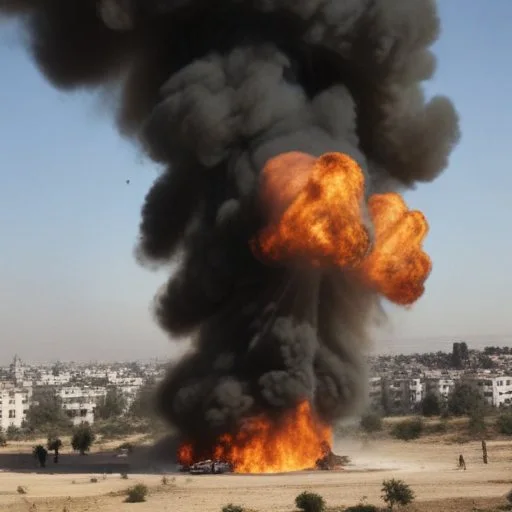
Ahmed Yassin was born in 1936 in the village of al-Juria, near the city of Ashkelon. As a young man, he became involved in the Palestinian nationalist movement, eventually co-founding Hamas in 1987 with Abdel Aziz al-Rantisi. Throughout his life, Yassin was driven by a fervent dedication to the Palestinian cause, often taking a hardline stance against Israel and the occupation of Palestinian territories.
On March 22, 2004, Yassin's life came to a tragic end. As he left a mosque in Gaza City, Israeli Air Force Apache helicopters launched a surprise attack, firing Hellfire missiles that struck Yassin's vehicle. The blast killed Yassin, his two bodyguards, and nine civilians who were in the vicinity, including a 15-year-old boy. The sudden and precise strike sent shockwaves throughout the Palestinian territories, sparking widespread outrage and condemnation from the international community.
The assassination of Ahmed Yassin was met with widespread criticism from governments and international organizations, with many condemning the attack as a violation of human rights and international law. The European Union, the United Nations, and several Arab states denounced the attack, while the United States refused to condemn or condone the action. In the aftermath, Hamas vowed to retaliate, leading to a period of heightened unrest and violence in the region.
Ahmed Yassin's death marked a significant turning point in the Israeli-Palestinian conflict. The event galvanized public opinion against Israel, leading to increased international pressure for a peaceful resolution. Yassin's legacy as a Palestinian leader and symbol of resistance continues to inspire many, with his assassination serving as a rallying cry for the Palestinian nationalist movement. Despite the controversy surrounding his life and death, Yassin remains an important figure in modern Middle Eastern history.
"We will not forget the blood of our martyrs, and we will not forget the blood of Sheikh Ahmed Yassin." - Khaled Mashal, Hamas leader
"The assassination of Sheikh Yassin is a grave mistake. It will only lead to more violence and instability in the region." - Amr Moussa, Arab League Secretary-General (at the time)
The assassination of Ahmed Yassin took place during a critical period in the Israeli-Palestinian conflict, marked by increased violence and terrorism. The event occurred just months after the Israeli government had begun constructing the West Bank barrier, a controversial separation wall aimed at reducing terrorist attacks. This led to heightened tensions between Israel and the Palestinians, with many viewing Yassin's killing as a deliberate attempt to disrupt the fragile peace process.
In the broader geopolitical context, the assassination of Yassin coincided with the ongoing US-led War on Terror, launched in response to the 9/11 attacks. The US government's decision not to condemn the attack reflected its own strategies in the War on Terror, which often involved targeting high-profile terrorist leaders.

Ahmed Yassin's leadership style was marked by a unique blend of political pragmatism and religious zealotry. Despite his hardline stance against Israel, he was known to be open to dialogue and diplomacy, often engaging in secret talks with Israeli officials. This pragmatic approach earned him criticism from more radical elements within Hamas, who viewed him as too soft on Israel.
Yassin's personal life was also marked by tragedy, having been paralyzed from the waist down since the age of 12. This physical limitation did not deter him from becoming a powerful symbol of Palestinian resistance, with many viewing his disability as a testament to his unwavering dedication to the cause.
The assassination of Ahmed Yassin had significant political implications for the Israeli-Palestinian conflict. The attack marked a shift in Israel's policy towards Hamas, from targeting lower-level operatives to directly targeting its leadership. This escalation in force was seen as a deliberate attempt to disrupt Hamas's command structure and weaken its ability to launch attacks against Israel.
In the aftermath of the attack, Hamas vowed to retaliate, leading to a period of increased violence and unrest in the region. The event also sparked a wave of international condemnation, with many viewing the attack as a violation of human rights and international law.

The assassination of Ahmed Yassin had a profound impact on Palestinian culture, with many viewing him as a martyr and symbol of resistance. His death sparked a wave of artistic and cultural expressions, from poetry and music to murals and graffiti, all celebrating his life and legacy.
In the years following Yassin's death, Hamas has actively promoted his image as a symbol of Palestinian nationalism, often depicting him alongside other Palestinian leaders and martyrs. This cultural iconography has helped to cement Yassin's place in Palestinian history, ensuring that his legacy continues to inspire and mobilize Palestinians to this day.
Historians have often debated the significance of Ahmed Yassin's assassination, with some viewing it as a pivotal moment in the Israeli-Palestinian conflict. Others have argued that the event was merely a symptom of a broader cycle of violence and retaliation that has characterized the conflict for decades.
Regardless, Yassin's death has become an important historiographical milestone, marking a shift in the conflict from a focus on territorial disputes to a more ideological struggle between Israeli and Palestinian nationalism. As such, his legacy continues to be felt in the ongoing struggle for Palestinian statehood and self-determination.