


In a brazen display of executive power, Peruvian President Alberto Fujimori, backed by the military, stormed the national congress on April 5, 1992, dissolving the legislative body and suspending the constitution. This drastic measure, dubbed the autogolpe or self-coup, would mark a profound shift in Peru's political landscape, sparking widespread condemnation and concerns about the future of democracy in the country.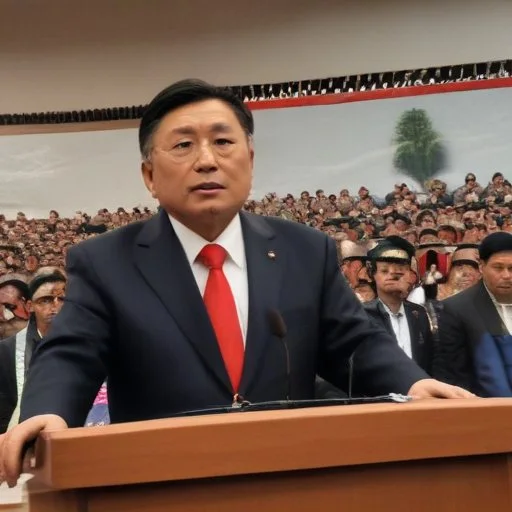
In the early 1990s, Peru was mired in economic crisis, plagued by hyperinflation, corruption, and the lingering effects of the Shining Path insurgency. Amidst this turmoil, Alberto Fujimori, a relatively unknown politician, emerged as a dark horse candidate in the 1990 presidential election. His pledge to restore order and stability resonated with Peruvians, who saw him as a beacon of hope in a time of crisis.
Initially, Fujimori enjoyed a honeymoon period with congress, working with lawmakers to pass several key reforms. However, as time went on, tensions between the two branches of government began to rise. Congress, dominated by opposition parties, grew increasingly critical of Fujimori's authoritarian tendencies and his handling of the economy. In response, Fujimori began to see the legislature as an obstacle to his vision for Peru, labeling it corrupt and inefficient.
The international community was swift to condemn Fujimori's actions, with human rights organizations and foreign governments expressing outrage and concern for Peru's fragile democracy. The Organization of American States, the United States, and the European Union all imposed sanctions on Peru, further isolating the country.
Domestically, the autogolpe sparked widespread protests and civil unrest, as Peruvians took to the streets to demand the restoration of democracy. The opposition, led by figures like Mario Vargas Llosa, rallied against Fujimori's regime, labeling it a dictatorship.
The autogolpe marked a turning point in Fujimori's presidency, as he consolidated power and began to rule by decree. Although he would go on to win re-election in 1995, his regime was marred by allegations of human rights abuses, corruption, and electoral fraud.
In 2000, amidst growing unrest and international pressure, Fujimori fled Peru, seeking asylum in Japan. He would later be extradited and tried for human rights abuses, ultimately being convicted and sentenced to prison.
The legacy of the autogolpe continues to shape Peru's political landscape, serving as a cautionary tale about the dangers of unchecked executive power and the importance of robust democratic institutions.
The autogolpe of 1992 remains a pivotal moment in Peruvian history, a stark reminder of the fragility of democracy in the face of authoritarian ambition. As Peru continues to navigate the complexities of governance and development, the lessons of Fujimori's coup serve as a potent warning about the importance of protecting the rule of law and the principles of democratic accountability.
Alberto Fujimori: The Enigmatic Leader
Alberto Fujimori, the son of Japanese immigrant parents, was a relatively unknown figure in Peruvian politics before his presidential campaign in 1990. A mathematician and university lecturer by training, Fujimori's rise to power was marked by his outsider status and populist rhetoric. He capitalized on the dissatisfaction of Peruvians with the traditional political elite, presenting himself as a beacon of hope for change.
Fujimori's leadership style was characterized by his authoritarian tendencies, willingness to bypass democratic institutions, and obsession with maintaining power. Despite his controversial methods, Fujimori maintained a significant level of popular support, particularly among the poor and marginalized sections of Peruvian society.
The Geopolitical Context of the Autogolpe
The autogolpe of 1992 occurred against the backdrop of significant geopolitical shifts in the region. The fall of the Soviet Union had created a power vacuum, and the United States was emerging as the sole global superpower. In this context, Fujimori's coup was seen as a challenge to the Washington Consensus and the prevailing neoliberal economic order.
The Organization of American States, dominated by the United States, played a significant role in condemning Fujimori's actions and imposing sanctions on Peru. The European Union, too, was critical of the coup, further isolating Peru in the international community.
The Autogolpe: A Political Power Play
The autogolpe was a masterful display of political maneuvering by Fujimori. By dissolving Congress and suspending the constitution, he effectively eliminated any opposition to his rule. The move allowed him to consolidate power, silence dissenting voices, and push through his own legislative agenda.
Fujimori's use of the military to intimidate lawmakers and impose discipline on the political class was a calculated move to demonstrate his authority. The autogolpe marked a turning point in Fujimori's presidency, as he transitioned from a democratically elected leader to an authoritarian ruler.
The Cultural Impact of the Autogolpe
The autogolpe had a profound impact on Peruvian culture, as the coup marked a shift away from democratic values and towards authoritarianism. The regime's control over the media, education, and cultural institutions led to a significant erosion of critical thinking and dissent.
Artists, writers, and intellectuals, who had previously been critical of Fujimori's government, were forced into exile or silenced. The regime's censorship and repression led to a stifling of creative expression, as many artists chose to self-censor rather than risk persecution.
The Historiographical Debate Surrounding the Autogolpe
The autogolpe has been the subject of intense historiographical debate, with scholars disagreeing on the motivations behind Fujimori's actions. Some have characterized the coup as a necessary evil, arguing that Peru was on the brink of collapse and that Fujimori's drastic measures were required to restore order.
Others have viewed the autogolpe as a naked power grab, emphasizing Fujimori's authoritarian tendencies and his disregard for democratic institutions. Regardless of interpretation, the autogolpe remains a pivotal moment in Peruvian history, with significant implications for the country's political development.