


In a serendipitous moment that would alter the face of medicine forever, Scottish biologist Alexander Fleming stumbled upon a peculiar mold growing in his laboratory in 1928. This chance discovery would lead to the identification of penicillin, a revolutionary antibiotic that would go on to save countless lives and transform the treatment of bacterial infections.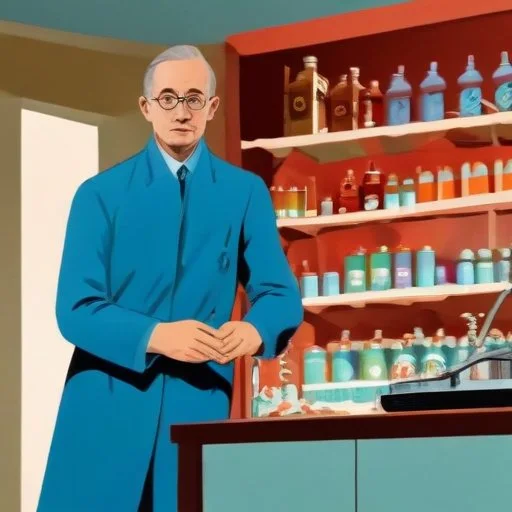
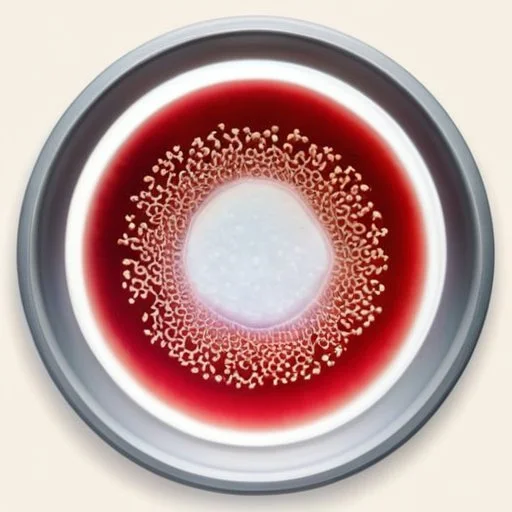
Fleming, a meticulous researcher, was working in his cluttered laboratory at St. Mary's Hospital in London when he noticed something unusual. A mold had contaminated one of his bacterial cultures, and the surrounding bacteria were dying. The mold, which would later be identified as Penicillium notatum, was inhibiting the growth of the surrounding bacteria, creating a clear zone around itself.
Fleming's curiosity was piqued, and he decided to investigate further. He isolated the substance responsible for the antibacterial properties, naming it penicillin. This breakthrough discovery sparked a chain reaction of events that would change the way doctors treated bacterial infections.
The discovery of penicillin marked the beginning of a new era in medicine. Doctors could now treat bacterial infections with a potent antibiotic, reducing the risk of death and improving patient outcomes. Fleming's discovery paved the way for the development of modern antibiotics, revolutionizing the treatment of a wide range of bacterial infections.
Fleming's discovery of penicillin has had a profound impact on medicine. The antibiotic has saved countless lives, transformed the treatment of bacterial infections, and paved the way for the development of modern antibiotics. Today, penicillin remains a cornerstone of modern medicine, with millions of people around the world relying on it to treat bacterial infections.
Alexander Fleming's chance observation in his laboratory has inspired generations of scientists and researchers. His discovery of penicillin has led to countless breakthroughs in medicine, cementing his legacy as one of the most important scientists of the 20th century.
"When I woke up just after dawn on September 28, 1928, I certainly didn't plan to revolutionize all medicine by discovering the world's first antibiotic, or bacteria killer. But I suppose that was exactly what I did." - Alexander Fleming
Alexander Fleming was awarded the Nobel Prize in Physiology or Medicine in 1945, along with Howard Florey and Ernst Chain, for their discovery of penicillin and its curative effect in various infectious diseases.
Alexander Fleming's discovery of penicillin was not an isolated incident, but rather a culmination of his years of research in the field of bacteriology. Prior to his famous discovery, Fleming had been studying the properties of staphylococci, a type of bacteria that causes boils and abscesses. His work on staphylococci led him to investigate the effects of lysozyme, an enzyme found in human tears and saliva, on bacterial growth.
Fleming's fascination with the properties of lysozyme was sparked by his observation that it could dissolve bacterial cell walls. He began to experiment with lysozyme, testing its effects on various types of bacteria. It was during one of these experiments that he accidentally contaminated one of his bacterial cultures with a mold, which would later be identified as Penicillium notatum.
Fleming's attention to detail and curiosity about the natural world were key factors in his discovery of penicillin. His years of research and experimentation laid the foundation for his chance observation, which would go on to revolutionize the field of medicine.
Alexander Fleming was a Scottish biologist who made significant contributions to the field of medicine. Born on August 6, 1881, in Ayrshire, Scotland, Fleming was raised on a farm and developed a strong interest in science and nature from an early age.
Fleming's passion for science led him to pursue a career in medicine, and he earned his medical degree from St. Mary's Hospital Medical School in London. He served in World War I as a captain in the Royal Army Medical Corps, where he witnessed firsthand the devastating effects of bacterial infections.
After the war, Fleming returned to St. Mary's Hospital, where he began his research on bacteriology. His dedication to his work and his perseverance in the face of obstacles earned him the respect of his peers and ultimately led to his discovery of penicillin.
The discovery of penicillin had a profound impact on popular culture, symbolizing a major breakthrough in the fight against bacterial infections. The antibiotic became a beacon of hope for people around the world, inspiring countless works of art, literature, and music.
In the 1940s and 1950s, penicillin became a cultural phenomenon, with its image appearing on posters, advertisements, and even souvenirs. The antibiotic was hailed as a miracle drug, and its discovery was seen as a testament to human ingenuity and scientific progress.
Penicillin also had a significant impact on the music industry, with songs like "Penicillin Boogie" and "The Penicillin Polka" becoming popular hits. The antibiotic even inspired a film, "The Penicillin War," which told the story of Fleming's discovery and its impact on society.
Alexander Fleming's discovery of penicillin marked a significant turning point in the history of medicine, paving the way for a new era of antibiotic development. The discovery of penicillin led to a deeper understanding of the role of microorganisms in disease and sparked a wave of research into the development of new antibiotics.
Fleming's work on penicillin also laid the foundation for the development of modern medicine, enabling doctors to treat a wide range of bacterial infections. The discovery of penicillin saved countless lives and revolutionized the treatment of diseases such as pneumonia, meningitis, and septicemia.
Today, penicillin remains a cornerstone of modern medicine, with millions of people around the world relying on it to treat bacterial infections. Fleming's discovery of penicillin continues to inspire scientific innovation, driving research into the development of new antibiotics and treatments.
The discovery of penicillin had a profound impact on the development of modern medicine, enabling doctors to treat a wide range of bacterial infections. The antibiotic's ability to target and kill bacterial cells led to a significant reduction in mortality rates from bacterial infections.
Penicillin's impact on medicine extends beyond its ability to treat bacterial infections. The antibiotic's discovery paved the way for the development of modern pharmacology, enabling the creation of new drugs and treatments for a range of diseases.
The discovery of penicillin also sparked a technological revolution in the field of medicine, driving innovation in fields such as microbiology, immunology, and biochemistry. Today, penicillin remains a vital tool in the fight against bacterial infections, with researchers continuing to develop new antibiotics and treatments to combat the growing threat of antibiotic resistance.