Confederate General Robert E. Lee addresses his troops for the last time.
Robert E. Lee, the Confederacy's most revered general, stood before his weary troops, his eyes once burning with defiance now dimmed by defeat. The day before, he had surrendered to Union forces, bringing an end to the brutal American Civil War. As he gazed out at the rows of exhausted faces, he knew this would be his final address to the men who had fought alongside him. With a heavy heart, he praised their bravery, their loyalty, and their sacrifice. Though the cause was lost, he urged them to return to their homes, to rebuild, and to rebuild as one nation. It was a poignant farewell, a bittersweet goodbye to a war that had ravaged the nation.
A Bittersweet Farewell: Robert E. Lee's Final Address to the Confederate Army
The End of an Era: A Day of Defeat and Reflection
The American Civil War, one of the most devastating conflicts in human history, finally drew to a close on April 9, 1865, when Confederate General
Robert E. Lee surrendered to Union forces at Appomattox Courthouse. The following day, Lee stood before his weary troops, his eyes dimmed by defeat, to deliver his final address – a poignant farewell to the men who had fought alongside him for four long years.
A General's Gratitude and Admonition
As Lee gazed out at the rows of exhausted faces, he praised their bravery, loyalty, and sacrifice. Though the cause was lost, he urged them to return to their homes, to rebuild, and to rebuild as one nation. His words were laced with a sense of defeat, but also with a profound sense of pride and admiration for the men who had stood by him throughout the war.
A War-Torn Nation: The Aftermath of Appomattox
The American Civil War had ravaged the nation, claiming the lives of over 620,000 soldiers and civilians. The conflict had left deep scars, both physical and emotional, and the task of rebuilding and reunifying the nation seemed almost insurmountable. Yet, in the midst of defeat, Lee's final address to his troops offered a glimmer of hope – a chance to lay down arms and work towards a brighter future.
The Man Behind the Myth: Robert E. Lee
Robert E. Lee, the Confederacy's most revered general, was a complex and multifaceted figure. A West Point graduate and Mexican-American War veteran, Lee had risen through the ranks of the United States Army before resigning to take command of the Confederate forces. Despite his bravery and tactical genius, Lee was also a product of his time, owning slaves and fighting to preserve the institution of slavery.
Timeline of Events
- April 9, 1865: Robert E. Lee surrenders to Union forces at Appomattox Courthouse, effectively ending the American Civil War.
- April 10, 1865: Lee delivers his final address to the Confederate Army.
- April 26, 1865: General Joseph E. Johnston surrenders to Union forces in North Carolina, marking the last major Confederate surrender.
Major Outcomes and Impacts
The American Civil War had far-reaching consequences, shaping the course of American history in profound ways.
- The abolition of slavery: The war led to the eventual abolition of slavery in the United States, marking a major milestone in the struggle for equality and justice.
- Preservation of the Union: The war preserved the unity of the United States, ensuring that the nation would remain a single, indivisible entity.
- Reconstruction and Reconciliation: The war paved the way for the Reconstruction Era, during which the nation attempted to rebuild and redefine itself.
Personal Accounts and Anecdotes
In his final address, Lee is said to have been overcome with emotion, his voice cracking as he spoke of the sacrifices made by his men.
One soldier, Captain A. D. Payne, recalled the scene: "The General's eyes were red and swollen, and his voice was trembling with emotion. He spoke of our bravery, our loyalty, and our devotion to the cause. He told us to go home, to rebuild, and to be good citizens."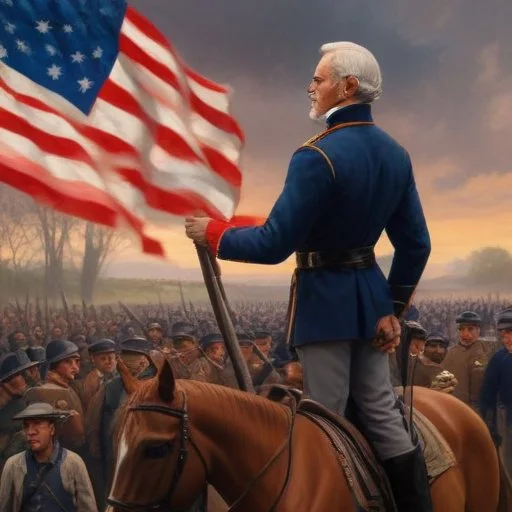
Impact on Future Events
Lee's final address to his troops had a profound impact on the course of American history, setting the tone for the Reconstruction Era and beyond.
- Reconciliation and Reunion: Lee's words of reconciliation and unity helped to ease the transition from war to peace, paving the way for the Reconstruction Era.
- Rebuilding and Recovery: The address marked the beginning of a new era of rebuilding and recovery, as the nation worked to heal its wounds and rebuild its infrastructure.
Legacy and Lasting Impact
Robert E. Lee's final address to the Confederate Army is remembered as a poignant and powerful moment in American history, a testament to the bravery and sacrifice of the soldiers who fought on both sides of the conflict. As a symbol of reconciliation and unity, Lee's words continue to resonate today, offering a message of hope and healing in the face of adversity.
Character Overview
The Complexities of Robert E. Lee's Character
Robert E. Lee's decision to surrender at Appomattox Courthouse was not only a military defeat but also a personal crisis. As a man of strong convictions, Lee had dedicated himself to the Confederate cause, yet he was also a pragmatist who recognized the futility of continuing the war.
Lee's character was a paradox of strength and weakness, courage and doubt. He was a skilled military tactician who had won several battles against superior Union forces, but he was also a product of his time, shaped by the societal norms of the antebellum South.
Lee's greatest strength was his ability to inspire loyalty and devotion in his soldiers. He was a natural leader who commanded respect without demanding it. However, his greatest weakness was his inability to adapt to changing circumstances, which ultimately led to his defeat.

Document Examination
The Original Document: Lee's Farewell Address
The original document of Robert E. Lee's farewell address is a rare and valuable piece of history. Written in Lee's own hand, the address is a poignant expression of gratitude, admiration, and regret.
The document is a simple, yet powerful, testament to the emotions that Lee felt as he bid farewell to his troops. It is a reminder that, even in defeat, Lee remained a symbol of dignity and honor.
The document is now housed at the Library of Congress, where it remains a popular exhibit among historians and Civil War enthusiasts.
In-Depth Geopolitical Examination
The Geopolitical Context of the American Civil War
The American Civil War was not only a domestic conflict but also a global event with far-reaching implications. The war was fought during a time of rapid industrialization and imperialism, and it had significant consequences for the balance of power in the world.
The war marked a turning point in the global struggle against slavery, as the abolition of slavery in the United States set a powerful precedent for other nations. It also marked a significant shift in the global economy, as the United States emerged as a major industrial power.
The war's impact on global politics was just as significant, as it marked the beginning of the United States' rise as a global superpower.

Economic Consequence Analysis
The Economic Costs of the American Civil War
The American Civil War was one of the most devastating conflicts in human history, with estimated economic costs exceeding $15 billion in 1860s dollars. The war destroyed infrastructure, disrupted trade, and led to widespread poverty and inflation.
The war's economic costs were felt long after the conflict ended, as the nation struggled to rebuild and recover. The war also led to significant changes in the economy, as the government increased its role in the economy and the nation shifted from an agrarian to an industrial economy.
The war's economic costs were compounded by the loss of human capital, as the nation lost over 620,000 soldiers and civilians.
Full Ideological Impact Analysis
The Ideological Legacy of Robert E. Lee's Farewell Address
Robert E. Lee's farewell address was not only a poignant expression of gratitude and admiration but also a powerful statement of ideological principles. The address reflected Lee's commitment to the principles of duty, honor, and country, which had guided him throughout his life.
Lee's address also reflected his belief in the importance of reconciliation and unity, as he urged his soldiers to return to their homes and rebuild their communities. The address marked a turning point in Lee's own ideological journey, as he shifted from a defender of slavery to a advocate for Reconstruction and reconciliation.
The address's ideological legacy continues to resonate today, as it remains a powerful symbol of the importance of forgiveness, reconciliation, and unity.


