


In the midst of the American Civil War, the city of New York experienced three days of unprecedented violence, chaos, and destruction, earning the infamous title of the worst riots in United States history. The New York City draft riots, which began on July 13, 1863, would leave an indelible mark on the city's psyche and forever change the course of American history.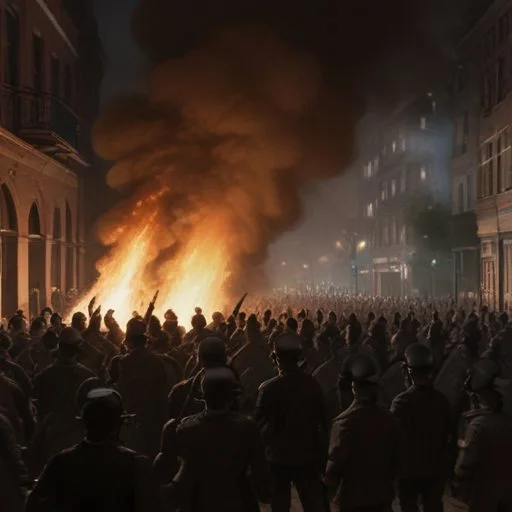
The catalyst for the riots was the introduction of the Conscription Act, passed by Congress in March 1863, which forced men to enlist in the Union army. The working class and immigrants felt disproportionately targeted by the draft, and tensions simmered as they perceived it as an unjust burden.
On July 13, 1863, a group of protesters gathered outside the draft office on Third Avenue. As passions flared, the crowd turned violent, smashing windows, torching buildings, and unleashing chaos upon the city. The riots quickly spread, engulfing Manhattan's streets, and by the end of the three-day rampage, the city lay in shambles.
The draft riots left an estimated 119 people dead, over 300 injured, and countless more displaced. The city's infrastructure and economy were severely impacted, with millions of dollars in damages and destruction.
A few notable figures played a significant role in the draft riots:
The draft riots had far-reaching consequences, including:
In the aftermath of the riots, New York City began the long process of rebuilding and healing. The city emerged stronger, more resilient, and more determined than ever, its people forging a new path forward, forever changed by the dark days of 1863.
The press played a significant role in shaping public opinion during the 1863 draft riots. Newspapers such as the New York Tribune and the New York Herald reported on the events as they unfolded, often sensationalizing the violence and chaos. This coverage helped to fuel public outrage and contributed to the growing sense of unrest in the city.
However, the press also served as a vital source of information for the authorities, providing them with valuable insights into the activities of the rioters and the areas of the city most affected by the violence.
The press's influence extended beyond the local level, with national newspapers such as the New York Times and the Washington Chronicle also covering the events. This widespread coverage helped to bring national attention to the riots, prompting a response from the federal government.
Fernando Wood, the Mayor of New York City during the 1863 draft riots, was a controversial figure known for his radical views and divisive leadership.
Wood, a Democrat, was a vocal opponent of the war effort and the draft, which he saw as an attack on state rights and individual liberties. He was also a strong supporter of the labor movement and the working class, who were disproportionately affected by the draft.
Despite his criticisms of the federal government, Wood's handling of the riots was widely seen as ineffective, and he was accused of exacerbating the violence through his reluctance to deploy troops to quell the unrest.
The 1863 draft riots had a profound impact on the cultural fabric of New York City, exposing deep-seated divisions between different ethnic and socioeconomic groups.
The riots highlighted the tensions between the city's working-class population, who felt disproportionately affected by the draft, and the wealthy elite, who were seen as profiting from the war effort.
The riots also brought to the forefront issues of racism and xenophobia, as African Americans and immigrants were targeted by rioters and accused of being "outsiders" and "traitors" to the city.
The 1863 draft riots had a devastating impact on the economy of New York City, with estimates suggesting that the violence and destruction resulted in over $1 million in damages (equivalent to over $20 million today).
The riots led to a sharp decline in trade and commerce, as businesses were forced to shut down and merchants fled the city.
The city's infrastructure was also severely affected, with many buildings and homes destroyed or damaged, leading to a significant increase in unemployment and homelessness.
The 1863 draft riots had significant political repercussions, highlighting the deep divisions within the government over the war effort and the draft.
The riots led to a worsening of relations between the federal government and the city authorities, with President Lincoln accusing Mayor Wood of failing to take adequate measures to restore order.
The riots also led to a reevaluation of the draft system, with many calling for reforms and exemptions for the wealthy, and others demanding a more equitable distribution of the burden.