


The Siege of Vicksburg is perhaps the most pivotal event in the American Civil War, marking a decisive Union victory that split the Confederacy in two and paved the way for future triumphs. For 47 grueling days, Union forces under the command of Ulysses S. Grant laid siege to the Confederate stronghold in Vicksburg, Mississippi, ultimately forcing General John C. Pemberton's army to surrender, handing over control of the crucial Mississippi River to the Union.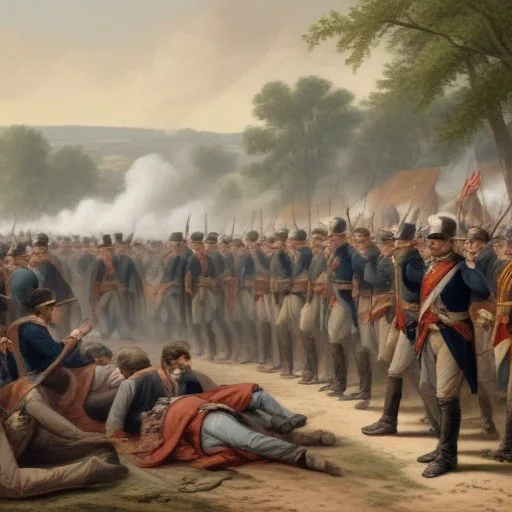
The Siege of Vicksburg was a culmination of the Union's efforts to gain control of the Mississippi River, a vital transportation artery and lifeline for the Confederacy. Vicksburg, situated on the eastern bank of the river, was a strategic location that connected the Confederate states of Texas, Louisiana, and Arkansas to the rest of the South.
The Siege of Vicksburg had far-reaching consequences for the Confederacy. The loss of Vicksburg and control of the Mississippi River:
Grant's resolve was tested during the siege, as he faced opposition from his own generals and uncertainties about the outcome. In a letter to his wife, Julia, Grant wrote: "I am now confident that Vicksburg will be ours, and that the flag of the Union will soon float over its walls."
The Siege of Vicksburg was not without controversy. Grant's decision to bombard the city, resulting in heavy civilian casualties, was criticized by some as excessively brutal. However, Grant's perseverance and eventual victory earned him widespread acclaim and recognition as a master strategist.

The Siege of Vicksburg serves as a testament to the power of perseverance and strategic thinking. Grant's determination to capture the city, despite initial setbacks and opposition, inspired his troops and ultimately led to a decisive Union victory.
The Siege of Vicksburg remains an iconic event in American history, a poignant reminder of the sacrifices made during the Civil War and the importance of strategic leadership in the face of adversity.
As the besieged city of Vicksburg lay in ruins, its citizens faced the harsh realities of war. Buildings were reduced to rubble, infrastructure was destroyed, and the once-thriving economy was in shambles. The city's beautiful antebellum architecture, once a testament to its prosperity, was now nothing more than a memory.
The bombardment of the city had taken a devastating toll on its civilian population. Many residents had fled, seeking refuge in safer areas, while others remained, struggling to survive amidst the chaos. Food and water were scarce, and disease was rampant.
Despite the devastation, the people of Vicksburg showed remarkable resilience in the face of adversity. They banded together, forming community organizations to help those in need and rebuild their shattered city.
Joseph E. Johnston, a senior Confederate general, played a crucial role in the Siege of Vicksburg, albeit an indirect one. Although he was not present during the siege, his decisions had far-reaching consequences for the Confederate army.
Johnston, a staunch critic of Jefferson Davis, had long clashed with the Confederate president over military strategy. He advocated for a more aggressive approach, while Davis preferred a defensive stance.
As the siege wore on, Johnston's failure to reinforce Pemberton's army with sufficient troops proved disastrous for the Confederacy. His reluctance to act decisively allowed Grant's army to gain the upper hand, ultimately leading to Vicksburg's fall.
The Siege of Vicksburg had a profound impact on American culture, symbolizing the nation's struggle for unity and freedom. The fall of the city marked a turning point in the Civil War, inspiring countless works of literature, art, and music.
The siege's significance extended beyond the battlefield, influencing the way Americans perceived themselves and their place in the world. It became a powerful symbol of resistance, perseverance, and redemption.

The Siege of Vicksburg had far-reaching geopolitical consequences, reshaping the balance of power in North America. The Mississippi River, once a vital artery for the Confederacy, was now under Union control, crippling the South's economy.
The fall of Vicksburg also had significant implications for the border states, forcing Missouri, Kentucky, and Tennessee to reevaluate their allegiances. The Union's victory solidified its grip on these key states, paving the way for future conquests.
The international community took notice of the Union's triumph, as European powers began to question the legitimacy of the Confederacy. The British, in particular, were forced to reassess their support for the South, ultimately choosing to remain neutral.
Abraham Lincoln, the 16th President of the United States, faced a daunting political landscape as the Siege of Vicksburg unfolded. His administration was under intense pressure to deliver a decisive victory, while navigating the complex web of alliances and rivalries within the Republican Party.
Lincoln's handling of the siege was a masterclass in politics, as he expertly managed the competing interests of his generals, cabinet members, and congressional leaders. He recognized Grant's potential, entrusting him with the command despite initial reservations.
The fall of Vicksburg was a political coup for Lincoln, providing much-needed momentum for his presidency and setting the stage for the ultimate defeat of the Confederacy.