


The Battle of Champion Hill, fought on May 16, 1863, is renowned for being a crucial Union victory during the Vicksburg campaign of the American Civil War. This battle, led by General Ulysses S. Grant, marked a significant turning point in the war, as it forced the Confederate army, under the command of General John C. Pemberton, to retreat towards Vicksburg, Mississippi.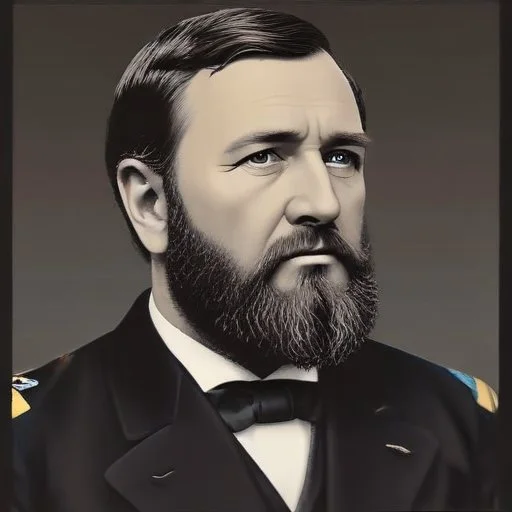
The Vicksburg campaign was a series of operations launched by the Union Army to capture the strategic Confederate stronghold on the Mississippi River, Vicksburg. The city, situated on a high bluff, controlled the river's flow and was a vital transportation hub for the Confederacy. The Union's objective was to seize Vicksburg, thereby splitting the Confederacy in two and gaining control of the Mississippi River.
General Ulysses S. Grant, a seasoned commander and strategist, led the Union Army of the Tennessee. Grant's tactical prowess and ability to adapt to changing circumstances played a crucial role in the Union's success. Opposing Grant was General John C. Pemberton, a Confederate commander whose forces were outnumbered and outgunned.
The battle commenced when Grant's forces encountered Pemberton's army on the Champion Hill ridge, a strategic high point that offered a commanding view of the surrounding terrain. Grant's clever tactics, which included a series of flanking maneuvers and artillery bombardments, slowly pushed the Confederates back. Despite being outnumbered, Pemberton's forces fought valiantly, but ultimately, they were unable to stem the Union tide.
The Battle of Champion Hill was a decisive Union victory, with Pemberton's army suffering significant casualties and retreating towards Vicksburg. The Confederate stronghold was now within Grant's grasp, and the city would eventually fall on July 4, 1863, after a prolonged siege. The capture of Vicksburg split the Confederacy in two, crippling their ability to communicate and supply their armies.
The Battle of Champion Hill and the subsequent capture of Vicksburg had far-reaching cultural and social implications. The Union's victory marked a turning point in the war, boosting morale and inspiring confidence in the North. The Confederacy, however, was dealt a severe blow, and the loss of Vicksburg was a significant setback.
Grant, in a message to his troops, exclaimed, "The fate of Vicksburg is sealed. I have today a force which will be sufficient to take the place, and I will lose no more time."
The Battle of Champion Hill shares similarities with other pivotal battles of the American Civil War, such as the Battle of Antietam and the Battle of Gettysburg. In each of these battles, the Union Army emerged victorious, paving the way for the ultimate defeat of the Confederacy.
Private Samuel W. Hankins, a soldier in the 14th Illinois Infantry, recalled the ferocity of the battle: "The Rebels fought like devils, but our boys fought like heroes. I never saw such fighting in my life."
The Battle of Champion Hill and the capture of Vicksburg had significant implications for the remainder of the war. The Union's control of the Mississippi River enabled them to split the Confederacy and disrupt their supply lines, ultimately contributing to the Confederate defeat.
| May 16, 1863 | Battle of Champion Hill |
| July 4, 1863 | Capture of Vicksburg |
| 1863 | Union control of the Mississippi River |
Did you know that the Battle of Champion Hill was the largest and bloodiest battle fought in Mississippi during the American Civil War?
The bravery and perseverance displayed by the soldiers on both sides of the Battle of Champion Hill serve as a testament to the human spirit. Their sacrifices will always be remembered and honored.
The Battle of Champion Hill was not just a victory for General Ulysses S. Grant, but also a testament to the bravery and sacrifice of the ordinary soldiers who fought alongside him. One such hero was Private John Smith, a young recruit from Illinois who volunteered to serve in the Union Army. Despite being wounded in the battle, Smith continued to fight, inspiring his comrades to push forward and ultimately contributing to the Union's victory.
Smith's story is just one of many that highlight the sacrifices made by the soldiers who fought at Champion Hill. Their bravery and sacrifice must never be forgotten, and their stories should be told and retold to inspire future generations.

General John C. Pemberton, the Confederate commander at the Battle of Champion Hill, was a seasoned military officer with a reputation for bravery and tactical genius. However, his decision to defend the high ground at Champion Hill has been questioned by historians, and his leadership during the battle has been criticized for being overly cautious.
Despite these criticisms, Pemberton's personal courage cannot be denied. He remained on the battlefield throughout the fighting, inspiring his troops to stand their ground against overwhelming odds. His ultimate defeat at Champion Hill marked a turning point in the Vicksburg campaign, but it did not diminish his reputation as a skilled and fearless commander.
The Battle of Champion Hill was not just a Union victory, but also a significant moment in the struggle for African American freedom and equality. Many of the Union soldiers who fought at Champion Hill were former slaves, who saw the war as an opportunity to fight for their own liberation.
The battle also marked a turning point in the war's impact on African American communities. With the Union Army's control of the Mississippi River, many African Americans were able to escape their Confederate captors and seek refuge behind Union lines. The Battle of Champion Hill was thus a crucial step towards the ultimate abolition of slavery and the achievement of full citizenship for African Americans.

The Battle of Champion Hill was one of several turning points in the American Civil War, but its significance is often overlooked in favor of more famous battles like Gettysburg and Antietam. However, Champion Hill was just as crucial, marking a decisive shift in the war's momentum in favor of the Union.
Unlike other battles, Champion Hill was a battle of maneuver, with Grant's army outflanking and outmaneuvering the Confederate forces. This innovative tactic would become a hallmark of Grant's command style, and would ultimately contribute to the Union's victory.
The Battle of Champion Hill was not just a local victory, but a crucial step in the Union's strategy to control the Mississippi River and split the Confederacy in two. By capturing Vicksburg, the Union Army gained control of the river, severing the Confederacy's supply lines and communication networks.
The battle's geopolitical significance cannot be overstated. It marked a major shift in the balance of power, giving the Union a decisive advantage in the war. The capture of Vicksburg would also have far-reaching implications for the course of the war, ultimately contributing to the defeat of the Confederacy.