


The American forces' decisive victory over the British under General John Burgoyne at the Second Battle of Saratoga, also known as the Battle of Bemis Heights, marked a significant turning point in the American Revolutionary War, compelling Burgoyne's eventual surrender and paving the way for French recognition and support of the American cause.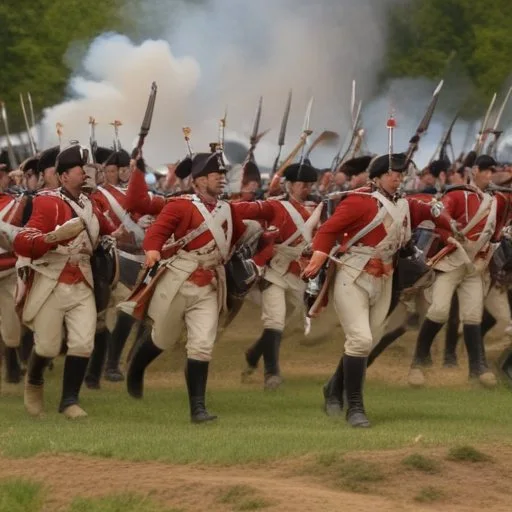
In the summer of 1777, British General John Burgoyne devised a plan to split the American colonies along the Hudson River, thereby isolating New England from the rest of the colonies. He led an army of over 7,000 troops, comprising British regulars, German mercenaries, and loyalist forces, south from Canada, aiming to capture Albany and sever the colonies' communication lines.
In response, American forces under General Horatio Gates concentrated near Stillwater, New York, prepared to confront Burgoyne's army.
The Battle of Bemis Heights resulted in severe casualties for the British, with over 900 killed, wounded, or missing. The Americans suffered around 150 casualties.
The victory at Saratoga convinced France to recognize American independence and provide substantial financial and military aid, significantly shifting the balance of power in the war. The British government, bereft of its best forces, was compelled to reassess its strategy and focus on defending its possessions in the South.
The Battle of Saratoga played a significant role in shaping American identity and morale. The victory boosted confidence in the Continental Army and demonstrated the effectiveness of American forces against their British counterparts.
In the realm of art and literature, the battle inspired numerous works, including poems, songs, and paintings, that celebrated American patriotism and bravery.
“We must all be united, we must all hang together, or assuredly we shall all hang separately.” - Benjamin Franklin, emphasizing the importance of unity in the face of British aggression
“The fate of uncertainty now hangs in the scale, and the God of battles must decide the contest.” - General John Burgoyne, before the Battle of Saratoga
The role of General Benedict Arnold, who was instrumental in the American victory, remains a subject of debate among historians. Arnold's actions during the battle were crucial, but his later defection to the British has led to ongoing discussions about his legacy.
The British government's decision to continue fighting the war despite the Saratoga defeat has been criticized by some as a strategic blunder, while others argue that it was a necessary attempt to salvage British honor and maintain control over its colonies.
| Event | Date | Location |
|---|---|---|
| Battle of Freeman's Farm | September 19, 1777 | Stillwater, New York |
| Battle of Bemis Heights | October 7, 1777 | Saratoga, New York |
| Surrender of British forces | October 17, 1777 | Saratoga, New York |
While General Benedict Arnold is often credited with the American victory at the Battle of Bemis Heights, General Horatio Gates was the commander-in-chief of the Continental Army forces during the Saratoga campaign. Gates' strategic decisions and calm demeanor played a crucial role in the battle's outcome. Despite being overshadowed by Arnold's bravery, Gates' leadership was instrumental in securing the American victory.
Gates' experience as a British officer during the French and Indian War served him well in the Saratoga campaign. He was well-versed in British military tactics and was able to anticipate Burgoyne's movements. Gates' ability to adapt to changing circumstances and make quick decisions was critical in the heat of battle.
The Battle of Saratoga inspired a wave of patriotic art and literature in the late 18th century. Poets such as Philip Freneau and Joel Barlow wrote odes to the American victory, while artists like William Dunlap and John Trumbull created works commemorating the battle.
One of the most famous works inspired by the battle is John Trumbull's painting "The Surrender of General Burgoyne," which hangs in the US Capitol Rotunda. The painting depicts the moment when Burgoyne surrendered his sword to Gates, symbolizing the British defeat.
The American victory at the Battle of Saratoga had far-reaching diplomatic consequences. The defeat was a humiliating blow to British prestige, and it led to a significant shift in British strategy.
In the wake of the battle, the British government began to question the wisdom of continuing the war. The defeat made it clear that the British army was not invincible, and it opened up the possibility of negotiating a peaceful settlement with the Americans.
In the days leading up to the Battle of Bemis Heights, General Burgoyne's army was struggling to make progress. The terrain was difficult, and the army was slowed down by the need to build roads and bridges.
Meanwhile, General Gates was fortifying his position on Bemis Heights, digging trenches and building breastworks to protect his army. The American forces were well-entrenched and well-prepared to defend their position.
The Battle of Saratoga took place against the backdrop of a larger global conflict. The American Revolutionary War was part of a broader struggle between the European powers, with the British, French, and Spanish vying for dominance.
The British strategy of splitting the colonies along the Hudson River was designed to prevent French and Spanish encroachment on British territory. However, the American victory at Saratoga undermined British claims to dominance and paved the way for French recognition of American independence.