


The First Battle of Saratoga, fought on September 19-October 7, 1777, is celebrated as a turning point in the American Revolutionary War, marking a crucial shift in the tide of the conflict. This brutal and decisive encounter saw British forces, led by General John Burgoyne, emerge victorious, but at a devastating cost in men and resources that would ultimately prove unsustainable.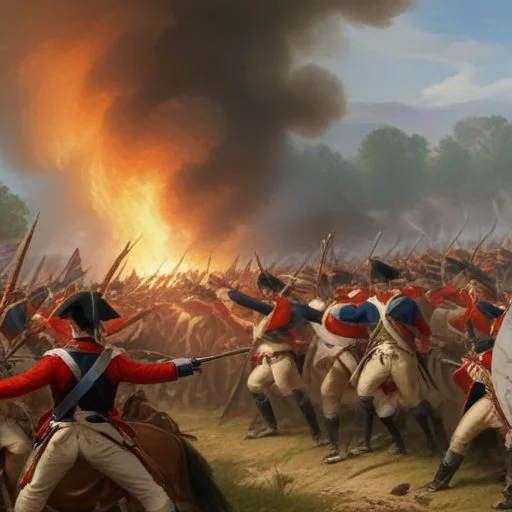
In the summer of 1777, British General John Burgoyne launched an ambitious campaign to split the colonies and force a negotiated settlement. His strategy involved marching south from Canada, linking up with other British forces in New York, and crushing the Continental Army. However, the plan was fraught with difficulties, and Burgoyne's army faced numerous challenges, including treacherous terrain, harsh weather, and a stubborn Continental Army.
The First Battle of Saratoga was a tactical victory for the British, but at an unsustainable cost. The British suffered over 900 casualties, including several high-ranking officers, which crippled their command structure and morale. The Continental Army, although defeated, had inflicted significant losses on the British and proved its ability to resist and adapt. The battle's aftermath saw the French, who had been watching the conflict unfold, declare their support for the American cause, marking a crucial turning point in the war.
The First Battle of Saratoga resonated deeply with the American public, galvanizing support for the Continental Army and bolstering morale. The battle also cemented the reputation of General Horatio Gates, who was hailed as a hero and showered with accolades. The French alliance, secured in part due to the battle's outcome, would go on to play a pivotal role in the war, providing critical financial and military support to the Continental Army.
"The fate of the British army is sealed. They will never be able to recover from this blow." - General Horatio Gates
This quote, attributed to Gates, captures the significance of the battle's outcome and the devastating toll it took on the British army.
One of the most notable stories to emerge from the battle is that of General Benedict Arnold, who, despite being marginalized by Gates, played a crucial role in the fighting. According to legend, Arnold rode into battle, defying Gates' orders, and led a decisive charge that helped to repel the British. This act of bravery and defiance has become an enduring part of American folklore.
The First Battle of Saratoga's significance extends far beyond the battlefield. The battle's outcome and the subsequent French alliance paved the way for the Continental Army's eventual victory at Yorktown, effectively ending the war and securing American independence. The battle's legacy also continues to inspire and educate generations of Americans, serving as a testament to the bravery and resilience of those who fought for their country's freedom.
General John Burgoyne was a complex figure, known for his bravery and tactical acumen, but also criticized for his poor decisions and miscalculations. Born in 1722, Burgoyne was educated at the prestigious Westminster School and later served in the British Army during the Seven Years' War. He was promoted to lieutenant colonel in 1762 and later became a member of Parliament. Despite his aristocratic upbringing, Burgoyne was known for his humble nature and willingness to listen to his subordinates. However, his overconfidence and failure to adapt to changing circumstances ultimately led to his downfall at Saratoga.
Burgoyne's early successes in the war, including the capture of Fort Ticonderoga, had earned him a reputation as a skilled commander. However, his decision to launch a frontal assault on the American forces at Freeman's Farm was a costly mistake. The narrow victory came at a high price, and Burgoyne's army was severely weakened. His subsequent decision to launch a second assault at Bemis Heights was equally ill-fated, and the British suffered a devastating defeat.
Personal LifeLittle is known about Burgoyne's personal life, but it is believed that he was married to a woman named Lady Charlotte Stanley. The couple had no children, and Burgoyne's focus was largely on his military career. Despite his flaws, Burgoyne was a respected leader, and his bravery in the face of adversity earned him admiration from his peers.

The Battle of Saratoga was not a single battle, but rather a series of engagements that took place over several weeks. The first battle, fought on September 19, 1777, was a bloody and inconclusive affair that set the tone for the rest of the campaign. The American forces, led by General Horatio Gates, had taken up a defensive position on Bemis Heights, a strategic location that overlooked the surrounding countryside. The British, led by General John Burgoyne, launched a series of frontal assaults against the American lines, but were repeatedly repelled.
The second battle, fought on October 7, 1777, was a decisive victory for the British. However, the cost was high, and the British suffered heavy casualties. The American forces, although defeated, had inflicted significant losses on the British and had proved their ability to resist and adapt. The battle's aftermath saw the French, who had been watching the conflict unfold, declare their support for the American cause, marking a crucial turning point in the war.
The Battle of Saratoga was a brutal and devastating conflict that left both sides reeling. The British suffered over 900 casualties, including several high-ranking officers, which crippled their command structure and morale. The American forces, although defeated, had proved their mettle and earned the respect of their enemies.
The Battle of Saratoga had a profound impact on American culture, galvanizing support for the Continental Army and bolstering morale. The battle was seen as a symbol of American resistance and defiance against British rule, and it helped to galvanize opposition to the British crown.
The battle also had a significant impact on the arts, inspiring numerous works of literature, music, and art. The American poet Philip Freneau wrote a series of poems commemorating the battle, while the artist John Trumbull created a famous painting depicting the surrender of the British forces. The battle's legacy continues to inspire Americans to this day, serving as a powerful symbol of patriotism and national pride.
The cultural impact of the Battle of Saratoga was not limited to the United States. The battle's outcome helped to shift the balance of power in Europe, convincing France to ally itself with the Americans and paving the way for the French Revolution. The battle's legacy continues to be felt around the world, serving as a powerful symbol of resistance against oppression and tyranny.
The economic impact of the Battle of Saratoga was significant, with both sides suffering heavy losses. The British suffered an estimated £1.3 million in damages, a staggering sum that crippled their economy. The American forces, although victorious, also suffered significant losses, with many of their supplies and equipment destroyed or captured.
The battle's aftermath saw a marked increase in inflation, as the British government struggled to finance its military efforts. The resulting economic instability had far-reaching consequences, contributing to widespread poverty and discontent among the British population. The battle's economic impact continued to be felt for decades, shaping the course of British and American economic policy.
The French alliance, secured in part due to the battle's outcome, had significant economic implications. The French provided critical financial and military support to the Continental Army, helping to turn the tide of the war. The alliance also paved the way for increased trade and commerce between the United States and France, shaping the course of international economic relations.
The political impact of the Battle of Saratoga was profound, with far-reaching consequences for the British government and the American colonies. The battle's outcome led to a shift in British policy, with many calling for a negotiated settlement with the Americans. The British government, realizing the futility of continued military action, began to seek a peaceful resolution to the conflict.
The battle's aftermath saw a marked increase in American patriotism, with many calling for independence from British rule. The Continental Congress, emboldened by the battle's outcome, began to take steps towards declaring independence, paving the way for the signing of the Declaration of Independence in 1778.
The battle's political impact was not limited to the United States. The outcome of the battle helped to shift the balance of power in Europe, convincing France to ally itself with the Americans and paving the way for the French Revolution. The battle's legacy continues to shape international relations to this day, serving as a powerful symbol of resistance against oppression and tyranny.