


The Anglo-Spanish War's most pivotal moment, the Battle of Gravelines, marked the crushing defeat of the Spanish Armada's invasion attempt on England, securing a triumphant victory for the English fleet and solidifying Queen Elizabeth I's reign in 1588. This naval engagement will forever be etched in history as a testament to the bravery and strategic prowess of the English forces.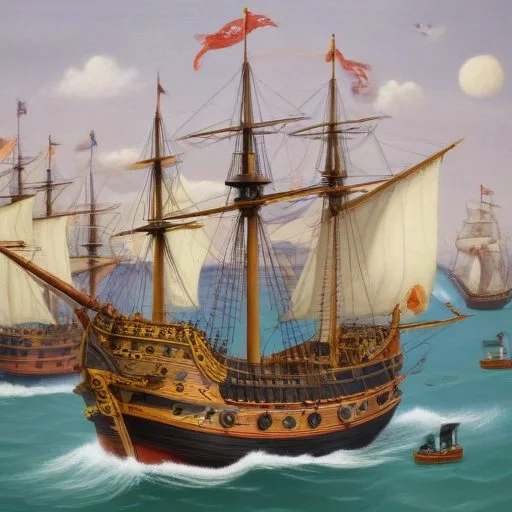
In the late 16th century, the Spanish Empire, under the rule of King Philip II, sought to expand its dominion over Europe. England, with its Protestant leanings, posed a significant threat to Spanish supremacy. The stage was set for a clash of titans, as the mighty Spanish Armada, boasting 130 ships and 25,000 men, sailed towards England to overthrow Queen Elizabeth I and claim the throne for Spain.
Led by Lord Howard of Effingham and Sir Francis Drake, the English fleet, though outnumbered, was a force to be reckoned with. Their smaller, more agile ships were perfectly suited for the treacherous waters of the Channel, allowing them to outmaneuver the lumbering Spanish galleons. The English had been preparing for this moment, and their cunning tactics would soon prove to be the Spanish Armada's downfall.
As the Armada sailed into the Strait of Dover, the English launched a series of surprise attacks, using their speed and agility to devastating effect. The Spanish ships, weighed down by troops and supplies, struggled to keep pace with the English vessels. The battle raged on, with the English employing innovative tactics, such as fire ships, to further demoralize the Spanish forces.
The Spanish Armada was like a great beast, cumbersome and slow, while the English fleet was like a pack of wolves, quick and deadly. – Sir Francis Drake
By the time the battle ended, the Spanish Armada had been battered and bruised, its ships either sunk or scattered, its men exhausted and demoralized. The English had secured a resounding victory, repelling the Spanish invasion and cementing their position as a major naval power. The Armada's defeat marked a turning point in the war, as Spain's grip on Europe began to loosen.
The Battle of Gravelines had far-reaching consequences, not only for Spain and England but also for the future of naval warfare. The English fleet's innovative tactics and adaptability had proven that smaller, more agile ships could outmaneuver larger, more heavily armed vessels. This marked a significant shift in naval strategy, as European powers began to develop faster, more nimble fleets.
The Battle of Gravelines remains one of the most significant naval engagements in history, a testament to the bravery and cunning of the English fleet. It cemented Queen Elizabeth I's reign and marked the beginning of England's rise as a major naval power. Today, the battle is remembered as a pivotal moment in the struggle for European dominance, a shining example of strategic brilliance and naval prowess.
The Spanish Armada's invasion of England was not an isolated event, but rather part of a larger struggle for European dominance. The Protestant Reformation had created a deep divide between Catholic and Protestant nations, and the Spanish Empire saw England as a key prize in their quest for hegemony. The defeat of the Armada marked a significant shift in the balance of power, as England emerged as a major player in European politics.
In the years leading up to the Armada's invasion, England had been engaged in a series of proxy wars with Spain, supporting Dutch rebels and privateers who targeted Spanish shipping. The English had also been making overtures to France, hoping to create a united front against Spanish aggression. The defeat of the Armada marked a turning point in these efforts, as England's newfound confidence on the high seas made them a more attractive ally.
Sir Francis Drake, the English naval commander, was a key figure in the defeat of the Spanish Armada. A privateer and explorer, Drake had spent years raiding Spanish shipping and possessions, earning a reputation as a cunning and ruthless opponent. As the Armada approached, Drake was appointed Vice-Admiral of the English fleet, and his knowledge of the Spanish tactics and his experience in naval warfare proved invaluable.
Drake's leadership during the battle was instrumental in the English victory. He deployed his ships aggressively, using their speed and agility to outmaneuver the lumbering Spanish galleons. His innovative tactics, such as the use of fire ships, further demoralized the Spanish forces and helped to secure the English victory.
The Spanish Armada and the English fleet were vastly different in terms of their composition and tactics. The Armada was a sprawling force, comprising 130 ships and 25,000 men, with a focus on heavy artillery and close-quarters combat. In contrast, the English fleet was smaller and more agile, with a focus on speed and maneuverability.
The two fleets also had different strategic goals. The Armada was tasked with invading England and overthrowing Queen Elizabeth I, while the English fleet was focused on defending their homeland and disrupting the Spanish supply lines. These differences in composition and strategy played a significant role in the outcome of the battle.
The Battle of Gravelines marked a significant shift in naval warfare, as the English fleet's innovative tactics and use of new technologies helped to secure their victory. The English deployment of fire ships, for example, was a precursor to the development of modern naval mines. The use of smaller, faster ships also led to the development of new ship designs and tactics.
The battle also highlighted the importance of gunpowder and cannons in naval warfare. The English fleet's deployment of heavy artillery played a significant role in their victory, and marked the beginning of a new era in naval warfare, where gunpowder and cannons would become the decisive factors in battles at sea.
The Battle of Gravelines has been the subject of much historical debate and interpretation over the centuries. Some historians have seen the battle as a triumph of English bravery and cunning, while others have argued that the Spanish defeat was largely due to bad weather and poor planning.
Recent historiography has sought to move beyond these simplistic interpretations, and to place the battle within the broader context of European politics and naval warfare. This has involved re-examining the role of figures such as Drake and Philip II, as well as the strategic and tactical decisions made by both sides during the battle.