


The Battle of Cuito Cuanavale, fought from 1987 to 1988, is renowned for being the largest and most decisive battle of the Angolan Civil War, wherein a combined force of Angolan and Cuban troops defeated the apartheid regime's South African Defense Force (SADF).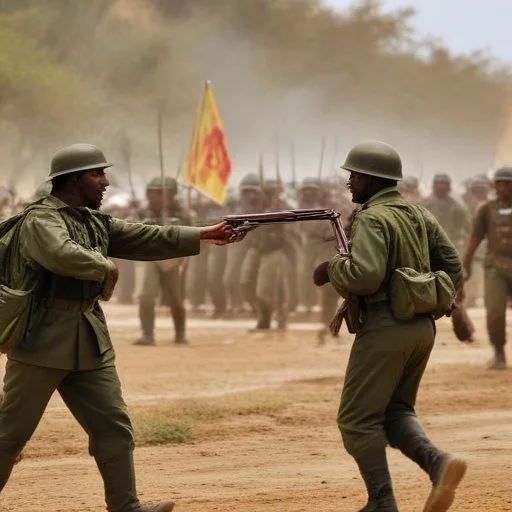
This pivotal conflict, which lasted for nearly 14 months, resulted in a significant routing of the SADF, marking a turning point in the war and ultimately contributing to the withdrawal of South African forces from Angola.
In the aftermath of Angola's independence from Portugal in 1975, the country became embroiled in a protracted civil war between the Marxist-oriented MPLA government and the anti-communist UNITA rebels. South Africa, seeking to maintain its influence in the region and crush the perceived communist threat, intervened militarily in support of UNITA.
In response, Cuba, an ally of the MPLA government, dispatched troops to Angola to counter the South African presence. This complex web of alliances and rivalries would eventually culminate in the Battle of Cuito Cuanavale.
The battle began in August 1987, when the SADF launched Operation Moduler, a concerted effort to capture the strategic town of Cuito Cuanavale. The SADF, bolstered by its superior firepower and air support, initially made significant gains, forcing the Angolan and Cuban forces to retreat.
However, the tides of the battle began to shift in favor of the allies as they regrouped and received additional reinforcements. By December 1987, the SADF's momentum had stalled, and they became increasingly bogged down in a protracted and bloody conflict.
The final push came in May 1988, when the Angolan and Cuban forces launched a decisive counterattack, forcing the SADF to retreat in disarray. The battle officially ended on June 27, 1988, with the signing of the Tripartite Accord, which paved the way for Namibian independence and the withdrawal of South African forces from Angola.
The Battle of Cuito Cuanavale marked a significant setback for the apartheid regime, exposing the limitations of its military power and paving the way for Namibian independence in 1990. The defeat also dealt a severe blow to the SADF's morale, contributing to the eventual dismantling of the apartheid system in South Africa.
Furthermore, the battle cemented the alliances between Cuba and Angola, solidifying their roles as champions of African independence and anti-colonialism. The triumph also boosted the international reputation of the Cuban revolution, demonstrating its willingness to project military power in defense of its allies.
The Battle of Cuito Cuanavale has been immortalized in song, film, and literature, serving as a powerful symbol of African resistance and solidarity. The conflict has inspired numerous artistic works, including the Cuban film "Caravana," which dramatizes the experiences of Cuban soldiers during the battle.
Moreover, the battle has become a rallying cry for anti-apartheid and anti-colonial movements worldwide, evoking a sense of pride and defiance among those who fought against oppression and exploitation.
Despite the significance of the battle, its legacy remains contested. Critics have accused the Cuban and Angolan governments of downplaying their own military losses, while exaggerating the scale of their victory.
Moreover, the battle has been shrouded in controversy due to allegations of human rights abuses committed by all parties involved. The SADF's use of conscripted black soldiers, in particular, has been widely condemned as a morally reprehensible tactic.
Regardless of these controversies, the Battle of Cuito Cuanavale remains an iconic symbol of African resilience and determination, serving as a testament to the power of collective resistance in the face of oppression.
"The Battle of Cuito Cuanavale was a victory for all the peoples of Africa, a demonstration of the strength and solidarity of our continent." - Fidel Castro
"We fought not only for Angola, but for the freedom and dignity of all African nations." - José Eduardo dos Santos
As the dust settles on this seminal conflict, one thing remains clear: the Battle of Cuito Cuanavale will forever be etched in the annals of African history as a beacon of hope and defiance in the face of colonialism and apartheid.
Fidel Castro, the Cuban revolutionary leader, played a crucial role in the Battle of Cuito Cuanavale. His decision to deploy Cuban troops to Angola was a turning point in the conflict, as it countered the South African presence and ultimately led to the defeat of the SADF. Castro's leadership and strategic thinking were instrumental in the success of the Cuban and Angolan forces.
Castro's commitment to African independence and anti-colonialism was evident in his unwavering support for the MPLA government. He saw the struggle in Angola as an opportunity to challenge Western imperialism and to promote socialist ideals. Throughout the battle, Castro maintained close communication with José Eduardo dos Santos, the president of Angola, to ensure a unified front against the SADF.
The Battle of Cuito Cuanavale was a clash of different military strategies, with the SADF employing conventional warfare tactics and the Cuban and Angolan forces relying on guerrilla warfare. The SADF's superior firepower and air support initially gave them the upper hand, but the Cuban and Angolan forces' ability to adapt and regroup ultimately proved decisive.
In contrast to the SADF's traditional military approach, the Cuban and Angolan forces employed unconventional tactics, such as ambushes, sabotage, and hit-and-run attacks. These tactics allowed them to exploit the SADF's weaknesses and wear them down over time.
The battle highlighted the limitations of conventional warfare in the face of asymmetric threats. The SADF's failure to adapt to the changing nature of the conflict ultimately led to their defeat.
The Battle of Cuito Cuanavale has had a profound impact on African culture, inspiring numerous artistic works, including music, film, and literature. The conflict has become a powerful symbol of African resistance and solidarity, evoking a sense of pride and defiance among those who fought against oppression and exploitation.
In Cuba, the battle is celebrated as a triumphant example of internationalist solidarity, demonstrating the country's commitment to anti-colonialism and anti-imperialism. The conflict has also been immortalized in song, with Cuban musicians composing songs that glorify the bravery and sacrifice of the Cuban soldiers who fought in Angola.
The Cuban forces' technological superiority played a significant role in their victory over the SADF. The Cubans deployed advanced surface-to-air missile systems, which neutralized the SADF's air power and forced them to rely on ground attacks. The Cubans also employed sophisticated communication systems, which enabled them to coordinate their forces effectively and respond quickly to SADF attacks.
The SADF, on the other hand, relied heavily on outdated military equipment, which limited their ability to adapt to changing circumstances. Their lack of air support and communication systems left them vulnerable to ambushes and sabotage.
The Battle of Cuito Cuanavale took place within the broader context of the Cold War, with the conflict serving as a proxy war between the Soviet Union and the United States. The Soviet Union provided significant military aid to the MPLA government, while the United States supported UNITA rebels and indirectly backed the SADF.
The battle was also influenced by the regional dynamics of southern Africa, with the apartheid regime in South Africa seeking to maintain its influence in the region and crush the perceived communist threat. The battle marked a significant shift in the balance of power in southern Africa, ultimately contributing to the withdrawal of South African forces from Angola and the independence of Namibia.