


On a fateful day in February 2002, the Angolan jungle witnessed the brutal demise of Jonas Savimbi, the enigmatic leader of UNITA, the National Union for the Total Independence of Angola. For nearly three decades, Savimbi had been a dominant force in Angola's political landscape, fighting for independence and later for control of the country's vast natural resources.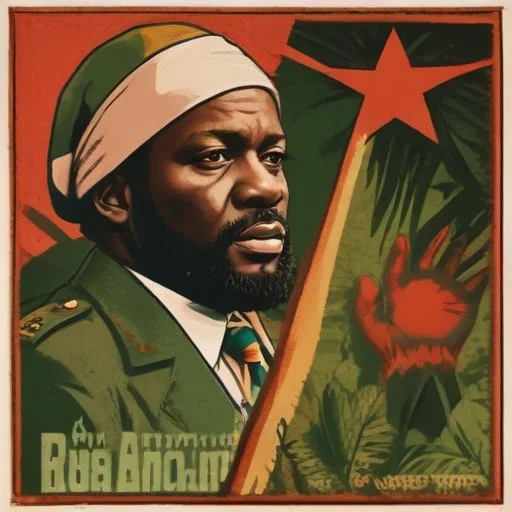
Born in 1934, Jonas Savimbi was the son of a Protestant pastor and was educated in Angola and Portugal. However, it was during his studies in Switzerland that he became influenced by Marxist ideologies and began to develop his nationalist sentiments. Upon his return to Angola, Savimbi joined the MPLA (Popular Movement for the Liberation of Angola) and played a key role in the country's struggle for independence from Portugal.
However, following Angola's independence in 1975, Savimbi's differences with the MPLA-led government led him to form UNITA, which would become the main opposition force in the country. Over the years, UNITA received support from the United States and other anti-communist nations, while the MPLA received backing from the Soviet Union and Cuba.
On February 22, 2002, Savimbi's forces were ambushed by the Angolan army in the Moxico province. The rebel leader was killed in the ensuing battle, along with several of his top commanders. The news of his death sent shockwaves throughout Angola and the international community, marking a significant turning point in the country's history.
Savimbi's death brought an end to the long-running civil war that had ravaged Angola for over two decades. However, his legacy extends beyond the battlefield. He was a charismatic leader who inspired a generation of Angolans to fight for their rights and freedom.
 "We will never surrender. We will fight to the last man."
In the aftermath of Savimbi's death, UNITA agreed to a ceasefire and eventually disbanded its armed forces. The MPLA government, led by President José Eduardo dos Santos, extended an olive branch to the rebels, and a fragile peace was established. The country began to rebuild, and international investments began to flow in.
Jonas Savimbi's death marked the end of an era in Angola's history. While his legacy is complex and multifaceted, his struggle for independence and self-determination continues to inspire generations of Angolans. As the country looks to the future, it remembers the sacrifices of those who fought for its freedom.
The historiography of Jonas Savimbi's life and death is marked by contradictions and complexities. While some portray him as a heroic figure who fought for Angola's independence, others view him as a ruthless warlord who brought destruction to the country. This dichotomy reflects the challenges of writing about a figure who embodied both nationalist and authoritarian tendencies.
Recent revisions to the Angolan history curriculum have sought to nuance the narrative around Savimbi's role, acknowledging his contributions to the country's independence movement while also highlighting the human cost of the civil war. This shift in perspective reflects a broader trend in African historiography, which seeks to move beyond simplistic narratives of heroism and victimhood towards a more nuanced understanding of the continent's complex past.
Early Influences
Jonas Savimbi's early life was marked by a strong sense of nationalism, influenced by his father's sermons and his own experiences of racial discrimination in colonial Angola. His studies in Switzerland introduced him to Marxist ideologies, which would shape his political worldview and inform his later leadership of UNITA.
Savimbi's relationships with other key figures, such as Holden Roberto and Agostinho Neto, were also crucial in shaping his political trajectory. While he was often at odds with these figures, they shared a common goal of Angolan independence and self-determination.
Jonas Savimbi's legacy extends beyond the political arena, with his image and ideology inspiring a range of cultural expressions. In Angola, he is often depicted in music and art as a symbol of national resistance and defiance.
In the diaspora, Savimbi's legend has been reclaimed by some as a symbol of black power and anti-colonial resistance. His image has been immortalized in hip-hop lyrics, street art, and social media, reflecting the ongoing resonance of his message.

The political landscape of Angola was forever changed by Jonas Savimbi's death. The MPLA government, led by President José Eduardo dos Santos, was able to consolidate its power and establish a fragile peace. However, the power vacuum created by Savimbi's demise also led to a period of instability and factionalism within UNITA.
The international community played a significant role in shaping the post-Savimbi era, with the United States and other nations providing crucial support to the MPLA government. This marked a significant shift in the global political landscape, as the end of the Cold War and the decline of apartheid in South Africa reduced the strategic importance of Angola.
The fall of Jonas Savimbi marked a significant turning point in the geopolitics of Southern Africa. The end of the civil war in Angola created a power vacuum that was quickly filled by neighboring countries, including South Africa and Namibia.
The region's complex web of alliances and rivalries was recast in the aftermath of Savimbi's death. The MPLA government's newfound stability enabled it to play a more assertive role in regional politics, while the decline of UNITA's military power reduced its influence in the region.