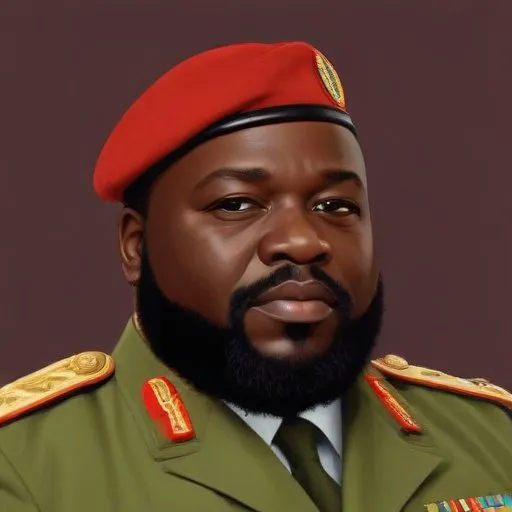
Jonas Savimbi: The Fearless Leader of Angola's Anti-Colonial Resistance
The Birth of a Revolution
Jonas Savimbi, a name synonymous with Angola's fight for independence and self-determination, was a revolutionary, politician, and rebel military leader who founded and led the National Union for the Total Independence of Angola (UNITA). As one of the key figures in Angola's struggle against Portuguese colonial rule, Savimbi's unwavering commitment to his country's freedom earned him recognition as a leading anticommunist voice in the world.
Early Life and Education
Born on August 3, 1934, in Munhango, Bi Province, Angola, Jonas Malheiro Savimbi was raised in a family deeply rooted in Protestantism. His father, Lote, a stationmaster on Angola's Benguela railway line and a preacher, instilled in him the values of education and social responsibility. Savimbi's education began in Protestant schools, and later, he attended Roman Catholic schools. At the age of 24, he received a scholarship to study in Portugal, where he became involved with students from Angola and other Portuguese colonies who were preparing for anticolonial resistance.
Rise to Prominence
Savimbi's involvement with the clandestine Portuguese Communist Party and his association with future MPLA president
Agostinho Neto cemented his position as a key figure in Angola's fight for independence. Under pressure from the Portuguese secret police (PIDE), Savimbi fled to Switzerland, where he continued to mobilize support for Angola's liberation. In 1966, he founded UNITA, which became a leading force in the country's guerrilla war against Portuguese colonial rule.
Leading the Charge against Colonialism
Savimbi's leadership and UNITA's military prowess played a crucial role in Angola's struggle for independence. After a long and brutal conflict, Angola finally gained independence in 1974. However, Savimbi's vision for a free and democratic Angola was soon derailed by the Cold War politics, as the country became embroiled in a civil war between UNITA and the ruling MPLA.
Anticommunist Crusade
Savimbi's anticommunist stance earned him extensive contact with anticommunist activists in the United States, including Jack Abramoff. As one of the leading anticommunist voices in the world, Savimbi's message resonated with conservatives and liberals alike, solidifying his position as a champion of democracy and freedom.
Final Years and Legacy
On February 22, 2002, Jonas Savimbi's life was cut short in a clash with government troops. Though his life was marked by conflict and controversy, Savimbi's unwavering commitment to Angola's independence and self-determination has cemented his place in history as a hero of the African liberation movement.
Philosophical Contributions and Beliefs
Savimbi's philosophy was deeply rooted in his Christian faith and his conviction that freedom and democracy were the birthright of all Angolans. He believed that the African liberation movement was not just a struggle against colonialism, but also a fight for social justice and human dignity.
Key Life Events and Milestones
- 1934: Born in Munhango, Bi Province, Angola
- 1966: Founded UNITA and launched guerrilla war against Portuguese colonial rule
- 1974: Angola gains independence from Portugal
- 2002: Killed in a clash with government troops
Influence on Modern Society
Savimbi's legacy continues to inspire generations of Africans and people around the world who are fighting for freedom, democracy, and social justice. His unwavering commitment to his principles, even in the face of overwhelming odds, serves as a beacon of hope for those who dare to challenge the status quo.
Quotes and Memorable Sayings
- "The struggle for independence is not just a struggle for freedom from colonial rule, but also a struggle for social justice and human dignity."
- "We will not rest until Angola is free, democratic, and prosperous for all."
Historical Context and Legacy
Jonas Savimbi's life and legacy are inextricably linked to the tumultuous history of Angola's struggle for independence and self-determination. His unwavering commitment to his country and his people has cemented his place as one of the most important figures in modern African history.
FAQ
Who was Jonas Savimbi and what was his role in Angolan politics?
Jonas Savimbi was an Angolan general and politician who founded the National Union for the Total Independence of Angola (UNITA), a prominent anti-communist movement. He played a significant role in Angolas struggle for independence and later fought against the MPLA government in the Angolan Civil War.
What was Jonas Savimbis ideology and how did it influence Angolan politics?
Jonas Savimbis ideology was rooted in anti-communism and nationalism. He opposed the MPLA governments socialist policies and sought to establish a democratic, capitalist state. His views influenced Angolan politics, shaping the countrys Cold War alliances and fueling the civil war.
How did Jonas Savimbis leadership impact UNITAs military campaigns?
As the leader of UNITA, Jonas Savimbis military strategies and tactics played a crucial role in the groups campaigns against the MPLA government. He masterminded several successful guerrilla operations, but also faced criticism for human rights abuses and authoritarian leadership.
What was Jonas Savimbis relationship with the international community, particularly the United States?
Jonas Savimbi enjoyed support from the United States and other Western countries, who saw him as a key anti-communist ally in the Cold War. He received significant financial and military aid from the US, which contributed to his ability to resist the MPLA government.
How did Jonas Savimbis death impact the Angolan Civil War and the countrys politics?
Jonas Savimbis death in 2002 led to a power vacuum in UNITA and paved the way for a peace agreement between the group and the MPLA government. His legacy remains divisive, with some hailing him as a hero and others criticizing his authoritarian rule and human rights abuses.