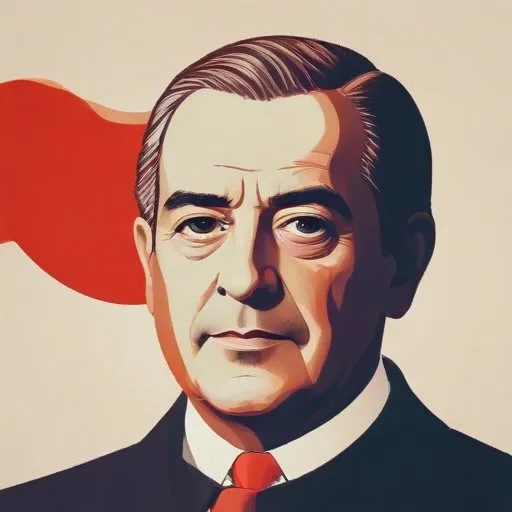
Antnio de Spnola: The Architect of Portugal's Transition to Democracy
A Military Officer, Author, and Statesman
Antnio de Spnola is renowned for being the first President of Portugal after the dissolution of the Estado Novo government, playing a pivotal role in the country's transition to democracy following the Carnation Revolution. As a military officer, author, and conservative politician, Spnola's life was marked by a dedication to public service and a commitment to shaping Portugal's future.
Early Life and Military Career
Born on April 11, 1910, in Santo Andr, Estremoz, Spnola was the son of Antnio Sebastio Spnola and Maria Gabriela Alves Ribeiro, both natives of Madeira. He entered the Colgio Militar in 1920, beginning a distinguished military career that would span several decades. By 1928, Spnola was at Portugals Military Academy, where he stood out as a young and promising cavalry officer.
Rise to Prominence
In 1939, Spnola became an adjunct-de-camp of the Guarda Nacional Republicana (Republican National Guard). During World War II, he traveled to the German-Russian Front as an observer, monitoring Wehrmacht movements during the encirclement of Leningrad. In 1961, guided by Antnio de Oliveira Salazar, he offered himself for voluntary service in the Portuguese colonies of West Africa. This experience would shape his later views on colonialism and national identity.
Colonial Service and Leadership
Between 1961 and 1963, Spnola held the command of the 345th Cavalry Battalion in Portuguese Angola, distinguishing himself and his unit. He was later appointed Governor and Commander-in-Chief of the Armed Forces of Portuguese Guinea from 1968 to 1972, during the period of the Overseas War. His administration favored a policy of respect for ethnic Guineans and traditional authorities, earning him recognition for his diplomatic efforts.
Transition to Democracy and Presidency
Following the Carnation Revolution in 1974, Spnola became the first President of Portugal, serving from 1974 to 1976. During his presidency, he oversaw the withdrawal of Portuguese forces from Africa and the establishment of a democratic government in Portugal. His leadership played a crucial role in stabilizing the country and paving the way for its integration into the European Community.
Legacy and Impact
Antnio de Spnola's legacy is marked by his commitment to democracy, national reconciliation, and colonial reform. He remains an important figure in Portuguese history, celebrated for his role in shaping the country's transition to democracy. Through his writings and public service, Spnola inspired generations of Portuguese citizens and leaders, leaving a lasting impact on the country's politics and society.
Personal Life and Later Years
Spnola married Maria Helena Martin Monteiro de Barros in 1932, and the couple had two children together. He passed away on August 13, 1996, at the age of 86, leaving behind a rich legacy of public service and literary works.
Quotes and Memorable Sayings
- "The greatest glory in living lies not in never falling, but in rising every time we fall."
- "A nation's greatness is not measured by its military strength, but by its ability to protect its people and promote their well-being."
Awards and Honors
- Grand Cross of the Military Order of the Tower and Sword
- Grand Cross of the Order of Christ
- Grand Cross of the Order of Aviz
Major Works
- Porchadas do Tempo (1974) - a collection of essays on politics and history
- País Reencontrado (1975) - a memoir on his experiences in Africa and Portugal
Trivia and Fun Facts
- Spnola was an accomplished horseman and enjoyed equestrian sports throughout his life.
- He was a prolific writer, publishing several books on politics, history, and literature.
FAQ
What was António de Spínolas role in Portuguese history?
António de Spínola was a key figure in Portuguese history, serving as the 14th President of Portugal and playing a crucial role in the countrys transition to democracy after the Carnation Revolution. He was a decorated military officer and statesman who worked to modernize Portugal and promote economic development.
What was António de Spínolas stance on colonialism?
António de Spínola was a vocal critic of Portuguese colonialism, advocating for decolonization and greater autonomy for Portugals African territories. He believed that colonialism was a relic of the past and that Portugals future lay in building relationships with its former colonies as equal partners.
What was António de Spínolas relationship like with Marcelo Caetano?
António de Spínola had a complex and often tense relationship with Marcelo Caetano, the prime minister of Portugal during the Estado Novo regime. While the two men shared a commitment to Portuguese nationalism, they disagreed on issues such as colonialism and democratization.
What awards did António de Spínola receive?
António de Spínola received several awards and honors for his service to Portugal, including the Grand Cross of the Order of the Tower and Sword and the Grand Cross of the Order of Prince Henry.
What is António de Spínolas legacy?
António de Spínolas legacy is that of a statesman and military leader who helped guide Portugal through a period of significant change and transformation. He is remembered for his commitment to democracy and his role in promoting greater autonomy for Portugals former colonies.