


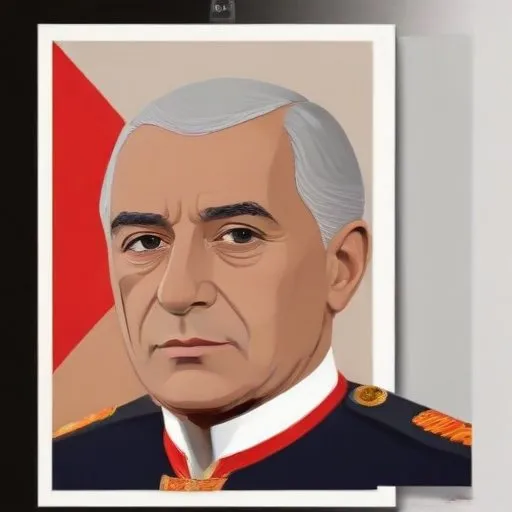
A Portuguese general and politician who served as the 15th President of Portugal, known for his role in the country's transition to democracy after the Carnation Revolution. He's remembered for his efforts to establish a new constitution and hold free elections.
Francisco da Costa Gomes, a prominent Portuguese military officer and politician, is best known for serving as the 15th President of Portugal, playing a crucial role in the country's transition to democracy after the Carnation Revolution. His military career spanned over four decades, earning him a reputation as a strong leader and strategist.
Costa Gomes' military career began in 1931, when he enrolled in the Portuguese Military Academy. He quickly rose through the ranks, becoming a general in 1962. In 1961, he was involved in a constitutional coup d'état, which aimed to remove António de Oliveira Salazar from the premiership.
In 1970, Costa Gomes became the Commander of the Military Region of Angola, where he implemented significant reforms and attempted to establish a military agreement with the National Union for the Total Independence of Angola (UNITA) against the People's Movement for the Liberation of Angola (MPLA) and the National Liberation Front of Angola (FNLA).
In 1974, Costa Gomes was part of the National Salvation Junta, a group of seven military leaders who played a crucial role in the Carnation Revolution. This peaceful revolution marked the end of the authoritarian regime and paved the way for Portugal's transition to democracy.
Between 1974 and 1980, Costa Gomes served as the President of Portugal, becoming the second president after the Carnation Revolution. During his presidency, he oversaw the country's transition to democracy, including the adoption of a new constitution and the holding of free elections.
Costa Gomes was born on June 30, 1914, in Chaves, Portugal, to António José Gomes and Idalina Júlia Monteiro da Costa. He married Maria Estela Veloso de Antas Varajão in 1952, and they had one son, Francisco da Costa Gomes.
Throughout his life, Costa Gomes was known for his strong leadership and vision for a democratic Portugal. He passed away on July 31, 2001, leaving behind a legacy as one of the most important figures in modern Portuguese history.
Francisco da Costa Gomes' life and legacy serve as a testament to his dedication to Portugal and its people. His courage, vision, and leadership played a crucial role in shaping the country's destiny, and his impact continues to be felt to this day.
Born in 1924
A Portuguese historian, lawyer, and politician who served as the 17th President of Portugal, known for leading the country's transition from authoritarianism to democracy. He played a key role in Portugal's decolonization and European integration.
Born in 1889
A dictator who ruled Portugal from 1933 to 1968, implementing a corporatist authoritarian regime and maintaining a neutral stance during World War II. He's known for his economic reforms and nationalist policies.
87 Years Old
The 18th President of Portugal, a lawyer and politician, served from 1996 to 2006 and was a key figure in the country's transition to democracy. He's known for his commitment to social justice and human rights.
87 Years Old
The 19th President of the Portuguese Republic was a prominent economist and politician who served from 2006 to 2016, known for his economic reforms and leadership during the European sovereign-debt crisis. He is also a published author on economics and politics.
62 Years Old
The 118th Prime Minister of Portugal, an economist-turned-politician who led the country from 2011 to 2015, implementing austerity measures to address the European sovereign debt crisis. He's known for his efforts to stabilize Portugal's economy during a tumultuous period.
