


In 1962, a pivotal moment in the struggle against apartheid shook the foundations of South Africa. Nelson Mandela, the fearless leader of the African National Congress (ANC), stood before the judge, his unwavering determination etched on his face as he received a life imprisonment sentence for sabotage and conspiracy to overthrow the government.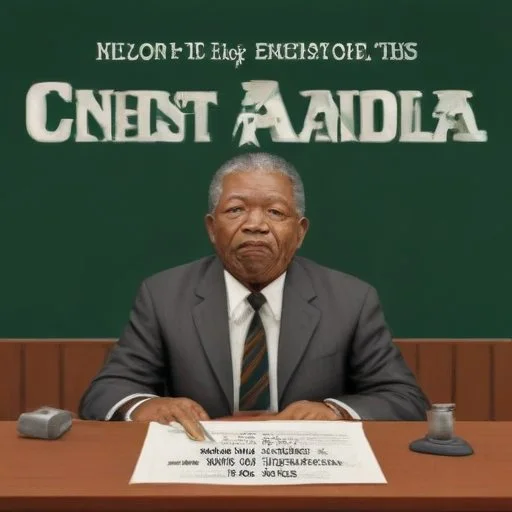
Nelson Mandela's journey to this fateful day began decades earlier, as a young man growing up in a country ravaged by racial segregation and discrimination. He was born in 1918 in the Transkei region of South Africa, and from an early age, he was acutely aware of the injustices faced by his people. This awareness sparked a fire within him, driving him to become a champion of equality and human rights.
The Rivonia Trial, conducted from 1963 to 1964, was a watershed moment in the history of the anti-apartheid movement. Ten leading figures of the ANC, including Mandela, Walter Sisulu, and Govan Mbeki, were arrested and put on trial for their roles in the sabotage of government facilities and infrastructure. The prosecution sought the death penalty, but the defendants refused to compromise, opting instead to use the trial as a platform to expose the atrocities of the apartheid regime.
On June 12, 1964, the verdict was delivered: life imprisonment for Mandela and his co-accused. The sentence was met with outrage and despair from the international community, but for Mandela, it only strengthened his resolve. From his prison cell, he continued to inspire and lead the anti-apartheid movement, his message of hope and defiance resonating across the globe.
Nelson Mandela's imprisonment became a powerful symbol of resistance against the apartheid regime. His unwavering commitment to the cause inspired a new generation of activists, both within South Africa and internationally. The cry "Free Nelson Mandela" echoed through the streets, a rallying cry for those demanding justice and equality.
After 27 years in prison, Nelson Mandela was finally released in 1990. He continued to lead the fight against apartheid, becoming the first black president of South Africa in 1994. His leadership and vision paved the way for a democratic, multiracial society, earning him the Nobel Peace Prize in 1993.
Nelson Mandela's sentence to life imprisonment marked a turning point in the struggle against apartheid. His unwavering dedication to the cause inspired a global movement, paving the way for his eventual release and the dismantling of the apartheid regime. His legacy continues to inspire generations, a powerful reminder of the importance of standing against oppression and fighting for human rights.
During his imprisonment, Mandela endured harsh conditions, including forced labor and isolation. Yet, he remained steadfast, using his time to educate himself and his fellow prisoners about the importance of non-violent resistance. It was in prison that he perfected his famous "Mandela smile," a symbol of hope and defiance that would become an iconic image of the anti-apartheid movement.
Nelson Mandela's sentence to life imprisonment had far-reaching cultural and social implications. His imprisonment sparked international outrage, inspiring artists, musicians, and writers to create works that paid tribute to his struggle. The "Free Nelson Mandela" campaign, which included concerts, songs, and poetry, helped raise awareness about the apartheid regime and its atrocities.
Nelson Mandela's legacy extends beyond his political achievements. He has inspired generations of students, educators, and social activists, leaving an indelible mark on the global community. His commitment to education and his vision for a more equitable society continue to shape the world we live in today.
Nelson Mandela's early life was marked by a strong sense of justice and a desire to fight against the injustices of apartheid. Born in 1918 in the Transkei region of South Africa, Mandela was raised in a traditional Thembu family and wasgiven the name Rolihlahla, which means "troublemaker." This name would prove prophetic, as Mandela would go on to become a thorn in the side of the apartheid regime.
Mandela's education at the University of Fort Hare and later at the University of the Witwatersrand shaped his political views and instilled in him a sense of purpose. He became involved in the African National Congress (ANC) at a young age and quickly rose through the ranks, becoming a leader in the fight against apartheid.
Throughout his life, Mandela's unwavering commitment to equality and justice earned him numerous accolades, including the Nobel Peace Prize in 1993. His courage in the face of adversity and his ability to inspire others have made him an iconic figure in the struggle against apartheid.

Nelson Mandela's imprisonment had a profound impact on the cultural landscape of South Africa and beyond. His fight against apartheid inspired a generation of artists, musicians, and writers to create works that reflected the struggles and injustices of the time.
The cultural significance of Mandela's imprisonment extends beyond the Anglophone world. In South Africa, his fight against apartheid inspired a new generation of black artists, who used their work to challenge the regime and promote social change.
Nelson Mandela's imprisonment took place during a tumultuous period in world history. The Cold War was at its height, and the global community was divided along ideological lines.
The apartheid regime in South Africa was seen as a key ally of the West, particularly the United States and the United Kingdom. The regime's brutal suppression of the black majority was conveniently overlooked in the interest of maintaining a stable anti-communist bulwark.
However, as the civil rights movement in the United States gained momentum, international pressure began to mount against the apartheid regime. The imprisonment of Mandela and other anti-apartheid leaders galvanized the international community, leading to widespread condemnation of the regime and ultimately contributing to its downfall.

Nelson Mandela's imprisonment was a calculated move by the apartheid regime to crush the anti-apartheid movement. The regime, led by Prime Minister Hendrik Verwoerd, was determined to maintain its grip on power and suppress any opposition to its policies.
The Rivonia Trial, in which Mandela and other ANC leaders were sentenced to life imprisonment, was a key moment in the struggle against apartheid. The trial was widely condemned as a sham, and the severity of the sentences sparked international outrage.
Despite the regime's best efforts to silence him, Mandela continued to inspire resistance from his prison cell. His imprisonment became a rallying cry for the anti-apartheid movement, and his defiance in the face of adversity inspired a new generation of activists.
Nelson Mandela's imprisonment highlighted the importance of education in the struggle against apartheid. The apartheid regime's policies of Bantu education, which aimed to limit the education of black South Africans, were a key aspect of its strategy to maintain control.
Mandela's own education at the University of Fort Hare and later at the University of the Witwatersrand had instilled in him a sense of purpose and a commitment to fighting against the injustices of apartheid.
From his prison cell, Mandela continued to emphasize the importance of education in the struggle for equality and justice. He saw education as a key tool for empowering individuals and communities, and his vision for a democratic, multiracial South Africa was shaped by his commitment to education for all.