


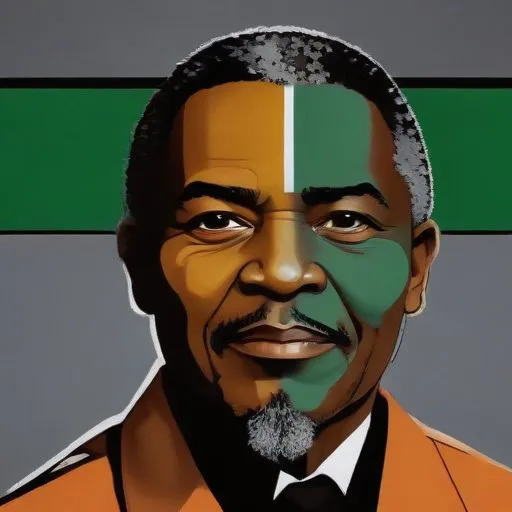
A leading figure in the fight against apartheid, he was a key organizer and strategist for the African National Congress, playing a crucial role in the country's transition to democracy.
Govan Mbeki, a stalwart of South Africa's anti-apartheid movement, is synonymous with bravery, resilience, and unwavering dedication to the fight for equality. As the Secretary of Umkhonto we Sizwe, the armed wing of the African National Congress (ANC), Mbeki played a pivotal role in the struggle against the apartheid regime, earning him a place among the pantheon of South African heroes.
Born on July 9, 1910, in the Nqamakwe district of the Transkei region, Govan Mbeki was a member of the Xhosa ethnic group. His early years were marked by hardship and exposure to the harsh realities of poverty and police brutality, which would later shape his political ideology. Mbeki's education at Fort Hare University, where he earned a Bachelor of Arts degree in politics and psychology, and later a teaching diploma, brought him into contact with other African struggle leaders, laying the groundwork for his future activism.
Mbeki's teaching career was cut short due to his political activities, but he soon found another outlet for his energies. He joined the African National Congress (ANC) in 1935 and became a member of the South African Communist Party (SACP) in the late 1930s. Mbeki's writing career took off, with his editorship of Territorial Magazine (Inkundla Ya Bantu) from 1938 to 1944, providing a platform for his ideas and cementing his reputation as a vocal critic of the apartheid regime.
In 1963, Mbeki was arrested and put on trial alongside Nelson Mandela, Walter Sisulu, and other prominent ANC leaders, for their role in the ANC's armed wing, Umkhonto we Sizwe (MK). Convicted of terrorism and treason, Mbeki spent 23 years behind bars, where he continued to inspire and educate his fellow prisoners. His unwavering commitment to the cause earned him the nickname "Oom Gov" (Uncle Gov).
Upon his release in 1987, Mbeki's reputation as a champion of freedom and equality was solidified. His influence extended beyond South Africa's borders, inspiring international solidarity and support for the anti-apartheid movement. Mbeki's legacy is also reflected in his family, with his sons, Thabo Mbeki (former South African President) and Moeletsi Mbeki (political economist), continuing to play prominent roles in South African politics and society.
Mbeki's unwavering commitment to the cause of freedom and equality was rooted in his belief in the principles of socialism and the importance of collective action. His experiences in prison and beyond only strengthened his resolve, inspiring generations of South Africans to continue the fight against oppression.
Govan Mbeki's contributions to the struggle against apartheid have been recognized and honored with various awards, including the Isitwalandwe Award, South Africa's highest honor for outstanding contribution to the struggle for liberation.
Govan Mbeki's life serves as a testament to the power of resilience, courage, and conviction. As a champion of freedom and equality, his legacy continues to inspire generations of South Africans and people around the world, ensuring that his fight against oppression will never be forgotten.
Born in 1918
A South African lawyer and politician who fought against apartheid, becoming the country's first black president and a symbol of racial reconciliation, earning a Nobel Peace Prize. He's a beacon of hope and freedom.
Born in 1917
A leading figure in the fight against apartheid, he served as President of the African National Congress and played a crucial role in mobilizing international opposition to the racist regime.
Born in 1912
A leading figure in the fight against apartheid, he was a co-founder of the African National Congress and spent 25 years in prison for his activism. He played a key role in shaping South Africa's transition to democracy.
Born in 1926
A Lithuanian-born South African revolutionary who fought against apartheid, leading the armed wing of the African National Congress and playing a key role in the country's transition to democracy.
84 Years Old
The second President of South Africa, a key figure in the country's transition from apartheid to democracy, known for his economic reforms and HIV/AIDS controversy.
84 Years Old
The 4th President of South Africa, a controversial figure known for his corrupt regime and multiple scandals, including bribery and racketeering charges. He was also a key figure in the fight against apartheid.
73 Years Old
The fifth President of South Africa, a leader who has played a crucial role in the country's transition to democracy and has been a key figure in the fight against apartheid. He is also a successful businessman and entrepreneur.
77 Years Old
The 3rd President of South Africa, a key figure in the country's transition from apartheid to democracy, known for his role in shaping the nation's post-apartheid era.
