


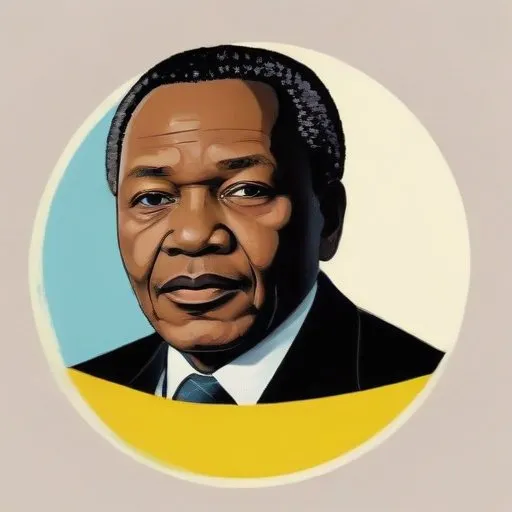
The 3rd President of South Africa, a key figure in the country's transition from apartheid to democracy, known for his role in shaping the nation's post-apartheid era.
Kgalema Motlanthe, the 3rd President of South Africa, is known for his pivotal role in stabilizing the country during a tumultuous period of transition, following the resignation of Thabo Mbeki in 2008. As a seasoned politician and a symbol of resistance against apartheid, Motlanthe's leadership was marked by a commitment to continuity and stability, earning him the reputation as a skilled compromiser and consensus-builder.
Raised in Soweto, Motlanthe was born on July 19, 1949, in the former Transvaal. His family was forcibly removed from Alexandra, an experience that would shape his political consciousness and fuel his fight against apartheid. After completing high school, Motlanthe was recruited into the armed wing of the African National Congress (ANC), UMkhonto we Sizwe, where he played an active role in the anti-apartheid struggle.
Between 1977 and 1987, Motlanthe was imprisoned on Robben Island under the Terrorism Act for his anti-apartheid activism. This period of incarceration proved to be a defining moment in his life, as he shared a cell with other prominent political leaders, including Nelson Mandela. The experience not only hardened his resolve against apartheid but also forged lasting bonds with fellow strugglers who would later become prominent figures in South African politics.
Upon his release from Robben Island, Motlanthe joined the National Union of Mineworkers, where he rose through the ranks to become General Secretary between 1992 and 1998. This period marked the beginning of his ascent in the trade union movement, which would eventually propel him to the national leadership of the ANC.
In 1997, Motlanthe was elected ANC Secretary General, a position he held until 2007. His leadership during this period was characterized by his ability to build consensus and navigate the complex web of alliances within the party. In 2008, he was elected ANC Deputy President, and following Thabo Mbeki's resignation, he became the President of South Africa, serving in the position from September 2008 to May 2009.
Motlanthe's presidency was marked by a commitment to stability and continuity. He prioritized policy continuity, and his leadership was characterized by a willingness to listen and build consensus. One notable exception to this approach was his decision to replace Health Minister Manto Tshabalala-Msimang with Barbara Hogan, effectively breaking with Mbeki's HIV/AIDS policy, which had been criticized for its ineffectiveness.
Kgalema Motlanthe's leadership has had a lasting impact on South African politics. His ability to steady the ship during a period of turmoil has earned him recognition as a skilled compromiser and consensus-builder. While his presidency was marked by controversy and criticism, his commitment to stability and continuity has left an indelible mark on the country's political landscape.
"We must learn to work together, to build a South Africa that is free from the shackles of the past, where all our people can live in dignity and prosperity."
Kgalema Motlanthe's leadership has inspired a generation of South Africans to engage in the democratic process and work towards building a more equitable society. His commitment to stability and continuity has contributed to the country's growth and development, and his legacy continues to shape South African politics today.
Born in 1918
A South African lawyer and politician who fought against apartheid, becoming the country's first black president and a symbol of racial reconciliation, earning a Nobel Peace Prize. He's a beacon of hope and freedom.
84 Years Old
The second President of South Africa, a key figure in the country's transition from apartheid to democracy, known for his economic reforms and HIV/AIDS controversy.
84 Years Old
The 4th President of South Africa, a controversial figure known for his corrupt regime and multiple scandals, including bribery and racketeering charges. He was also a key figure in the fight against apartheid.
73 Years Old
The fifth President of South Africa, a leader who has played a crucial role in the country's transition to democracy and has been a key figure in the fight against apartheid. He is also a successful businessman and entrepreneur.
Born in 1912
A leading figure in the fight against apartheid, he was a co-founder of the African National Congress and spent 25 years in prison for his activism. He played a key role in shaping South Africa's transition to democracy.
Born in 1917
A leading figure in the fight against apartheid, he served as President of the African National Congress and played a crucial role in mobilizing international opposition to the racist regime.
Born in 1926
A Lithuanian-born South African revolutionary who fought against apartheid, leading the armed wing of the African National Congress and playing a key role in the country's transition to democracy.
97 Years Old
A South African anti-apartheid activist who spent 26 years in prison, including 18 years on Robben Island with Nelson Mandela, fighting for racial equality and democracy.
