


The Appeal of 18 June, a passionate radio broadcast by Charles de Gaulle, marked a turning point in French history, inspiring a nation to resist the Nazi occupation and ignite the flames of the French Resistance. It was a call to arms, a defiant declaration of independence, and a beacon of hope in the darkest of times.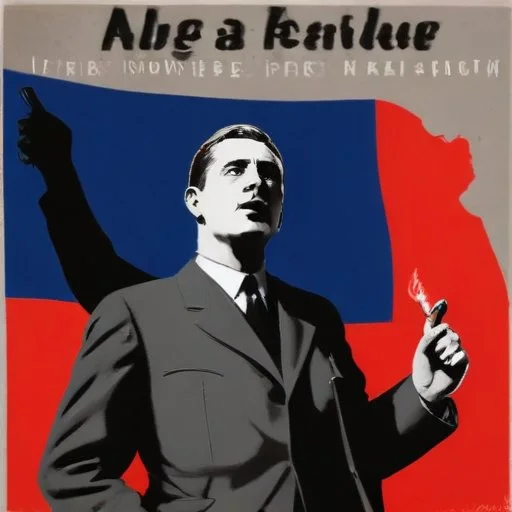
In the spring of 1940, France was reeling from the swift and brutal German invasion. The French government, led by Marshal Philippe Pétain, had signed an armistice, effectively surrendering to the Nazi war machine. The once-proud French nation was on its knees, its people demoralized and divided.
Into this vacuum of leadership and hope stepped Charles de Gaulle, a relatively unknown brigadier general at the time. From exile in London, de Gaulle used the BBC's Radio Londres to broadcast a message of defiance and resistance to the French people. His words, spoken in his signature deep, resonant voice, echoed across the English Channel, galvanizing a nation.
On June 18, 1940, de Gaulle's Appeal of 18 June was broadcast to the French people. It was a masterclass in oratory, a blend of patriotism, passion, and persuasion. De Gaulle's words painted a vivid picture of a France enslaved but unbroken, a nation that would rise again from the ashes of defeat.
"France has lost a battle, but France has not lost the war. A nation, like a person, has a soul, and it is this soul that makes it live. And this soul, the French soul, is immortal."
The Appeal of 18 June marked the beginning of the French Resistance, a movement that would play a crucial role in the Allied victory. Thousands of French citizens, inspired by de Gaulle's words, joined the fight against the Nazi occupation, engaging in acts of sabotage, espionage, and guerrilla warfare.
The Appeal of 18 June is remembered as a pivotal moment in French history, a testament to the power of leadership and the human spirit. It cemented de Gaulle's status as a national hero, and his legacy continues to inspire generations of French citizens.
The Appeal of 18 June is a powerful reminder that even in the darkest of times, hope and resistance can ignite a nation. As de Gaulle himself said, "The greatest glory in living lies not in never falling, but in rising every time we fall." His words continue to inspire, a beacon of freedom and defiance in the face of oppression.
The German invasion of France in May 1940 caught the French military off guard, and the country's defenses were quickly overwhelmed. The rapid collapse of the French army was a shock to the nation, and it led to a power vacuum that was filled by the collaborating Vichy government. This government, led by Marshal Philippe Pétain, signed an armistice with Germany on June 22, 1940, which divided France into two zones: the occupied north and the "free" south.
The armistice effectively surrendered France to Germany, and it led to the occupation of the country by German troops. This occupation had a profound impact on the French people, who were forced to live under German rule and adhere to strict regulations and curfews. The occupation also led to the persecution of Jews, communists, and other minority groups, which further divided the French people.

Charles de Gaulle was a complex figure, with a mix of arrogance and humility, of authoritarianism and democratic ideals. He was a natural leader, with a strong sense of purpose and conviction, and he was determined to save France from the Nazi occupation.
De Gaulle's personality was also marked by a strong sense of pride and patriotism. He was deeply attached to the French nation and its history, and he believed that France had a special role to play in the world. This pride and patriotism drove his decision to resist the Nazi occupation, even when it seemed like a lost cause.
The Appeal of 18 June was not only a powerful speech, but it was also a carefully crafted document that was designed to inspire and motivate the French people. The speech was written by de Gaulle himself, in collaboration with a few close advisors, and it was broadcast on the BBC's Radio Londres.
The original manuscript of the Appeal of 18 June is now housed at the Archives Nationales in Paris, and it provides a fascinating glimpse into de Gaulle's writing process. The manuscript shows that de Gaulle was a meticulous writer, who carefully revised and edited his text to ensure that it was perfect.
The Appeal of 18 June had a profound impact on French culture, inspiring a nation to resist the Nazi occupation and fight for its freedom. The speech became a symbol of French defiance and resistance, and it was often referenced in art, literature, and music.
The Appeal of 18 June also inspired a new generation of French artists, musicians, and writers, who were determined to express their resistance to the Nazi occupation through their work. This cultural resistance movement played an important role in the French Resistance, as it helped to inspire and motivate the people to take action.
The Appeal of 18 June marked a turning point in French politics, as it challenged the authority of the collaborating Vichy government and inspired a new generation of French leaders to resist the Nazi occupation. The speech also marked the emergence of de Gaulle as a national leader, who would go on to play a key role in the liberation of France.
The Appeal of 18 June was also a clever piece of political strategy, as it allowed de Gaulle to create a sense of unity and purpose among the French people. By appealing directly to the people, de Gaulle was able to bypass the Vichy government and create a new power base that was independent of the collaborators.