


The August Revolution of 1945 marked a pivotal moment in Vietnam's struggle for independence, as the Viet Minh, led by the charismatic Ho Chi Minh, seized power in Hanoi, declaring the nation's freedom from colonial rule. This bold move ignited a long and tumultuous journey towards self-governance, forever changing the course of Vietnamese history.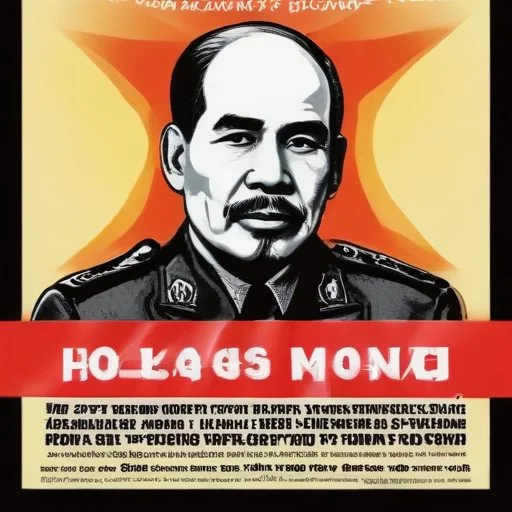
As World War II drew to a close, Vietnam was in a state of flux. The country had been under French colonial rule since the mid-19th century, but the Japanese occupation during the war had weakened France's grip. The Viet Minh, a communist-led coalition of nationalist groups, saw an opportunity to fill the power vacuum and establish an independent Vietnam.
Ho Chi Minh, also known as Nguyen Ai Quoc, was a visionary leader who had spent years fighting for Vietnam's independence. With his experience as a journalist, politician, and diplomat, Ho was the perfect candidate to unite the nation and lead the revolution. His charisma, strategic thinking, and determination made him a powerful figure in the fight for independence.
The August Revolution marked the beginning of a new era in Vietnam's history. The establishment of the DRV gave the nation its first taste of self-governance, and Ho Chi Minh's leadership set the stage for a long and complex struggle for independence.
The revolution had a profound impact on Vietnamese culture and society. The Viet Minh's emphasis on national unity and independence inspired a sense of patriotism and pride among the people. The revolution also paved the way for significant social reforms, including the empowerment of women and the redistribution of land to peasants.
The August Revolution was not without controversy. The Viet Minh's communist ideology and close ties to the Soviet Union raised concerns among Western powers, including the United States. The subsequent conflict between North and South Vietnam, fueled by Cold War tensions, would engulf the region for decades to come.
Ho Chi Minh's words still resonate today, inspiring generations of Vietnamese people and beyond:
"Nothing is more precious than independence and liberty."
The August Revolution of 1945 was a beacon of hope for a nation longing to be free. Ho Chi Minh's leadership and the Viet Minh's bravery paved the way for Vietnam's long and difficult journey towards independence, a journey that continues to inspire and motivate people around the world.
"The struggle for independence is not yet over. We still have to fight for our freedom, for our country, for our people." - Ho Chi Minh
Ho Chi Minh's early life and influences played a significant role in shaping his vision for Vietnam's independence. Born in 1890, Ho grew up during a time of French colonial rule, which instilled in him a sense of nationalism and anti-colonialism. His father, a Confucian scholar, instilled in him the importance of education and social justice.
Ho's travels to the United States and Europe in the early 20th century exposed him to socialist and communist ideologies, which further shaped his political beliefs. His experiences working as a cook on a French ship and later as a journalist in Paris helped him develop a sense of empathy for the working class and an understanding of the global class struggle.
These influences combined to shape Ho Chi Minh's vision for a unified, independent Vietnam, free from colonial rule and guided by socialist principles. His early life and experiences laid the foundation for his later leadership of the Viet Minh and the August Revolution.
The August Revolution of 1945 did not occur in isolation. Rather, it was part of a broader global trend of nationalist movements and anti-colonial sentiment that emerged during World War II. As the war drew to a close, the Allied powers' Atlantic Charter, which called for the restoration of self-government to colonized peoples, inspired nationalist movements across Asia and Africa.
The Japanese occupation of Vietnam during the war had weakened French colonial rule, creating a power vacuum that the Viet Minh was well-positioned to fill. The global mood was shifting in favor of national self-determination, and Ho Chi Minh's declaration of independence in Hanoi capitalized on this momentum.
The August Revolution was thus both a product of Vietnam's unique history and a reflection of the broader global forces shaping the post-war world.
The August Revolution of 1945 had a profound impact on Vietnamese identity and culture. The Viet Minh's emphasis on national unity and independence helped to create a sense of shared Vietnamese identity, transcending regional and ethnic differences.
The revolution also led to a resurgence of interest in traditional Vietnamese culture, including art, literature, and music. The new government actively promoted these cultural forms as a way to foster national pride and unity.
In addition, the revolution paved the way for significant social reforms, including the empowerment of women and the redistribution of land to peasants. These changes helped to create a more egalitarian society and further solidified the notion of a unified Vietnamese people.
Historians have offered various interpretations of the August Revolution, reflecting different perspectives on Vietnam's struggle for independence. Some have portrayed the revolution as a nationalist movement driven by a desire for self-determination, while others have emphasized its socialist and communist elements.
Some historians have also highlighted the role of external factors, such as the Japanese occupation and the global shift towards decolonization, in shaping the revolution's outcome. Others have stressed the agency of Vietnamese leaders, such as Ho Chi Minh, in navigating these factors to achieve independence.
These competing interpretations reflect the complexities and nuances of the August Revolution, underscoring the need for ongoing historical analysis and debate.
Ho Chi Minh's legacy extends far beyond his role as a political leader. He is also revered as a cultural icon, whose poetry, writings, and speeches continue to inspire generations of Vietnamese people.
Ho's love of poetry and literature helped to foster a cultural renaissance in Vietnam, encouraging artists and writers to explore themes of national identity and independence.
Today, Ho Chi Minh's image appears on currency, in public art, and in popular media, serving as a symbol of Vietnamese national pride and unity. His cultural legacy continues to inspire and motivate people around the world, transcending political and ideological boundaries.