


In the sweltering summer of 1914, a tumultuous ultimatum sent by Austria-Hungary to the Kingdom of Serbia would prove to be the catalyst that plunged Europe into the abyss of World War I. This series of demands, born from the ashes of Archduke Franz Ferdinand's assassination, would ultimately seal the fate of millions and forever alter the course of history.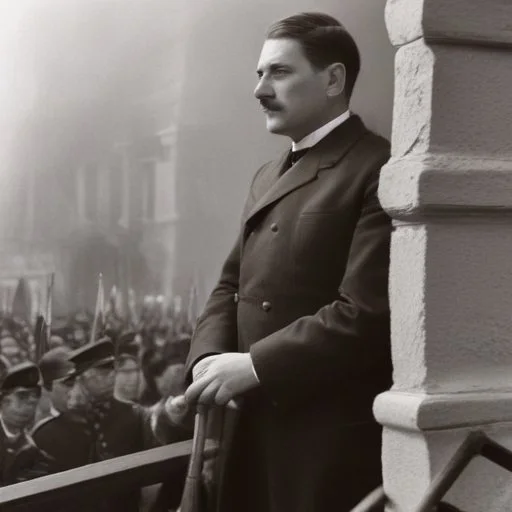
The early 20th century was a time of great change and upheaval in Europe. Nationalist sentiments were on the rise, and the complex system of alliances that bound the continent together was growing increasingly fragile. Austria-Hungary, a sprawling empire comprising numerous ethnic groups, was struggling to maintain its dominance in the face of growing unrest among its subjects. The Kingdom of Serbia, a small but fiercely independent nation, had long been a thorn in Austria-Hungary's side, advocating for the unification of South Slavs under its banner.
On June 28, 1914, a chance encounter in Sarajevo, the capital of Bosnia and Herzegovina, would set in motion the chain of events that would lead to war. Gavrilo Princip, a young Serbian nationalist and member of the secret society known as the Black Hand, stepped forward and fired the fatal shots that would kill Archduke Franz Ferdinand, heir to the Austrian throne. This brutal act of violence sent shockwaves throughout Europe, and Austria-Hungary's response would prove to be swift and merciless.
In the aftermath of the assassination, Austria-Hungary issued a stern ultimatum to Serbia, demanding that the country take immediate action to prevent further anti-Austrian activities and allow Austrian authorities to investigate the murder on Serbian soil. The list of demands was exhaustive, comprising six key points:
Serbia, unwilling to surrender its sovereignty, accepted all but one of the demands, refusing to permit Austrian investigations on its territory. This refusal was all the pretext Austria-Hungary needed to declare war on July 28, 1914. The response from Serbia's Prime Minister, Nikola Pašić, was unequivocal: "We cannot accept the Austro-Hungarian ultimatum, as it would be a violation of our sovereignty and the rights of our citizens."
On July 28, 1914, Austria-Hungary declared war on Serbia, a decision that would have far-reaching consequences. The Russian Empire, bound by its alliance with Serbia, mobilized its military in response, prompting Germany to declare war on Russia. France, bound by its alliance with Russia, declared war on Germany, and Britain, committed to defending Belgium's neutrality, declared war on Germany. The complex system of alliances had been triggered, and the war that would come to be known as the Great War had begun in earnest.
The war that resulted from Austria-Hungary's ultimatum would last for four years, claim millions of lives, and reshape the world order. The Treaty of Versailles, signed in 1919, would impose harsh penalties on Germany, contributing to the rise of Nazi Party and the outbreak of World War II. The legacy of Austria-Hungary's ultimatum would be felt for generations to come, serving as a stark reminder of the devastating consequences of nationalist fervor and the importance of diplomacy in international relations.
Austria-Hungary's ultimatum was not an isolated incident, but rather a culmination of years of geopolitical tensions in the Balkans. The complex system of alliances, which bound Europe together, created an environment in which a small conflict could escalate into a global war. The Balkans, in particular, were a powder keg of nationalist sentiment, with various ethnic groups vying for independence and self-determination.
The assassination of Archduke Franz Ferdinand provided the perfect pretext for Austria-Hungary to assert its dominance in the region. By issuing an ultimatum to Serbia, Austria-Hungary hoped to crush the growing nationalist movement and maintain its grip on power. However, this aggressive move only served to provoke Russia, which was bound by its alliance with Serbia, and thus the war began.
Gavrilo Princip, the young Serbian nationalist who assassinated Archduke Franz Ferdinand, is often portrayed as a naive and impulsive revolutionary. However, his actions were part of a larger movement to unite the South Slavs under Serbian leadership. Princip was a product of the Balkan environment, where nationalist sentiment was on the rise, and his actions were a desperate attempt to spark a larger movement.
Princip's actions were not without controversy, however. His involvement with the Black Hand, a secret society, has been the subject of much debate and speculation. Some have argued that Princip was merely a pawn in a larger game of espionage and geopolitics, while others have portrayed him as a hero and a martyr for the Serbian cause.
The Balkans, a region of southeastern Europe, have long been a hotbed of nationalist sentiment and geopolitical tensions. The complex system of alliances, which bound Europe together, created an environment in which a small conflict could escalate into a global war. The region was home to a multitude of ethnic groups, each with their own language, culture, and national identity.
The assassination of Archduke Franz Ferdinand and the subsequent ultimatum issued by Austria-Hungary only served to heighten tensions in the region. The Balkans, which had long been a powder keg of nationalist sentiment, were now ready to explode, and the rest of Europe was drawn into the conflict.
The ultimatum issued by Austria-Hungary to Serbia is a fascinating document, offering a unique insight into the mindset of the Austro-Hungarian government at the time. The document, which has been preserved in the archives of the Austro-Hungarian foreign ministry, is a stark reminder of the aggressive and expansionist policies of the Austro-Hungarian Empire.
The ultimatum, which consisted of six key points, was deliberately designed to be unacceptable to Serbia. It was a cleverly crafted document, intended to provoke a response from Serbia and thus provide a pretext for war. The document has been the subject of much historical analysis and debate, with many historians arguing that it was a decisive moment in the lead-up to World War I.
The outbreak of World War I had a profound impact on society, leading to widespread social change and cultural upheaval. The war effort required massive mobilization, which in turn led to significant changes in the social and economic fabric of society. Women, who had previously been relegated to traditional domestic roles, were drawn into the workforce, leading to significant changes in gender roles and expectations.
The war also led to a increase in nationalism and xenophobia, as governments and societies turned inward and became more isolated. The war had a profound impact on the arts, with many artists and writers responding to the conflict with works that reflected the horrors and atrocities of war. The war also led to significant advances in technology, including the development of tanks, aircraft, and chemical weapons.