


In the summer of 2000, the Syrian presidency witnessed a seismic shift as Bashar al-Assad succeeded his father, Hafez al-Assad, as the President of Syria. This unexpected transition marked the end of an era and the beginning of a new chapter in Syrian politics, with the world watching with bated breath to see if the son would follow in his father's footsteps or forge a new path.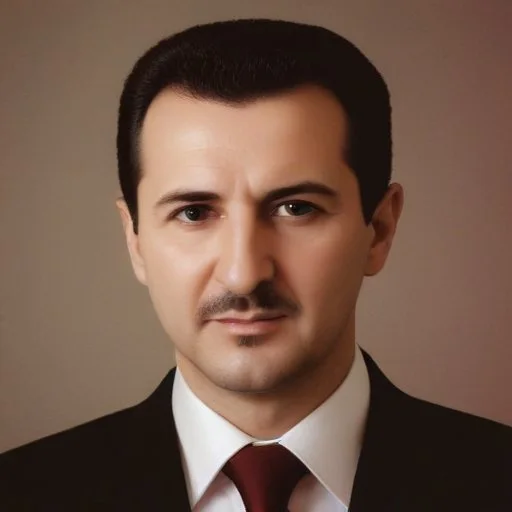
Bashar al-Assad, an ophthalmologist by training, had never shown much interest in politics. In fact, his brother Basil was being groomed to take over the presidency before his untimely death in 1994. However, Bashar's fate was sealed when his father nominated him as the head of the Syrian army and began to groom him for the top spot.
As Bashar took the reins, he vowed to reform and modernize Syria, promising to open up the country to the world and bring about economic growth. His inaugural address spoke of the need for transparency, accountability, and the empowerment of citizens. The world waited with anticipation to see if these lofty promises would translate into real change.
Bashar al-Assad's rise to power can be traced back to the following events:
| Event | Date |
|---|---|
| Hafez al-Assad's death | June 10, 2000 |
| Bashar's nomination as head of the Syrian army | 1994 |
| Bashar's inauguration as President of Syria | July 17, 2000 |
Bashar's ascension to power marked a significant shift in Syrian politics, with many hoping for a more liberal and open approach to governance. The new president's promise to reform and modernize the country resonated with the Syrian people, who were eager for change after decades of authoritarian rule.
Bashar al-Assad's presidency has been marked by a mix of reforms and crackdowns. While he has introduced some economic reforms and allowed for limited political liberalization, he has also been criticized for his handling of the Syrian civil war and human rights abuses.
Bashar's presidency has been marred by controversy, with many accusing him of being out of touch with the Syrian people and prioritizing the interests of his own regime over those of the country. His handling of the Syrian civil war has been widely criticized, and his government has been accused of numerous human rights abuses.
"We need to reform, but we need to do it in a way that doesn't harm the country or its people." - Bashar al-Assad, in his inaugural address
Bashar al-Assad's rise to power bears some resemblance to that of other authoritarian leaders who have succeeded their fathers, such as Kim Jong-il in North Korea and Fidel Castro in Cuba. However, the Syrian context is unique, with Bashar's presidency marked by a complex interplay of regional and international factors.
According to those close to the Assad family, Bashar was a reluctant politician who was thrust into the spotlight by circumstance. Despite his lack of experience, he was determined to make a difference and bring about change to Syria.
Bashar al-Assad's presidency has had far-reaching implications for the Middle East and beyond. His handling of the Syrian civil war has drawn in regional and international powers, and his government's actions have been widely condemned by the international community.
In conclusion, Bashar al-Assad's succession to the Syrian presidency marked a new chapter in Syrian politics, with the world watching to see if the son would follow in his father's footsteps or forge a new path. While the outcome has been far from certain, one thing is clear - Bashar's presidency has had a profound impact on the region and beyond.
Bashar al-Assad's rise to power was a surprising turn of events, given his lack of interest in politics from a young age. Born on September 11, 1965, Bashar was the second son of Hafez al-Assad, and his older brother Basil was being groomed to take over the presidency. However, Basil's death in 1994 thrust Bashar into the spotlight, and he was subsequently nominated as the head of the Syrian army.
Despite his initial reluctance, Bashar proved to be a shrewd politician, navigating the complexities of Syrian politics with ease. His ophthalmology training and experience working in the Syrian army gave him a unique perspective on governance, and he was determined to make a difference.
Those close to the Assad family describe Bashar as a quiet and introspective person, who is fiercely loyal to his family and his country. His presidency has been marked by a mix of reforms and crackdowns, but he remains a polarizing figure in Syrian politics.

Bashar al-Assad's succession was not without its challenges, with several high-ranking officials in the Syrian government opposed to his nomination. The old guard, led by Vice President Abdul Halim Khaddam, saw Bashar as inexperienced and unfit to lead the country.
However, Bashar had the backing of his father's most trusted advisors, including General Assef Shawkat, who would later become a key figure in his government. The power struggle behind the scenes was intense, with Bashar ultimately emerging victorious.
The new president's priority was to consolidate his power and build a loyal support base. He did this by appointing trusted allies to key positions, including the military and intelligence services.
Bashar al-Assad's rise to power marked a significant shift in Syrian culture, with the old guard giving way to a new era of modernization and reform. The young president's promise to open up the country to the world resonated with the Syrian people, who were eager for change after decades of authoritarian rule.
The cultural impact of Bashar's presidency was felt beyond Syria's borders, with his government's actions closely watched by the international community. The symbolism of a young, Western-educated leader taking the reins of power was not lost on observers, who saw it as a sign of hope for the region.

Bashar al-Assad's succession took place against the backdrop of a rapidly changing Middle East. The region was still reeling from the aftermath of the Gulf War, and the United States was increasingly exerting its influence in the area.
Syria, with its strategic location and alliances with Iran and Hezbollah, was a key player in regional politics. Bashar's presidency was seen as an opportunity for the country to reassert its influence and play a more prominent role in regional affairs.
The international community was watching closely, with the United States, Israel, and Europe all jostling for influence in the region. Bashar's ability to navigate these complex geopolitics would be crucial to Syria's future.
Bashar al-Assad's presidency was marked by a series of economic reforms, aimed at modernizing the Syrian economy and attracting foreign investment. The government introduced measures to liberalize trade, privatize state-owned enterprises, and encourage tourism.
The impact of these reforms was significant, with Syria experiencing rapid economic growth in the early 2000s. The country's GDP grew by an average of 5% per year, and foreign investment poured in.
However, the economic reforms also had their downsides, with inequality and corruption becoming major issues. The benefits of growth were largely limited to the ruling elite, while the majority of the population struggled to make ends meet.