


The Battle of Aughrim, fought on July 22, 1691, was a decisive victory for William III of England's forces in Ireland, marking a crucial milestone in the Williamite War in Ireland. This pivotal battle, fought on the rolling hills of Aughrim, County Galway, would seal the fate of the Jacobite cause and cement William III's dominance over Ireland.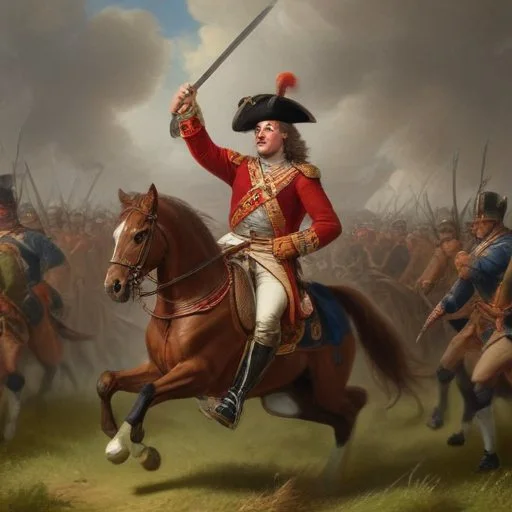
The Williamite War in Ireland, which lasted from 1689 to 1691, was a conflict between the forces of King William III of England and those of King James II of England, who had been deposed in the Glorious Revolution of 1688. James II, a Catholic, had attempted to regain his throne with the support of French and Irish troops, while William III, a Protestant, sought to consolidate his power and secure the Protestant succession.
The Battle of Aughrim was a bloody and brutal conflict that raged for several hours. The Williamite forces, led by the experienced and cunning Duke of Marlborough, were comprised of a mix of English, Dutch, and Danish troops. The Jacobite forces, led by Charles Chalmot, Marquis de Saint-Ruhe, were largely made up of Irish and French soldiers.
The battle began with a series of skirmishes between the two armies, as they jockeyed for position on the hills and valleys of Aughrim. The Jacobite forces, though outnumbered, fought valiantly, but were ultimately outmaneuvered by the Williamite cavalry. As the Jacobite lines began to crumble, Saint-Ruhe fell in the chaos, marking a decisive turning point in the battle.
The Battle of Aughrim was a crushing blow to the Jacobite cause, marking the beginning of the end of James II's claim to the throne. The victory cemented William III's dominance over Ireland, paving the way for British rule over the island. The battle also marked a significant shift in the balance of power in Europe, as the Dutch and English emerged as dominant military powers.
The Treaty of Limerick, signed just a few months after the battle, secured the rights of Irish Catholics and paved the way for the Act of Settlement, which established the Protestant succession in England.
The Battle of Aughrim has had a lasting impact on Irish culture and society. The defeat of the Jacobite forces marked the beginning of a period of Protestant ascendancy in Ireland, which would shape the country's politics, social dynamics, and cultural identity for centuries to come.
The battle has also been immortalized in Irish folklore and literature, with numerous poems, songs, and stories written about the bravery and sacrifice of the Jacobite forces.
The Battle of Aughrim serves as a testament to the bravery and resilience of the soldiers who fought on both sides. The story of Saint-Ruhe's bravery and tactical prowess, despite being ultimately defeated, serves as an inspiration to military commanders and historians alike.
The battle also serves as a reminder of the importance of adaptability and strategic thinking in the heat of battle. The Duke of Marlborough's cunning and flexibility on the battlefield provide a valuable lesson for military strategists and leaders.
One eyewitness account, written by a Williamite soldier, describes the chaos and carnage of the battle: "The cries of the wounded, the clash of steel on steel, and the thunder of the cannons created a din that was almost deafening. I saw men on both sides fighting with a ferocity that I had never seen before."
An Irish folk song, written in the aftermath of the battle, laments the defeat of the Jacobite forces and the loss of Irish lives: "Oh, Aughrim's hills were red with blood, As our brave men fell in the mud. Our hearts were broken, our hopes were dashed, As the Williamite forces took our land at last."
Little is known about Charles Chalmot, Marquis de Saint-Ruhe, beyond his bravery and tactical prowess on the battlefield. However, historical records suggest that he was a French nobleman who fought alongside James II in the Williamite War in Ireland.
Saint-Ruhe's early life and military career remain shrouded in mystery, but his leadership during the Battle of Aughrim is a testament to his exceptional military acumen. Despite being outnumbered and outmaneuvered, he fought valiantly, earning the respect of his enemies.
His untimely death during the battle marked a turning point in the conflict, and his legacy was all but forgotten in the aftermath of the Williamite victory. Nevertheless, his bravery and sacrifice serve as a powerful reminder of the human cost of war.

The Battle of Aughrim had a profound impact on Irish culture, shaping the country's identity, folklore, and literature for centuries to come.
The battle has been immortalized in Irish folklore, with stories of courage, loyalty, and sacrifice passed down through generations. The legendary bravery of the Jacobite forces has become an integral part of Irish cultural heritage, symbolizing the nation's struggle for independence and self-determination.
In literature, the battle has inspired numerous poems, songs, and stories, cementing its place in the Irish literary canon. The battle's cultural significance extends beyond Ireland, influencing the broader European literary and artistic landscape.
The Battle of Aughrim was a pivotal event in the Williamite War in Ireland, a conflict that shaped the course of Irish and British history.
The war, sparked by James II's attempt to regain the throne, was a complex and multifaceted conflict, involving Irish, English, French, and Dutch forces. The Battle of Aughrim was a decisive victory for the Williamite forces, marking a turning point in the war and cementing William III's dominance over Ireland.
The battle was a microcosm of the broader conflict, reflecting the political, religious, and strategic tensions that defined the Williamite War. It was a clash of armies, ideologies, and interests, with far-reaching consequences for Ireland, Britain, and Europe.
The Battle of Aughrim had far-reaching political consequences, shaping the course of Irish and British history for centuries to come.
The battle marked the beginning of British rule over Ireland, paving the way for the Act of Settlement and the establishment of the Protestant succession in England. The Treaty of Limerick, signed in the aftermath of the battle, secured the rights of Irish Catholics, but ultimately failed to address the underlying tensions that had sparked the conflict.
The battle also had significant implications for European politics, as the Dutch and English emerged as dominant military powers, shifting the balance of power in Europe.
The Battle of Aughrim was fought against the backdrop of a complex and shifting geopolitical landscape, shaped by the rivalries and alliances of European powers.
The Glorious Revolution had created a power vacuum in England, as James II sought to regain the throne with French support. The Dutch, eager to prevent French expansion, allied themselves with William III, while the Irish, seeking independence and self-determination, fought alongside James II.
The battle was a manifestation of these broader geopolitical tensions, as European powers jockeyed for influence and control in Ireland and beyond.