


"The fate of empires hangs in the balance, as two great generals clash on the Plains of Abraham, their names etched in the annals of history, forever bound to the soil of Quebec City."
The Battle of the Plains of Abraham stands as a testament to the enduring spirit of human conflict, a poignant reminder of the triumphs and tragedies that shape our world.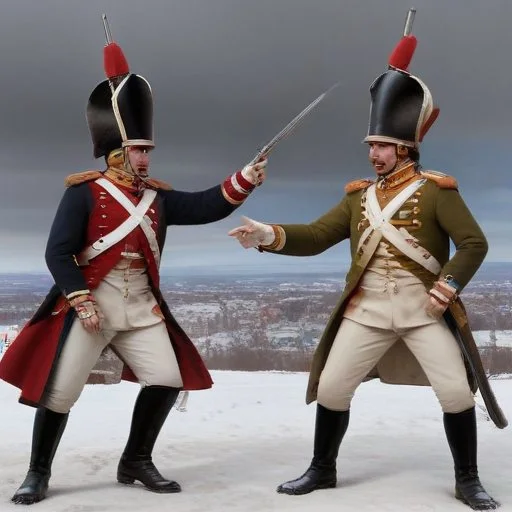
The British siege of Quebec City began on June 26, 1759, with General Wolfe's troops landing at the Île d'Orléans, 3 miles east of the city. The French, expecting a attack from the west, had fortified the Beauport shore, leaving the east side vulnerable. Wolfe seized this opportunity, launching a series of attacks on the French defenses, which ultimately led to the Battle of the Plains of Abraham. The British artillery, consisting of 24-pounder guns, played a crucial role in breaching the French walls, forcing Montcalm to withdraw his troops to the plains.
The French army, comprising regulars, militiamen, and Native American allies, was assembled on the Plains of Abraham. Montcalm's strategy was to pin down the British with a strong central column, while his flanking units attacked from the sides. However, the British artillery and superior numbers ultimately forced the French to retreat.
The French defeat marked the beginning of the end for New France. With Quebec City in British hands, the rest of the French territories in North America were vulnerable to British conquest. The eventual surrender of Montreal in September 1760, followed by the Treaty of Paris in 1763, sealed the fate of New France.
James Wolfe: The Brilliant but Flawed Commander
James Wolfe, the British commander at the Battle of the Plains of Abraham, was a complex figure. Aged 32 at the time of the battle, Wolfe was already a seasoned veteran of several European campaigns. His bravery and tactical genius were unquestionable, but his impulsive nature and tendency to disregard orders often put his troops in harm's way.
Wolfe's leadership style was marked by a strict discipline and a strong sense of justice, which earned him the respect of his soldiers. However, his obsession with capturing Quebec City often led him to take reckless decisions, such as the ill-fated assault on the Beauport shore in July 1759.
Despite his flaws, Wolfe's legacy as a brilliant commander endures. His victory at the Battle of the Plains of Abraham was a testament to his military prowess, and his sacrifice in the battle has become a symbol of British heroism.
The Seven Years War was a global conflict that involved most of the European powers, with the British and French empires vying for dominance in North America, India, and the Caribbean. The war was fought on multiple fronts, with battles raging from the Ohio River Valley to the Ganges River in India.
The French and Indian War, as it was known in North America, was a key theatre of the conflict. The British sought to capture French territories, including Quebec City, to gain control of the continent. The fall of Quebec City marked a significant turning point in the war, paving the way for British expansion in North America.
The Treaty of Paris, which ended the war in 1763, redrew the map of North America, with the British gaining control of most of the continent. The war had far-reaching consequences, shaping the course of American and Canadian history for centuries to come.

The Battle of the Plains of Abraham had a profound impact on the cultural identity of Quebec and Canada. The defeat of the French and the subsequent British rule led to a cultural and linguistic divide between French-speaking Quebec and English-speaking Canada.
The French-speaking population of Quebec maintained its cultural heritage, language, and traditions, despite being under British rule. This cultural distinctiveness has shaped the province's identity and continues to influence Canadian society today.
The battle also had an impact on the Native American populations, whose alliances with the French were tested during the war. The British victory led to a shift in Native American allegiances, as many tribes began to form alliances with the British to counter the American colonists' westward expansion.
Historical debates surrounding the Battle of the Plains of Abraham have centered on the leadership styles of James Wolfe and Louis-Joseph de Montcalm.
Historians have debated the effectiveness of Wolfe's tactics, with some arguing that his impulsive nature led to unnecessary bloodshed. Others have praised his bravery and tactical genius, citing the capture of Quebec City as a testament to his military prowess.
The French perspective on the battle has often been overlooked, with historians traditionally focusing on the British narrative. However, recent studies have sought to redress this imbalance, exploring the complexities of Montcalm's leadership and the role of French and Native American forces during the battle.