


In the early hours of April 15, 2014, the world was left in shock as news broke of the brazen abduction of 276 schoolgirls from the Government Girls Secondary School in Chibok, Borno State, Nigeria. This heinous act, carried out by the extremist group Boko Haram, would go on to become one of the most notorious kidnappings in recent history.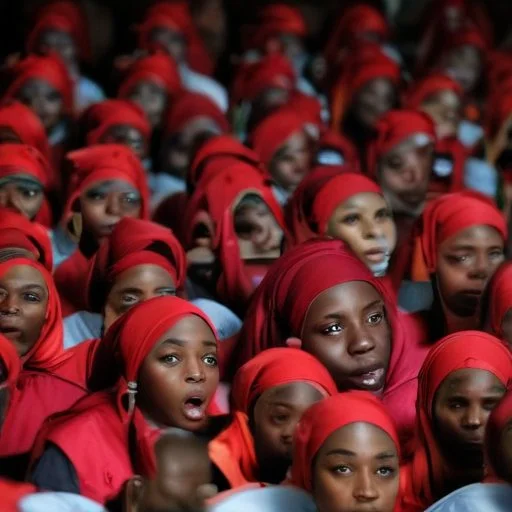
The initial days following the abduction were marked by chaos and confusion. Parents were left frantically searching for their daughters, with many taking to social media to spread the word and seek help. The hashtag #BringBackOurGirls began to trend, with celebrities, world leaders, and ordinary citizens alike demanding the safe return of the kidnapped girls.

| Date | Event |
|---|---|
| April 14, 2014 | Boko Haram militants attack the Government Girls Secondary School in Chibok, abducting 276 schoolgirls. |
| April 15, 2014 | The BringBackOurGirls campaign begins, with Nigerians and people around the world taking to social media to demand the girls' safe return. |
| May 2014 | International pressure mounts, with world leaders and celebrities joining the call to #BringBackOurGirls. |
| 2016-2018 | Gradual release of some of the abducted girls, with many still remaining in captivity. |
The Chibok schoolgirls kidnapping brought global attention to the growing threat of Boko Haram and the plight of women and girls in Nigeria. The incident sparked a renewed focus on girls' education and the need to protect vulnerable communities from terrorist groups.
The abduction also led to increased international cooperation, with countries like the United States and the United Kingdom providing military aid to Nigeria to combat Boko Haram.
The BringBackOurGirls campaign became a cultural phenomenon, inspiring music, art, and literature. The incident also sparked a wave of activism, with many people around the world using their platforms to raise awareness about the importance of girls' education.

One of the most poignant stories to emerge from the kidnapping is that of the 'Chibok Girls' themselves. Many of the rescued girls have since shared their harrowing experiences, revealing the trauma and resilience they displayed during their time in captivity.
"I was so scared, but I knew I had to be strong for my family and my friends." - One of the rescued Chibok girlsThis article was written in memory of the 276 schoolgirls abducted from Chibok, Nigeria, and in solidarity with their families and the global community that continues to demand their safe return.
Nkiru Balmonds, the mother of one of the abducted schoolgirls, became an iconic figure in the BringBackOurGirls campaign. Her unwavering determination and resilience in the face of unimaginable tragedy inspired countless people around the world.
Balmonds' daughters, Jessica and Florence, were both taken by Boko Haram. While Florence managed to escape, Jessica remained captive for several years. Throughout the ordeal, Balmonds continued to advocate for her daughter's release, even in the face of intimidation and danger.
Quote: "I will not stop until my daughter is back home, no matter what it takes." - Nkiru Balmonds
The #BringBackOurGirls campaign transcended national borders, becoming a cultural phenomenon that resonated with people from diverse backgrounds. The movement's impact was palpable in the realm of music, art, and literature, as creatives responded to the crisis with powerful works.
In the aftermath of the abduction, Nigerian artists like Tiwa Savage and Don Jazzy released songs dedicated to the cause, while international artists like Alicia Keys and Coldplay expressed their solidarity. The campaign also inspired a wave of poignant poetry, fiction, and visual art.
The BringBackOurGirls campaign served as a testament to the power of social media in mobilizing a global response to a humanitarian crisis.The town of Chibok, nestled in the heart of Borno State, Nigeria, has a rich and complex history that predates the 2014 abduction. The region has long been a crossroads of cultures, with the Kanuri and Shuwa Arab ethnic groups vying for influence.
During the 19th century, Chibok was a significant center of Islamic learning, with scholars from the region making significant contributions to Islamic jurisprudence. However, with the onset of British colonial rule, the region's cultural and economic significance began to wane.
Despite its historical significance, Chibok remained a neglected and marginalized region, paving the way for the rise of extremist groups like Boko Haram.
The Chibok abduction had far-reaching economic consequences for Nigeria, with the country's economy suffering significantly in the aftermath of the crisis.
The decline in investor confidence, coupled with the diversion of resources to combat Boko Haram, led to a significant decline in Nigeria's GDP growth rate. The tourism and education sectors, in particular, suffered heavily, as schools and tourist attractions became targets for Boko Haram attacks.
Fact: The Nigerian economy lost an estimated $10 billion in the first year following the abduction, with the overall cost of the crisis projected to exceed $100 billion.The Chibok abduction sparked a wave of social change in Nigeria, as Nigerians demanded greater accountability from their government and more effective action against Boko Haram.
The BringBackOurGirls campaign empowered ordinary citizens to become active participants in the country's democratic process, with many using social media to demand change. The movement also sparked a renewed focus on girls' education, with initiatives aimed at increasing access to education for marginalized communities.
The Chibok abduction served as a catalyst for social change in Nigeria, galvanizing a new generation of activists and advocates.