


On a sweltering day in Kingston, Jamaica, George Foreman cemented his place in boxing history by defeating reigning champion Joe Frazier in a brutal display of power and aggression. The bout, which would become known as one of the most dominant performances in heavyweight boxing history, saw Foreman knock Frazier down six times in the first two rounds before referee Arthur Mercante stopped the fight.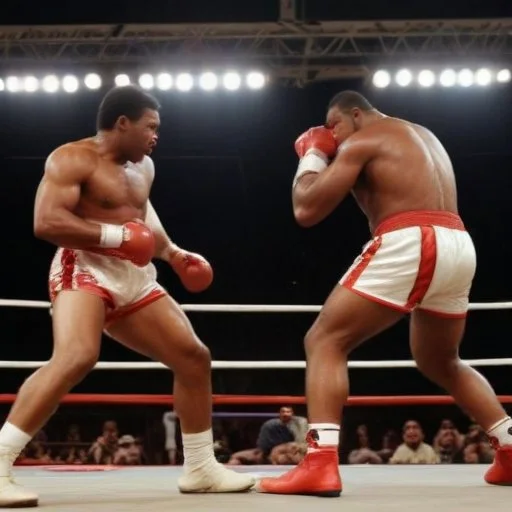
The January 22, 1973, bout marked a turning point in the sport, as Foreman's formidable power and relentless pressure proved too much for Frazier, dubbed "The Greatest" by his fans. The victory propelled Foreman to the top of the heavyweight division, ushering in a new era of boxing dominated by big-hitting fighters.
Foreman, an Olympic gold medalist and amateur champion, had been quietly building a reputation as a formidable fighter in the years leading up to the bout. With a string of impressive victories under his belt, he was seen as a legitimate challenger to Frazier's title. The stage was set for a battle of titans, with Foreman's raw power pitted against Frazier's lightning quickness and guile.
The fight itself was a one-sided affair, with Foreman coming out swinging from the opening bell. Frazier, known for his durability, was subjected to a merciless barrage of punches that left him reeling. Despite his best efforts, Frazier was unable to mount a significant challenge, with Foreman's superior power and aggression proving too much to overcome.
The victory marked Foreman's first world championship, and cemented his place as one of the top heavyweights of the era. The fight would have far-reaching consequences for both fighters, with Frazier never quite regaining his former glory, while Foreman went on to dominate the division for years to come.
The bout was seen as a symbol of the shift in power in the heavyweight division, with Foreman's victory marking the end of an era dominated by Frazier and Muhammad Ali. It also highlighted the growing influence of African American fighters in the sport, with Foreman becoming a hero to many in the black community.
"I didn't even think about Frazier's reputation. I just knew I had to go in there and do my job." - George Foreman
The fight is often compared to Mike Tyson's devastating knockout of Michael Spinks in 1988, with both bouts featuring a dominant performance by a young, up-and-coming fighter. However, Foreman's victory is often seen as more impressive, given Frazier's reputation as one of the greatest fighters of all time.
Foreman has spoken publicly about the bout, describing it as a defining moment in his career. "It was like a dream come true," he said in a 2013 interview. "I had worked so hard for that moment, and to finally achieve it was incredible."
The bout between Foreman and Frazier was not just a boxing match, but a cultural phenomenon that resonated with the African American community. Foreman's victory was seen as a symbol of black empowerment, and his rise to heavyweight glory was celebrated as a testament to the growing influence of African American athletes in the sport.
Foreman's humble beginnings and rough exterior also resonated with many in the black community, who saw him as a relatable and authentic champion. His victory marked a shift in the cultural narrative of boxing, as African American fighters began to dominate the sport in the 1970s.
Fighting for EqualityForeman's victory was also seen as a statement against racial inequality, as African American fighters had long been marginalized in the sport. Foreman's rise to glory was a beacon of hope for many, who saw his success as a symbol of what could be achieved through hard work and determination.

The bout between Foreman and Frazier is often compared to the legendary fight between Muhammad Ali and Joe Frazier in 1975. While both fights were epic battles between boxing legends, they were fought in different styles and with different outcomes.
While Ali's victory over Frazier was marked by his lightning quickness and clever footwork, Foreman's victory was characterized by his brute power and relentless pressure. Foreman's fight was a display of raw aggression, while Ali's fight was a masterclass in ring generalship.
Two Different Paths to VictoryDespite their differences in style, both Foreman and Ali emerged victorious from their respective fights with Frazier. However, their paths to victory were distinct and reflective of their unique strengths and weaknesses as fighters.
George Foreman's rise to heavyweight glory was no accident. Born in Marshall, Texas in 1949, Foreman grew up in a poor household with 11 siblings. Despite the challenges he faced, Foreman was driven to succeed, and his natural talent for boxing was evident from an early age.
Foreman's amateur career was marked by impressive victories, including a gold medal at the 1968 Olympic Games. His success in the amateur ranks propelled him to the professional circuit, where he quickly made a name for himself as a formidable fighter.
A Fighter's MindsetForeman's mental toughness and never-give-up attitude were key components of his success in the ring. Despite facing formidable opponents, Foreman always remained focused and determined, refusing to back down from a challenge.

The bout between Foreman and Frazier was a financial windfall for all parties involved. The fight generated millions of dollars in revenue, with ticket sales, television rights, and sponsorships all contributing to a record-breaking payday.
The fight also generated significant economic activity in Kingston, Jamaica, where the bout was held. Local businesses boomed as fans from around the world flocked to the island to witness the event.
A New Era of Boxing RevenueForeman's victory marked a turning point in the economic history of boxing, as the sport began to attract more mainstream attention and sponsorship. The fight paved the way for future blockbuster events, cementing boxing's place as a major player in the sports entertainment industry.
The bout between Foreman and Frazier has been subject to varying interpretations over the years, with different historians and boxing analysts offering divergent views on the significance of the fight.
Some have viewed the fight as a symbol of the decline of the classic boxing era, as the sport began to transition towards a more modern, aggressive style. Others have seen it as a testament to Foreman's raw power and aggression, which dominated the sport in the 1970s.
Deconstructing the NarrativeDespite these differing interpretations, one thing is clear: Foreman vs. Frazier was a pivotal moment in boxing history. By examining the fight through a historiographical lens, we can gain a deeper understanding of the cultural, social, and economic contexts that shaped the event.