


In a brazen display of authoritarianism, the Burmese military regime detained 71 supporters of democracy icon Aung San Suu Kyi, targeting individuals who dared to challenge the junta's grip on power. This ruthless crackdown occurred mere hours before a crucial pro-democracy meeting, as the regime sought to stifle dissent and maintain its stranglehold on the nation.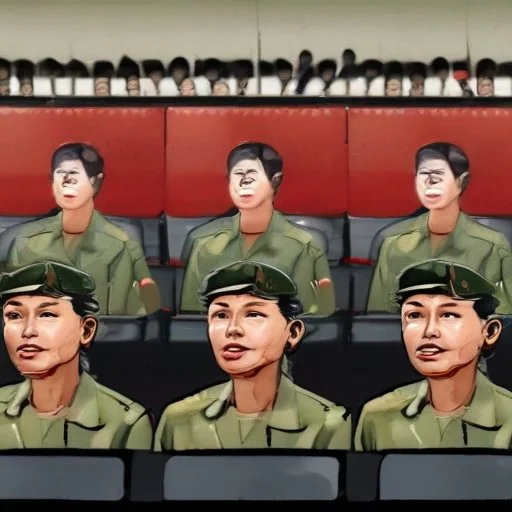
The Burmese military regime, led by General Than Shwe, had a long history of repression and human rights abuses. Since seizing power in 1962, the junta had employed brutal tactics to quell dissent, including arbitrary arrests, torture, and forced labor. Suu Kyi's National League for Democracy (NLD) party, which had won a landslide victory in the 1990 elections, posed a significant threat to the regime's authority.
On that fateful day, the regime launched a series of dawn raids, swooping up 71 individuals associated with the NLD and other pro-democracy groups. The detained included politicians, activists, and ordinary citizens who had simply exercised their right to free speech. The regime's actions were a desperate attempt to disrupt the planned pro-democracy meeting, which aimed to galvanize support for Suu Kyi's efforts to bring democratic reforms to Burma.
The regime's heavy-handed tactics sparked widespread international condemnation. Governments, human rights organizations, and world leaders expressed outrage at the junta's brutal suppression of dissent. The United States, European Union, and other nations imposed economic sanctions on Burma, further isolating the already reclusive regime.
The Burmese people's resilience in the face of oppression has inspired countless individuals around the world. Suu Kyi's unwavering commitment to democracy and human rights has made her an international icon, earning her the Nobel Peace Prize in 1991. The regime's brutal suppression of dissent has also sparked a global movement, with artists, activists, and ordinary citizens rallying behind the cause of democracy in Burma.
In the face of unrelenting repression, Suu Kyi and her fellow activists remain steadfast in their pursuit of democracy. Their unwavering commitment to the cause has inspired generations of Burmese and citizens worldwide, serving as a beacon of hope in the darkest of times.
Aung San Suu Kyi's life has been a testament to her unwavering commitment to democracy and human rights. Born on June 19, 1945, to General Aung San, the founder of modern Burma, Suu Kyi was raised with a strong sense of patriotism and a desire for social justice. After studying philosophy, politics, and economics at Oxford University, Suu Kyi returned to Burma to care for her ailing mother, only to find herself thrust into the forefront of the pro-democracy movement. Her leadership and courage in the face of adversity have inspired countless individuals around the world.
Suu Kyi's early life was marked by tragedy, with the assassination of her father when she was just two years old. This event would shape her future and drive her to fight for democratic reforms in Burma. Through her life, Suu Kyi has remained resolute in her pursuit of freedom and dignity for the Burmese people, earning her numerous international accolades and recognition.
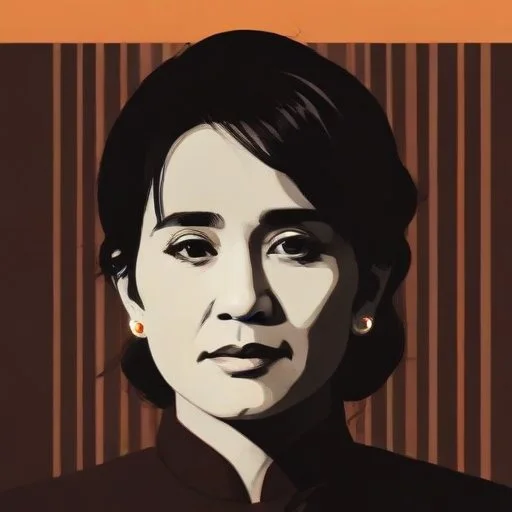
The 1990s were a tumultuous period in Burmese politics, marked by a resurgence of pro-democracy activism and a brutal crackdown by the military regime. The National League for Democracy (NLD), led by Aung San Suu Kyi, had won a landslide victory in the 1990 elections, but the military junta refused to recognize the results. This led to a period of intense political repression, with the regime employing tactics such as arbitrary arrests, torture, and forced labor to quell dissent.
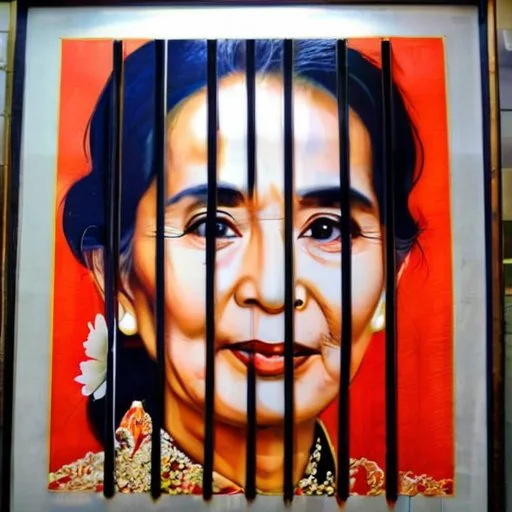
Aung San Suu Kyi's iconic image has transcended borders, becoming a symbol of democracy and human rights worldwide. Her steadfast commitment to non-violent resistance has inspired countless artists, writers, and activists around the world. From graffiti murals in Bangkok to protest posters in New York City, Suu Kyi's face has become synonymous with the struggle for freedom and human dignity.
The Burmese people's reverence for Suu Kyi is reflected in the numerous songs, poems, and works of art dedicated to her. Her image has also been incorporated into various forms of traditional Burmese art, such as tapestries and wood carvings. Suu Kyi's cultural significance extends beyond Burma, serving as a beacon of hope for oppressed communities around the world.
Burma's unique geography has long made it a critical player in regional and global politics. Its strategic location between India and Southeast Asia has allowed it to serve as a bridge between two of the world's most populous regions. The country's rich natural resources, including oil, gas, and minerals, have made it an attractive destination for foreign investment and diplomatic engagement.
The global community has long recognized Burma's importance, with the United States, European Union, and other nations imposing economic sanctions on the regime in response to its human rights abuses. This geopolitical significance has contributed to the international attention surrounding Suu Kyi's struggle for democracy, with many nations viewing her as a key partner in promoting regional stability and security.
The Burmese military regime's brutal suppression of dissent has come at a significant economic cost. The regime's human rights abuses and political repression have led to international sanctions, isolating the country from the global economy. The lack of investment, coupled with mismanagement and corruption, has resulted in widespread poverty and economic stagnation.
The human cost of this repression is also significant, with many Burmese citizens forced to flee their homes and seek refuge in neighboring countries. The regime's actions have also led to the loss of valuable human capital, as many skilled professionals and entrepreneurs have been forced to leave the country. The economic cost of the regime's actions will likely be felt for generations to come.