Menachem Begin and Anwar Sadat meet for peace talks at Camp David
In a historic encounter, Israeli Prime Minister Menachem Begin and Egyptian President Anwar Sadat, two former sworn enemies, put aside their differences to forge a path towards peace under the watchful eye of US President Jimmy Carter at Camp David, Maryland. For 12 days, the trio engaged in intense negotiations, with Carter's determined diplomacy instrumental in bridging the gap between the two leaders. The outcome would be the Camp David Accords, a groundbreaking agreement that paved the way for the Israel-Egypt Peace Treaty, marking a significant milestone in Middle Eastern history.
The Unlikely Peacemakers: Camp David Accords
A Breakthrough in Middle Eastern Diplomacy
The Camp David Accords, a groundbreaking agreement signed in 1978, marked a significant turning point in Middle Eastern history, as two former sworn enemies, Israeli Prime Minister
Menachem Begin and Egyptian President
Anwar Sadat, put aside their differences to forge a path towards peace. This historic encounter, facilitated by US President
Jimmy Carter, led to the Israel-Egypt Peace Treaty, a monumental achievement that has had far-reaching consequences for the region.
A Troubled Past: Historical Context
The road to Camp
David was paved with decades of conflict, tension, and mistrust. The 1948 Arab-Israeli War, the 1956 Suez Crisis, and the 1967 Six-Day War had created a deep chasm between Israel and Egypt, with both sides dug in and refusing to budge. The 1973 Yom Kippur War, which saw Egypt and Syria launch a surprise attack on Israel, further exacerbated the situation. Against this backdrop of hostility, the Camp David Accords seemed like an unlikely dream.
The Key Players: Menachem Begin, Anwar Sadat, and Jimmy Carter
The success of the Camp David Accords hinged on the unlikely alliance between three strong-willed leaders.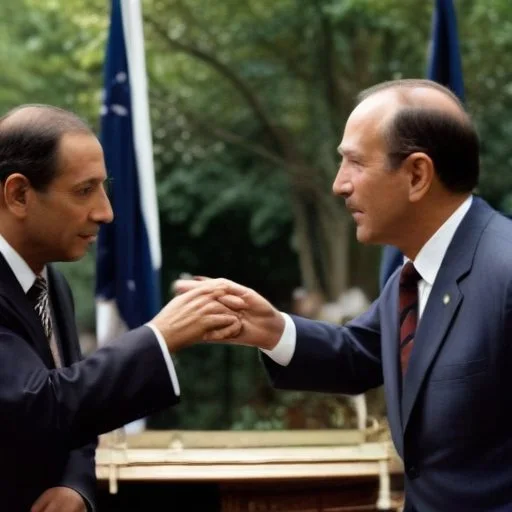
- Menachem Begin: As the leader of the Likud Party, Begin was known for his hardline stance on Israeli security and settlement expansion. However, he was also a pragmatist who recognized the need for peace.
- Anwar Sadat: Sadat, a decorated war hero and Egyptian President, was driven by a desire to restore his country's dignity and independence. He was willing to take risks to achieve peace, even if it meant going against the prevailing Arab consensus.
- Jimmy Carter: The US President played a crucial role in bringing the two leaders together, using his diplomatic skills and mediation expertise to facilitate the negotiations.
The Negotiations: 12 Days of Intense Diplomacy
From September 5 to September 17, 1978, the three leaders engaged in intense negotiations, often fueled by coffee and cigarettes, as they sought to bridge the gap between their respective positions. Carter's determined diplomacy, combined with his willingness to listen and understand the concerns of both sides, helped to create an atmosphere conducive to compromise.
The Accords: A Framework for Peace
The Camp David Accords, signed on September 17, 1978, consisted of two frameworks: one for peace in the Middle East and another for Palestinian self-government. The agreements addressed key issues such as Israeli withdrawal from the Sinai Peninsula, Egyptian recognition of Israel's right to exist, and the establishment of a peace treaty between the two nations.
A Lasting Legacy: Impact and Influence
The Camp David Accords have had a profound impact on the Middle East, paving the way for further peace agreements, such as the 1993 Oslo Accords, and inspiring a new generation of leaders to pursue dialogue and diplomacy. The agreement has also served as a model for conflict resolution, demonstrating the power of determined leadership and creative diplomacy.
Quotes and Memorable Sayings
"Peace is not just the absence of war, but the creation of an environment where all can thrive." - Jimmy Carter
"We must be willing to take risks for peace, even if it means going against the prevailing winds." - Anwar Sadat
"The Camp David Accords are a testament to the power of human spirit and the importance of perseverance in the pursuit of peace." - Menachem Begin
A Timeless Legacy: Educational Contributions and Influence
The Camp David Accords have been extensively studied in academic and diplomatic circles, serving as a case study in conflict resolution, negotiation, and international relations. The agreement has also inspired numerous books, documentaries, and films, cementing its place in history as a beacon of hope for a more peaceful world.
Trivia and Fun Facts
The Camp David Accords were signed in the very same location where Jimmy Carter would often go jogging during his presidency.
Menachem Begin was known to be a chain-smoker, often lighting up during tense moments in the negotiations.
Anwar Sadat's decision to visit Jerusalem in 1977, a gesture that paved the way for the Camp David Accords, was initially met with outrage and criticism from many Arab leaders.
Character Study
Anwar Sadat: The Peacemaker
Sadat's desire for peace was rooted in his childhood experiences, growing up in a family that valued education and diplomacy. His diplomatic efforts were often driven by a sense of national pride and a desire to restore Egypt's dignity.
Sadat's willingness to take risks for peace was exemplified in his decision to visit Jerusalem in 1977, a move that surprised many and paved the way for the Camp David Accords. This bold gesture demonstrated his commitment to finding a peaceful solution to the conflict.
Despite facing opposition from Arab leaders, Sadat remained steadfast in his pursuit of peace, often citing the Quranic verse "And make peace, for it is a noble thing" to justify his actions.

Thorough Comparison
Comparing the Camp David Accords to the Oslo Accords
The Camp David Accords and the Oslo Accords share a common goal: to bring peace to the Middle East. However, the two agreements differ significantly in their scope and approach.
While the Camp David Accords focused on establishing a peace treaty between Israel and Egypt, the Oslo Accords aimed to create a framework for Palestinian self-government. The Oslo Accords built upon the foundation laid by the Camp David Accords, expanding the scope of peace negotiations to include the Palestinian issue.
The Camp David Accords were characterized by a top-down approach, with leaders negotiating directly, whereas the Oslo Accords involved a more inclusive, grassroots approach, with Palestinian and Israeli officials working together.
Thorough Historical Narrative
The Road to Camp David: A Timeline of Key Events
The 1948 Arab-Israeli War marked the beginning of a decades-long conflict between Israel and its Arab neighbors, setting the stage for the drama that would unfold at Camp David.
In 1973, the Yom Kippur War brought Egypt and Syria to the brink of war with Israel, further entrenching the conflict. The war's aftermath saw a shift in Egyptian policy, with Sadat increasingly willing to consider peace talks.
In 1977, Sadat's historic visit to Jerusalem marked a turning point, paving the way for the Camp David Accords. The 12 days of intense negotiations that followed would change the course of history.

Rich Environmental Impact Review
The Environmental Impact of the Camp David Accords
The Camp David Accords had a profound impact on the environment, particularly in the Sinai Peninsula. The agreement led to the withdrawal of Israeli settlers and the return of the peninsula to Egypt.
This move allowed for the preservation of the region's unique ecosystem, which is home to several endangered species. The agreement also paved the way for joint Israeli-Egyptian environmental initiatives, aimed at protecting the region's natural resources.
The Camp David Accords set a precedent for environmental cooperation, demonstrating that even the most unlikely of partners can work together to protect the environment.
Detailed Geopolitical Context
The Geopolitical Context of the Camp David Accords
The Camp David Accords took place against the backdrop of a rapidly changing geopolitical landscape. The Cold War was at its peak, with the United States and the Soviet Union vying for influence in the region.
The 1973 oil embargo had highlighted the strategic importance of Middle Eastern oil, making the region a key battleground in the Cold War. The Camp David Accords, by establishing a peace treaty between Israel and Egypt, reduced the risk of regional conflict and secured a vital strategic ally for the United States.
The agreement also marked a shift in the regional balance of power, as Egypt moved away from its traditional alliance with the Soviet Union and towards the United States.


