


The world bore witness to a phenomenon so bizarre, it defied the sensibilities of modern geopolitics – a war sparked by a soccer match. The infamous Football War, fought between Honduras and El Salvador in 1969, lasted a mere six days, but its impact still resonates in the realms of international relations and sporting history.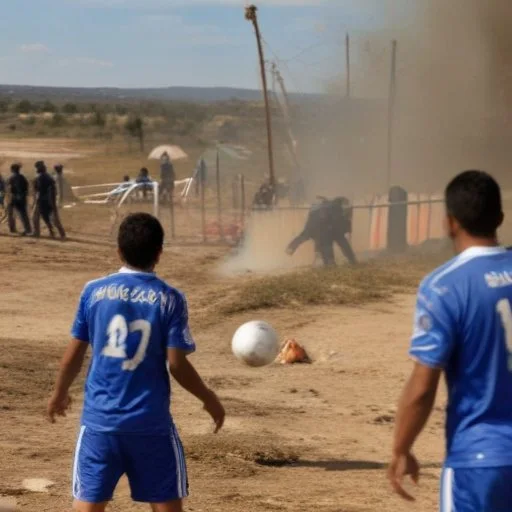
The fuse was lit on June 8, 1969, when Honduras defeated El Salvador 1-0 in a World Cup qualifying match. The loss proved too much for El Salvador's fans, who took to the streets, rioting and clashing with Honduran immigrants. The situation escalated rapidly, as military forces from both nations mobilized along the border, exchanging gunfire and artillery fire.
Just six days into the conflict, on July 18, 1969, a ceasefire was announced, bringing a tenuous calm to the region. The agreement was facilitated by the Organization of American States (OAS), which intervened to prevent further bloodshed and instability in Central America.
The Football War highlighted the simmering tensions between Honduras and El Salvador, rooted in disputes over territory, immigration, and economic interests. It also exposed the fragility of regional security arrangements, prompting the OAS to reexamine its conflict resolution mechanisms.
The Football War was a manifestation of the intense passion and national pride invested in soccer in Central America. The region's love for the sport, combined with underlying social and economic tensions, created a volatile cocktail that ultimately boiled over into conflict.
Despite the passage of time, the rivalry between Honduras and El Salvador on the soccer pitch remains intense. Their matches are still considered high-risk, with security measures in place to prevent a repeat of the 1969 violence.
In conclusion, the Football War serves as a poignant reminder of the unpredictable nature of human conflict and the power of sports to both unite and divide nations. As we look back on this brief but blazing chapter in history, we are compelled to acknowledge the enduring legacy of a war that refused to be confined to the soccer pitch.
In the months leading up to the Football War, tensions between Honduras and El Salvador were already simmering. A series of border disputes and disagreements over immigration policies had created an atmosphere of mistrust and hostility. The 1969 World Cup qualifying match, which sparked the war, was merely the catalyst for a much deeper-seated conflict. The real issue at play was a century-old rivalry between the two nations, fueled by competing economic interests and a long history of territorial disputes.
General Oswaldo López Arellano, Honduras' President and Commander-in-Chief, was a complex figure with a multifaceted role in the Football War. While he is often portrayed as a hardline militarist, Arellano was also a skilled diplomat who worked closely with the OAS to negotiate a peaceful resolution to the conflict. Despite his reputation as a strongman, Arellano was known for his charisma and ability to connect with ordinary Hondurans, which helped to galvanize national support for the war effort.
The Football War had a profound impact on popular culture in Central America, particularly in the realm of soccer. The war cemented soccer's status as a symbol of national pride and identity, and matches between Honduras and El Salvador became a focal point for nationalist sentiment. The war also led to a surge in popularity for soccer in the region, with attendance at matches and interest in the sport reaching new heights in the years following the conflict.

The Football War exposed deep-seated structural flaws in the regional security arrangements of Central America. The conflict revealed that the OAS, which had previously been seen as a reliable mediator, was ill-equipped to handle a crisis of this magnitude. The war prompted a major overhaul of the OAS's conflict resolution mechanisms, including the creation of new protocols for crisis management and dispute resolution.
The Football War took place against a backdrop of broader geopolitical tensions in Central America. The Cold War was at its height, and both Honduras and El Salvador were caught up in a regional struggle for influence between the United States and the Soviet Union. The war was also influenced by the broader context of regional integration, as Central American countries struggled to balance their relationships with one another and with global powers.