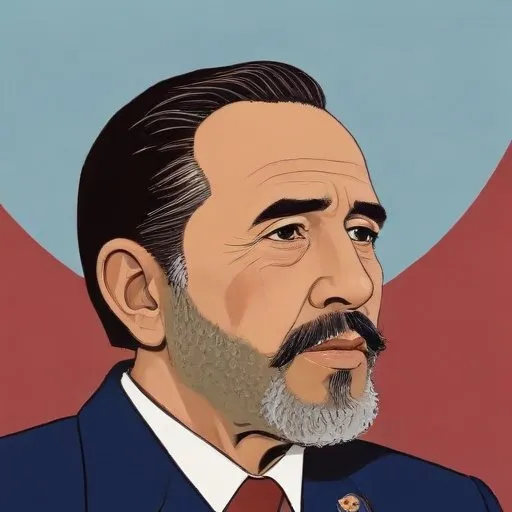
Fidel Sánchez Hernández: The Salvadoran President Who Shaped a Nation
A Militarist and Statesman
Fidel Sánchez Hernández was a prominent Salvadoran military officer and politician who served as the President of El Salvador from 1967 to 1972. During his tenure, he navigated the country through a tumultuous period of war and economic turmoil, leaving an indelible mark on the nation's history.
Military Career
Before ascending to the presidency, Sánchez Hernández was an esteemed army general in El Salvador. He played a key role in the overthrow of José María Lemus in 1960 and later served as a military attaché in Washington D.C. and Paris. In 1962, President Julio Adalberto Rivera appointed him as Minister of the Interior, a position he held until 1967.
Presidency and Reforms
Sánchez Hernández succeeded Rivera as President of El Salvador in 1967. During his presidency, he continued Rivera's progressive programs and created a mostly civilian cabinet. The 1967 election, in which he emerged victorious, was considered one of the few fair and transparent elections during the period of military domination. However, this trend towards democratization was short-lived, and subsequent elections in the 1970s were marred by rigging.
The Football War and Its Consequences
One of the most significant events during Sánchez Hernández's presidency was the brief but violent Football War against Honduras in July 1969. Although the Salvadoran Army achieved significant territorial gains, the war led to devastating economic consequences, including a massive influx of refugees and the closure of trade routes by Honduras.
Legacy and Later Life
Sánchez Hernández remained in office until 1972, when he was succeeded by Colonel Arturo Armando Molina. He spent the remainder of his life in relative obscurity, passing away on February 28, 2003, at the age of 85, due to a heart attack.
Awards and Decorations
- Order of José Matías Delgado
- Order of Francisco Morazán
- Order of the Quetzal
Controversies and Public Perception
Sánchez Hernández's presidency was not without controversy. His role in the Football War and the subsequent economic crisis drew criticism from various quarters. Additionally, his decision to pull out of Honduras under the ceasefire agreement arranged by the Organization of American States was seen as a betrayal by many of his military leaders.
Historical Context and Legacy
Fidel Sánchez Hernández's presidency was a complex and multifaceted chapter in El Salvador's history. While he made significant strides in continuing progressive reforms, his leadership during the Football War and its aftermath remains a subject of debate. Nevertheless, his impact on the country's development and his role in shaping its modern trajectory cannot be overstated.
FAQ
What was Fidel Sánchez Hernándezs early life like?
Fidel Sánchez Hernández was born in 1917 in El Salvador and grew up in a military family. He graduated from the Salvadoran Military Academy and went on to study in the United States.
What role did Sánchez Hernández play in Salvadoran politics?
Fidel Sánchez Hernández served as the President of El Salvador from 1967 to 1972, during a period of significant political turmoil and social change in the country.
Did Sánchez Hernández implement any notable policies?
During his presidency, Sánchez Hernández implemented several policies aimed at modernizing El Salvadors economy and infrastructure, including the construction of new roads and highways.
How did Sánchez Hernándezs presidency end?
Fidel Sánchez Hernándezs presidency ended in 1972, when he was ousted in a military coup. He went into exile and later returned to El Salvador, where he died in 2003.
What legacy did Sánchez Hernández leave in El Salvador?
Fidel Sánchez Hernándezs legacy in El Salvador is complex and contested, with some viewing him as a modernizer and others criticizing his authoritarian style of governance.