


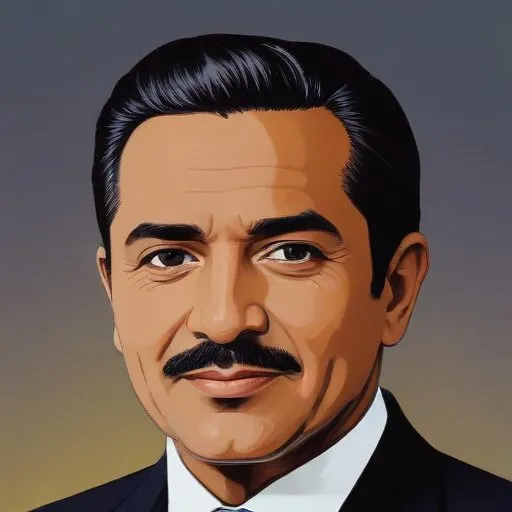
The first president of El Salvador to transition from a military to a civilian government, known for his efforts to rebuild the country after a devastating civil war. He implemented various economic and political reforms to promote stability and growth.
Francisco Guillermo Flores Pérez, a Salvadoran politician, served as President of El Salvador from 1999 to 2004, earning him a reputation as a conservative leader with close ties to the United States. During his presidency, he implemented significant economic reforms, including the adoption of the U.S. dollar as the country's official currency.
Flores was born on October 17, 1959, in Santa Ana, El Salvador, to Maria Leonor Pérez de Flores, an ethnographer and folklorist, and Ulises Flores, an economist. He was one of three children in the family. Flores pursued his education in the United States, earning an associate degree in sociology from the University of Hartford's Hillyer College, followed by a major in political science at Amherst College in Massachusetts. He furthered his studies with a master's degree in philosophy at World University in California.
Flores entered politics during the Alfredo Cristiani administration, holding various positions before being elected as a deputy to the Legislative Assembly in 1994. He quickly rose through the ranks, becoming the president of the Assembly from 1997 to 1999. In 1999, he successfully ran for president, becoming the youngest person to hold the office at the age of 39.
During his presidency, Flores focused on strengthening El Salvador's relationship with the United States, which led to the adoption of the U.S. dollar as the official currency. This move aimed to stabilize the economy and attract foreign investment.
In May 2014, Flores was accused of embezzling $15 million in aid from Taiwan, intended for survivors of the 2001 El Salvador earthquakes. This led to his indictment and trial, making him the first former Salvadoran president to face corruption charges. Flores was placed under house arrest but passed away on January 30, 2016, before standing trial.
Flores' presidency was marked by significant economic reforms, including the adoption of the U.S. dollar, which had a lasting impact on El Salvador's economy. However, his legacy is also marred by the corruption allegations and trial that tarnished his reputation.
In conclusion, Francisco Flores Pérez was a complex figure, known for his conservative politics and close ties to the United States. While his presidency brought about significant economic changes, his legacy is also marked by controversy and allegations of corruption.
Flores' legacy continues to be the subject of debate, with some praising his economic reforms and others criticizing his alleged corruption.
67 Years Old
Former President of El Salvador who implemented progressive reforms, including free healthcare and education, and sought to reduce gang violence and poverty.
86 Years Old
A Costa Rican leader who served as President and was awarded the Nobel Peace Prize for his efforts to broker peace in Central America, particularly in ending the Nicaraguan Civil War.
67 Years Old
First female President of Costa Rica, serving from 2010 to 2014 and known for her efforts to reduce poverty and promote sustainable development.
72 Years Old
The charismatic leader who transformed Venezuela through socialist reforms and anti-imperialist rhetoric, leaving a lasting impact on the country's politics and economy.
81 Years Old
The former Marxist guerrilla leader who ruled Nicaragua with an iron fist, known for his authoritarian regime and controversial human rights record.
63 Years Old
Ecuador's first leftist president, who implemented progressive reforms, nationalized industries, and defaulted on foreign debt, gaining popularity among the poor and working class.
