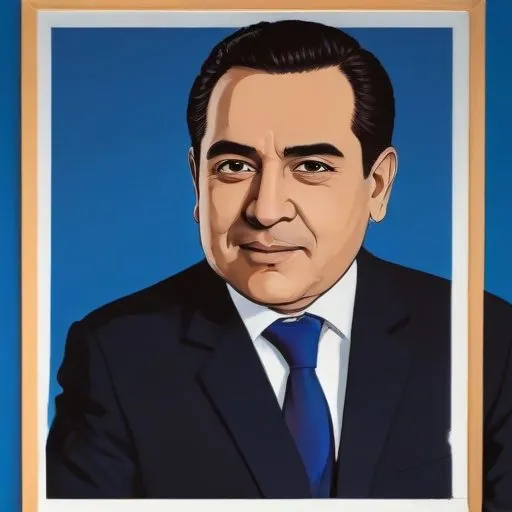
Mauricio Funes: The Journalist-Turned-President Who Shaped El Salvador's History
A Champion of Press Freedom and Leftist Ideals
Mauricio Funes is widely recognized as the 41st President of El Salvador, serving from 2009 to 2014, and a former journalist who dared to challenge the status quo. As a prominent figure in Salvadoran politics, Funes is known for his unwavering commitment to press freedom, inter-American understanding, and leftist ideologies that resonated with the nation's marginalized communities.
Early Life and Education: Seeds of Social Consciousness
Born on October 18, 1959, in San Salvador, Funes received his high school diploma from the prestigious Externado San José, a Jesuit institution. He continued his education at Universidad Centroamericana, another Jesuit institution, although he did not graduate. The Jesuit influence had a profound impact on Funes' professional and personal development, particularly after the brutal murder of six Jesuit priests by the Salvadoran military in 1989.
Award-Winning Journalist: Unapologetic and Unrelenting
Before venturing into politics, Funes built a reputation as a fearless journalist, hosting popular interview shows on television and radio. He made appearances on Channel 12 and CNN en Español, as well as local news programs that critically examined previous governments. Funes' reporting during the Salvadoran Civil War allowed him to interview leftist rebel leaders, which further solidified his sympathy for the marginalized.
The Turning Point: From Journalism to Politics
In 1994, Funes was awarded the Maria Moors Cabot prize from Columbia University for his tireless efforts in promoting press freedom and inter-American understanding. This recognition catapulted him into the realm of politics, where he became a prominent figure in the Farabundo Martí National Liberation Front (FMLN) party.
Campaign and Presidency: A New Era for El Salvador
On September 28, 2007, Funes was nominated as the FMLN candidate for the presidency, running against Rodrigo Ávila from the Nationalist Republican Alliance (ARENA) party. In a historic election, Funes won the presidency, marking the first time a former guerrilla group had assumed power in El Salvador. During his tenure, Funes implemented various social and economic reforms, including programs to reduce poverty and improve healthcare.
Controversies and Legacy
Funes' presidency was not without controversy. In 2016, he and his family fled to Nicaragua amid allegations of criminality, and in 2023, the U.S. State Department sanctioned him for his alleged involvement in gang truces, illicit enrichment, and tax evasion. Despite these challenges, Funes remains an important figure in Salvadoran politics, remembered for his unwavering commitment to social justice and press freedom.
Quotes and Memorable Sayings
- "The freedom of expression is the cornerstone of a healthy democracy."
- "We must work together to build a more just and equitable society, where everyone has access to basic human rights."
Personal Milestones and Key Life Events
- 1959: Born in San Salvador, El Salvador
- 1994: Awarded the Maria Moors Cabot prize from Columbia University
- 2007: Nominated as the FMLN candidate for the presidency
- 2009: Inaugurated as the 41st President of El Salvador
- 2014: Completed his presidential term
- 2016: Fled to Nicaragua amid allegations of criminality
- 2023: Sanctioned by the U.S. State Department
Inspiring a Generation: Funes' Lasting Impact
Mauricio Funes' remarkable journey serves as a testament to the power of conviction and perseverance. Despite the challenges he faced, Funes remains an inspiration to those fighting for social justice, press freedom, and human rights. His legacy continues to shape El Salvador's history, reminding us that even in the darkest of times, there is always hope for a brighter tomorrow.
FAQ
What was Mauricio Funes role in Salvadoran politics?
Mauricio Funes served as the President of El Salvador from 2009 to 2014, leading the Farabundo Martí National Liberation Front (FMLN) party.
What did Mauricio Funes do to address poverty and inequality?
Mauricio Funes implemented several social programs aimed at reducing poverty and inequality in El Salvador, including initiatives to improve access to education and healthcare.
What was Mauricio Funes stance on economic development?
Mauricio Funes advocated for a mixed economy, promoting public-private partnerships and investments in key sectors such as agriculture and infrastructure.
What has Mauricio Funes said about his experience in journalism?
Mauricio Funes worked as a journalist before entering politics, and has spoken about the importance of a free and independent press in holding government accountable.
What charitable causes does Mauricio Funes support?
Mauricio Funes has been involved with several charitable organizations, including those supporting education and healthcare initiatives in El Salvador.