Charles Darwin publishes theory of evolution alongside Alfred Russel Wallace
It's a seismic shift in scientific understanding! Charles Darwin, the brilliant British naturalist, finally shares his revolutionary idea - evolution through natural selection - with the world. In a groundbreaking joint publication, he's joined by Alfred Russel Wallace, a fellow pioneer, who independently arrived at the same groundbreaking concept. Together, they shake the foundations of biology and beyond, introducing the concept of species adaptation and change over time. Their work, appearing in The Journal of the Proceedings of the Linnean Society of London, sparks a new era in scientific inquiry, paving the way for major breakthroughs in fields like genetics and paleontology.
The Paradigm Shift: Darwin and Wallace's Joint Publication on Evolution through Natural Selection
A New Dawn in Scientific Understanding
In 1858,
Charles Darwin's seminal paper on evolution through natural selection, accompanied by
Alfred Russel Wallace's parallel discovery, was published in The Journal of the Proceedings of the Linnean Society of London. This groundbreaking joint publication marked a significant turning point in the history of biology, as it introduced the concept of species adaptation and change over time, revolutionizing the field of natural history.
Historical Background: The Intellectual Ferment of the 19th Century
The mid-19th century was an era of rapid scientific progress, marked by significant advances in fields like geology, biology, and paleontology. The discovery of fossils, the development of comparative anatomy, and the rise of geological theories like uniformitarianism created an intellectual ferment that laid the groundwork for Darwin's and Wallace's work.
Key Figures Involved: The Unlikely Duo Behind the Theory
Charles Darwin, the renowned British naturalist, is widely recognized as the father of modern evolutionary theory. His extensive travels on the HMS Beagle and subsequent research on Galapagos finches laid the foundation for his groundbreaking work on evolution.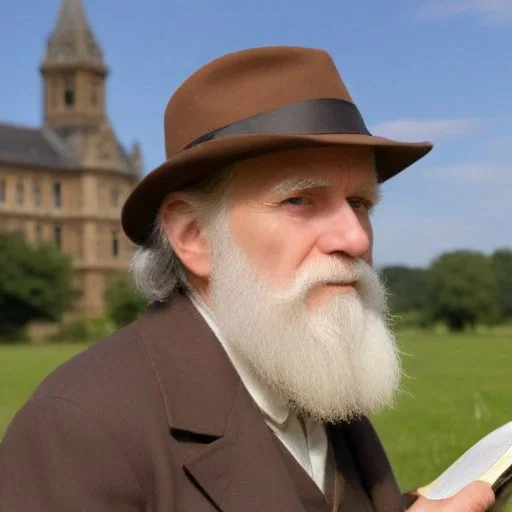
Alfred Russel Wallace, a British biologist and explorer, independently arrived at the concept of evolution through natural selection. His research on animal distribution and adaptation in the Malay Archipelago led him to develop a theory parallels to Darwin's, earning him a place alongside Darwin as a co-founder of modern evolutionary theory.
Timeline of Events: The Building Blocks of a Revolution
- 1831: Charles Darwin embarks on the HMS Beagle, beginning his five-year journey to South America and the Galapagos Islands.
- 1844: Darwin begins writing his manuscript on species adaptation and change over time, later to become "On the Origin of Species."
- 1858: Alfred Russel Wallace sends his paper on evolution to Darwin, prompting Darwin to publish his own work.
- July 1, 1858: The joint publication of Darwin's and Wallace's papers on evolution through natural selection appears in The Journal of the Proceedings of the Linnean Society of London.
Major Outcomes and Impacts: A New Era in Scientific Inquiry
The publication of Darwin's and Wallace's work sparked a new era in scientific inquiry, paving the way for major breakthroughs in fields like genetics and paleontology. Their theory of evolution through natural selection:
- Provided a unifying explanation for the diversity of life on Earth.
- Established the concept of adaptation as a driving force in species change.
- Fostered a new understanding of the natural world, shifting the focus from static creation to dynamic evolution.
Cultural and Social Influences: A Controversial Reception
The publication of Darwin's and Wallace's work was met with both fascination and hostility. The theory's implications on religious beliefs and traditional views of humanity sparked heated debates, with some hailing it as a revolutionary breakthrough and others condemning it as heresy.
Quotes and Memorable Sayings: Darwin's Reflections on Evolution
"It is interesting to contemplate an entangled bank, clothed with many plants of many kinds, with birds singing on the bushes, with various insects flitting about, and with worms crawling through the damp earth, and to reflect that these elaborately constructed forms, so different from each other, and dependent on each other in so complex a manner, have all been produced by laws acting around us."
— Charles Darwin, "On the Origin of Species" (1859)
Comparative Analysis with Similar Events: The Precursor to Modern Evolutionary Theory
Darwin's and Wallace's work built upon the foundations laid by earlier scientists, such as
Jean-Baptiste Lamarck and Erasmus Darwin. Their theory, however, marked a significant departure from earlier ideas, providing a comprehensive explanation for the diversity of life on Earth.
Personal Accounts and Anecdotes: The Unlikely Friendship Between Darwin and Wallace
Despite being separated by distance and social class, Darwin and Wallace developed a close and enduring friendship. Their exchange of letters and ideas fostered a sense of camaraderie, with Darwin later referring to Wallace as "my dear fellow-traveler."
Impact on Future Events: The Legacy of Darwin and Wallace
The publication of Darwin's and Wallace's work set the stage for a century of scientific progress, influencing the development of modern evolutionary theory, ecology, and conservation biology. Their legacy continues to shape our understanding of the natural world, inspiring new generations of scientists and thinkers.
Thorough Historical Narrative
The Intellectual Climate of 19th Century England
The mid-19th century was an era of significant scientific and intellectual change in England. The Industrial Revolution had brought about rapid economic growth, urbanization, and social change, creating an environment conducive to new ideas and perspectives. The scientific community was abuzz with debates about the nature of species, the age of the Earth, and the mechanisms of geological change. This intellectual ferment provided the perfect backdrop for Darwin's and Wallace's groundbreaking work on evolution.
Their theory of evolution through natural selection was not only a response to the scientific questions of the time but also a reflection of the broader cultural and social trends of the era. As England was grappling with the consequences of industrialization, urbanization, and imperialism, Darwin's and Wallace's work spoke to the need for a new understanding of the natural world and humanity's place within it.

Thorough Character Sketch
Lyell's Influence on Darwin's Thought
Principles of Geology, which Darwin had read during his voyage on the HMS Beagle, introduced him to the concept of uniformitarianism, the idea that the Earth's geological features are shaped by gradual, incremental processes over long periods of time. This concept deeply influenced Darwin's understanding of species adaptation and change over time.Lyell's friendship and mentorship also provided Darwin with a sounding board for his ideas, which he would often discuss and debate with Lyell. In fact, it was Lyell who encouraged Darwin to publish his work on evolution, recognizing the significance of his discoveries.
Detailed Comparative Overview
Comparing the Contributions of Darwin and Wallace
While both Darwin and Wallace are credited with the development of the theory of evolution through natural selection, their contributions differed in significant ways. Darwin's work was more comprehensive, spanning over two decades of research and observation. His book, On the Origin of Species, provided a detailed and systematic explanation of the mechanisms of evolution, including the concept of adaptation, variation, and speciation.
Wallace's contribution, on the other hand, was more focused on the geographical distribution of species and the role of natural selection in shaping that distribution. His paper, "On the Tendency of Varieties to Depart Indefinitely from the Original Type," presented a more concise and accessible explanation of the theory, which helped to popularize it among a broader audience.

Detailed Cultural Impact Report
The Public Reception of Darwin's Theory
The publication of Darwin's On the Origin of Species in 1859 sparked a frenzy of public debate and discussion. The theory of evolution through natural selection was seen as a threat to traditional religious beliefs and sparked heated debates about the nature of humanity and the natural world.
The scientific community was divided, with some hailing the theory as a revolutionary breakthrough and others condemning it as heresy. The general public was fascinated by the implications of the theory, with many seeing it as a challenge to the authority of the Church and the established social order.
In-Depth Scientific Discoveries Analysis
The Evolution of Evolutionary Thought
Darwin's and Wallace's theory of evolution through natural selection was not an end in itself but rather a starting point for further scientific inquiry and discovery. In the years and decades that followed, scientists built upon their work, refining and expanding our understanding of evolution.
The discovery of genetics, the development of modern taxonomy, and the discovery of fossils like Lucy and Tiktaalik have all contributed to a deeper understanding of the mechanisms and processes of evolution. Today, evolutionary thought continues to shape our understanding of the natural world, informing fields like ecology, conservation biology, and biotechnology.


