


The Sino-Indian War, a conflict that raged like a tempest across the Himalayas, is remembered for its sheer intensity and far-reaching consequences. The war, sparked by China's sudden and simultaneous offensives in Ladakh and across the McMahon Line, would forever reshape the geopolitical landscape of Asia.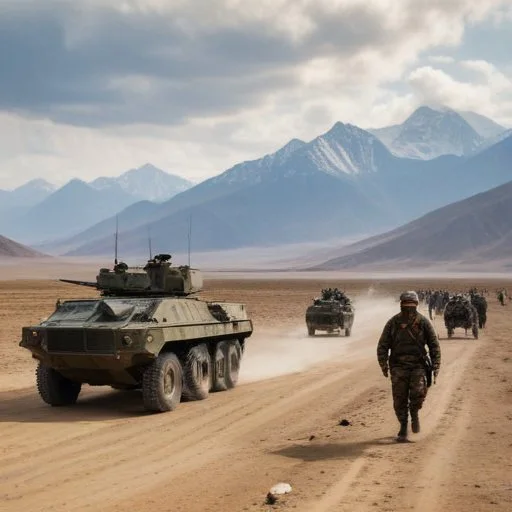
The seeds of the Sino-Indian War were sown in the early 20th century, when the British Empire's "Great Game" in Asia created a tangled web of borders and interests. The McMahon Line, a disputed border between India and China, was a relic of this era, with both nations claiming sovereignty over the region.
The war began on October 20, 1962, with China's surprise attack on Indian positions in Ladakh and the North-East Frontier Agency (NEFA). The initial assault caught the Indian military off guard, forcing them to scramble and respond to the sudden onslaught.
The Sino-Indian War resulted in significant losses for both nations, with thousands of lives lost and deep scars left on the psyche of the two nations. The war exposed the weaknesses of India's military and led to a re-evaluation of its foreign policy, while China's assertive stance earned it recognition as a regional power.
The war also led to a significant shift in India's foreign policy, with the nation adopting a more pragmatic approach to international relations. The war marked the beginning of a prolonged period of tensions between India and China, which would only begin to ease in the 1980s.
The Sino-Indian War had a profound impact on the cultural and social fabric of both nations. In India, the war led to a resurgence of nationalist sentiment, with the nation rallying behind its military and government. In China, the war marked a significant milestone in the nation's rise to global prominence.
The war also had a profound impact on the art and literature of both nations, with writers and artists drawing inspiration from the conflict. The war inspired a new generation of artists, writers, and musicians, who sought to capture the essence of the conflict in their work.
The Sino-Indian War was marked by numerous tales of bravery and sacrifice, as soldiers from both nations fought valiantly in the harsh terrain of the Himalayas. One such story is that of Major Shaitan Singh, an Indian Army officer who led his company against overwhelming odds, and was posthumously awarded the Param Vir Chakra, India's highest military honor.
The war also inspired a new generation of leaders, who drew inspiration from the bravery and sacrifice of the soldiers who fought in the war. The war marked a turning point in the history of both nations, and its legacy continues to shape the complex and often contentious relationship between India and China.
The roots of the Sino-Indian War can be traced back to the Simla Convention of 1914, where the British, Chinese, and Tibetan governments met to demarcate the borders of Tibet. However, the Chinese government never ratified the agreement, leading to a long-standing dispute over the McMahon Line.
In the years leading up to the war, India and China engaged in a series of diplomatic negotiations, but the talks ultimately broke down due to China's insistence on recognizing its claim over the disputed territories. The failure of diplomacy paved the way for the outbreak of war in 1962.
Chairman Mao Zedong, the supreme leader of China, played a crucial role in the Sino-Indian War. Mao's communist ideology and desire to assert China's dominance in the region drove his decision to launch a surprise attack on India.
Mao's leadership style was marked by his emphasis on self-reliance and national pride. He believed that China needed to demonstrate its military prowess to the world, and the war with India provided an opportunity to do so.
The Sino-Indian War was a unique conflict in that it was fought between two non-aligned nations, both of which were committed to the principles of peaceful coexistence.
In contrast to other Cold War-era conflicts, the war did not involve the direct involvement of the United States or the Soviet Union, despite their rivalries with each other. Instead, the war was largely driven by regional and national interests.
The Sino-Indian War had a profound impact on Indian literature and art. The war inspired a new generation of writers, poets, and artists who sought to capture the essence of the conflict in their work.
The war also led to a resurgence of nationalist sentiment in India, with many artists and writers drawing inspiration from the country's rich cultural heritage. The war marked a significant turning point in Indian cultural history, with the nation emerging more confident and assertive than ever before.
The Sino-Indian War was fought against the backdrop of a rapidly changing geopolitical landscape in Asia. The war marked a significant shift in the balance of power in the region, with China emerging as a major player.
The war also highlighted the limitations of the non-aligned movement, which had been a cornerstone of Indian foreign policy. The war forced India to re-evaluate its position and seek new alliances to counter the growing threat from China.