


On July 22, 1977, Deng Xiaoping, the pragmatic and visionary Chinese leader, was reinstated as Vice Premier of the People's Republic of China, marking a pivotal turning point in the country's history. This significant event signaled a departure from the radical policies of the Cultural Revolution and paved the way for China's remarkable transformation into the economic powerhouse we know today.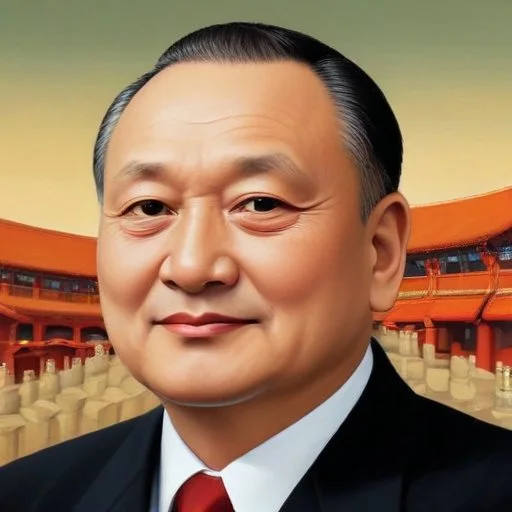
Deng Xiaoping's journey to reinstatement was not an easy one. After being purged from power in 1966, Deng spent two years in exile, during which time he was subjected to public criticism and humiliation. However, his reputation as a skilled politician and economist remained intact, and he slowly began to rebuild his influence within the Communist Party.
Upon his return to power, Deng Xiaoping wasted no time in introducing market-oriented policies that would propel China towards unprecedented growth and global prominence. He believed that economic development was the key to China's prosperity and sought to create a more open and entrepreneurial economy.
Deng Xiaoping's reinstatement and subsequent reforms had a profound impact on China's development, transforming the country into the second-largest economy in the world. His legacy continues to inspire generations of Chinese leaders and entrepreneurs, cementing his place as one of the most influential figures of the 20th century.
"It doesn't matter whether the cat is black or white, as long as it catches mice."
Deng Xiaoping's pragmatic approach to governance and economics continues to be a guiding principle for China's leadership, and his impressive achievements serve as a testament to the power of visionary leadership and innovative thinking.
Deng Xiaoping's reinstatement marked a significant turning point in China's history, paving the way for a new era of economic reforms. In the years following his return to power, Deng implemented a series of policies aimed at decentralizing decision-making authority, encouraging private enterprise, and promoting foreign investment.
One of Deng's earliest reforms was the introduction of the "household responsibility system," which allowed farmers to sell their surplus crops on the open market, effectively ending the People's Commune system. This reform led to a significant increase in agricultural production and marked a major departure from the radical policies of the Cultural Revolution.
These reforms, although initially met with resistance from hardline Maoists, soon gained widespread support and paved the way for China's economic miracle.
Hua Guofeng, Deng Xiaoping's ally and temporary successor, played a crucial role in Deng's reinstatement as Vice Premier. Hua, who was appointed Premier of China after Mao's death, was initially seen as a transitional figure, but he soon proved to be a shrewd politician who recognized the need for economic reform.
Hua's support for Deng was instrumental in helping him consolidate power and implement his reforms. In return, Deng ensured that Hua was appointed as the Chairman of the Communist Party, a position that guaranteed him a seat on the Politburo Standing Committee.
Hua's role in Deng's reinstatement remains a fascinating footnote in Chinese history, highlighting the complex web of alliances and rivalries that shape the country's political landscape.Deng Xiaoping's economic reforms had a profound impact on China's economy, transforming the country into one of the world's fastest-growing economies. By introducing market-oriented policies and encouraging foreign investment, Deng was able to stimulate economic growth, increase productivity, and improve living standards.
Between 1978 and 1995, China's GDP grew at an average annual rate of 9.5%, making it one of the fastest-growing economies in the world. This growth was fueled by a range of factors, including rapid industrialization, urbanization, and increases in foreign investment and trade.
Today, China is the world's second-largest economy, with a GDP of over $14 trillion, and is poised to overtake the United States as the world's largest economy in the near future.
Deng Xiaoping's economic reforms had a profound impact on Chinese culture, transforming the country's social and cultural landscape. As China opened up to the world, Western ideas and values began to influence Chinese culture, leading to a resurgence of interest in traditional Chinese customs and values.
The reforms also led to an increase in cultural exchange between China and the rest of the world, as foreign artists, intellectuals, and businesses began to engage with China. This exchange had a profound impact on Chinese art, literature, and music, as Chinese artists began to incorporate Western styles and themes into their work.
Today, China is a vibrant cultural hub, with a thriving arts scene, a rich cultural heritage, and a confident sense of national identity.Deng Xiaoping's economic reforms had a profound impact on Chinese politics, transforming the country's political landscape. By introducing market-oriented policies and encouraging private enterprise, Deng was able to create a new class of entrepreneurs and business leaders who were not beholden to the Communist Party.
This led to a significant shift in power dynamics, as the Communist Party began to lose its grip on the economy. The reforms also led to an increase in regional autonomy, as provincial governments began to take on more responsibilities and develop their own economic strategies.
Today, China's political landscape is characterized by a complex interplay between the Communist Party, regional governments, and private enterprise, with the Party seeking to maintain its grip on power while also adapting to the changing economic and social landscape.